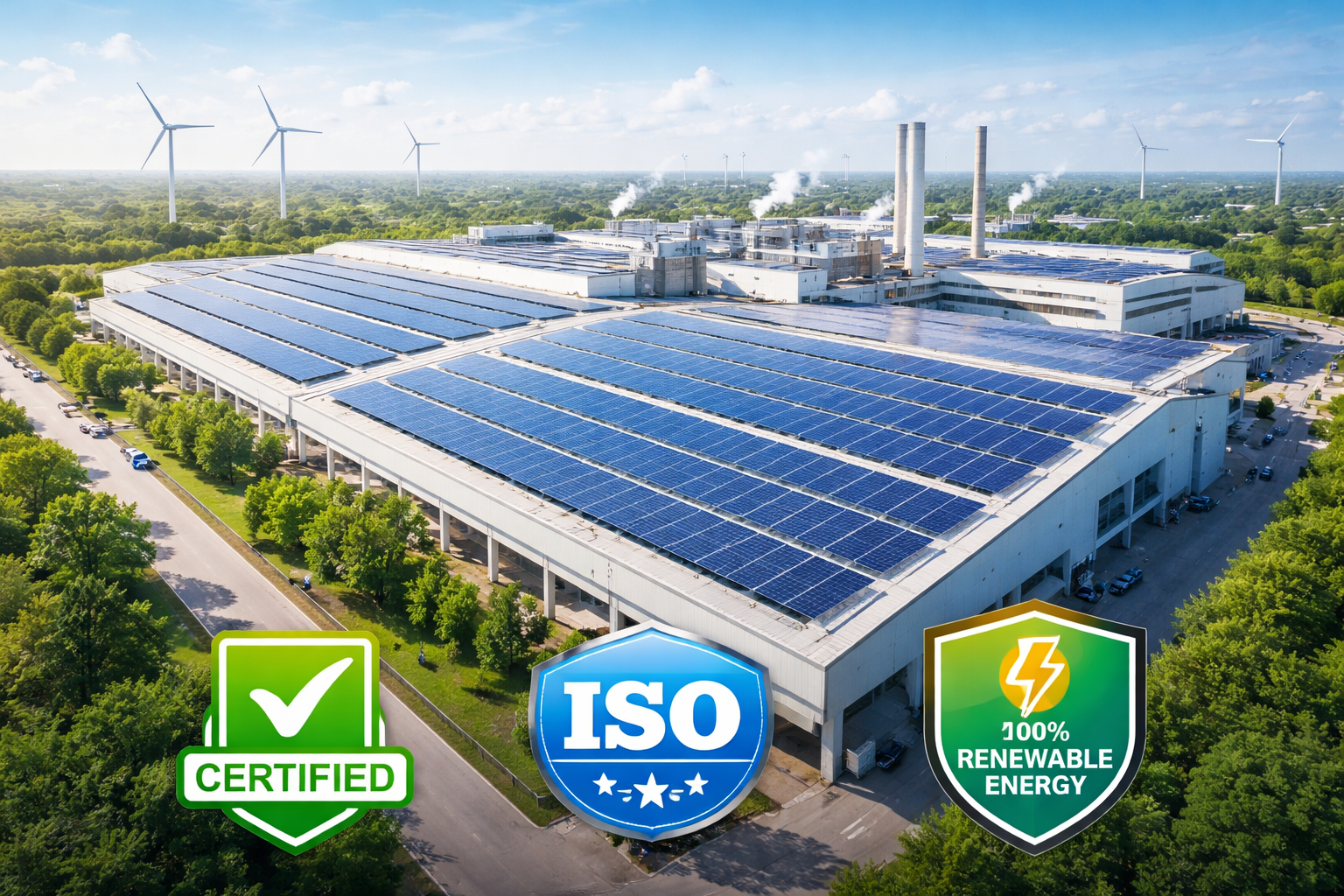
For factories, immediate cash positive commercial solar solutions can amplify benefits dramatically by reducing operational energy costs while simultaneously strengthening accreditation metrics and sustainability credentials.
Separately, factories invest in accreditations for compliance, market access, operational efficiency, and ESG credibility.
Although there are both commercial and operational advantages to integrate commercial solar solutions with accreditations.
Integrating Commercial Solar Solutions with Accreditations
Step 1 – Energy Assessment:
1. Use ISO 50002 or ESOS audit to identify high consumption areas
2. Quantify daytime electricity demand and potential solar coverage
Step 2 – Financial Modelling:
1. Choose financing structure (cash, asset finance or rental)
2. Model savings and cash positive cash flow
Step 3 – Accreditation Alignment:
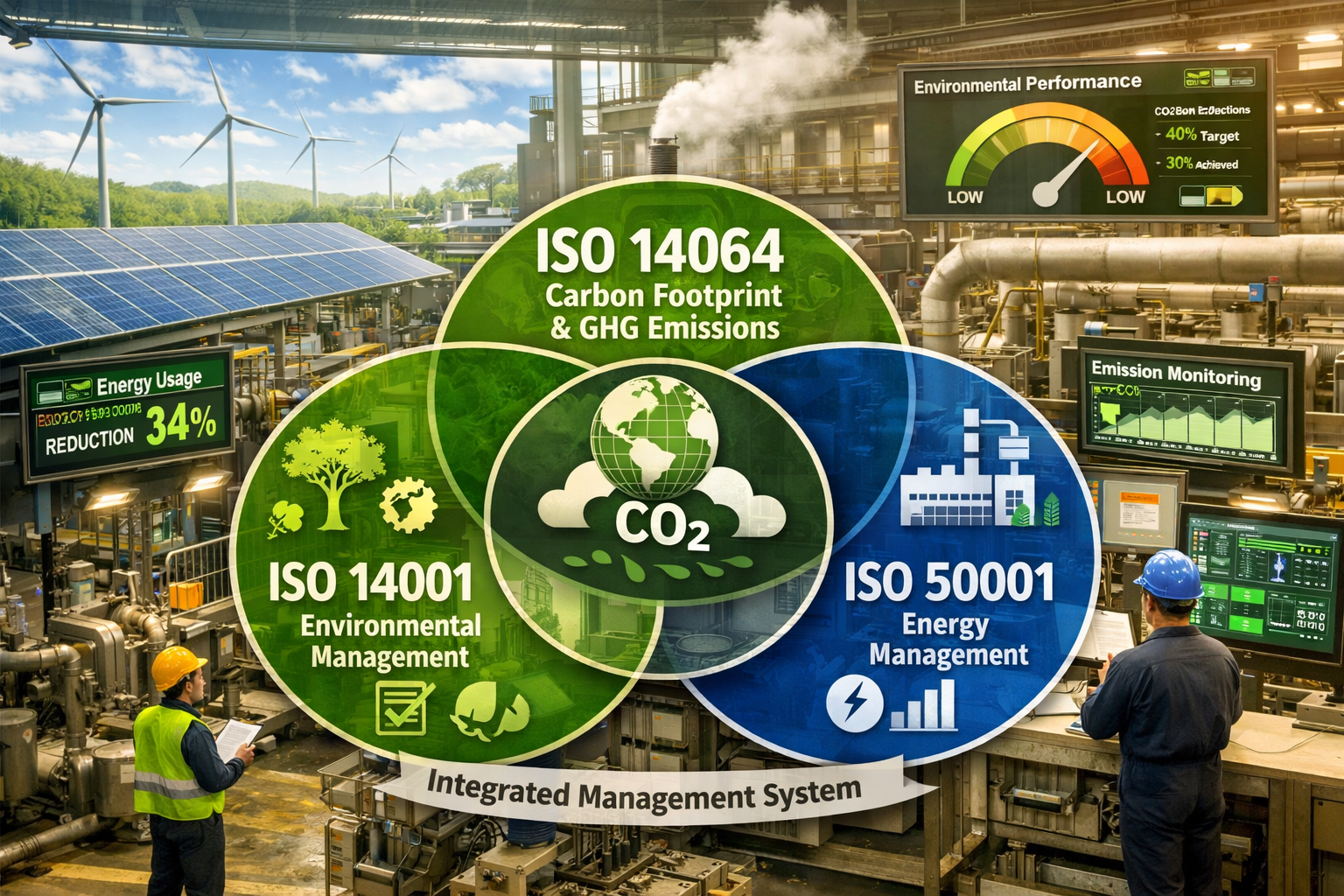
1. Document energy offset for ISO 50001 KPIs
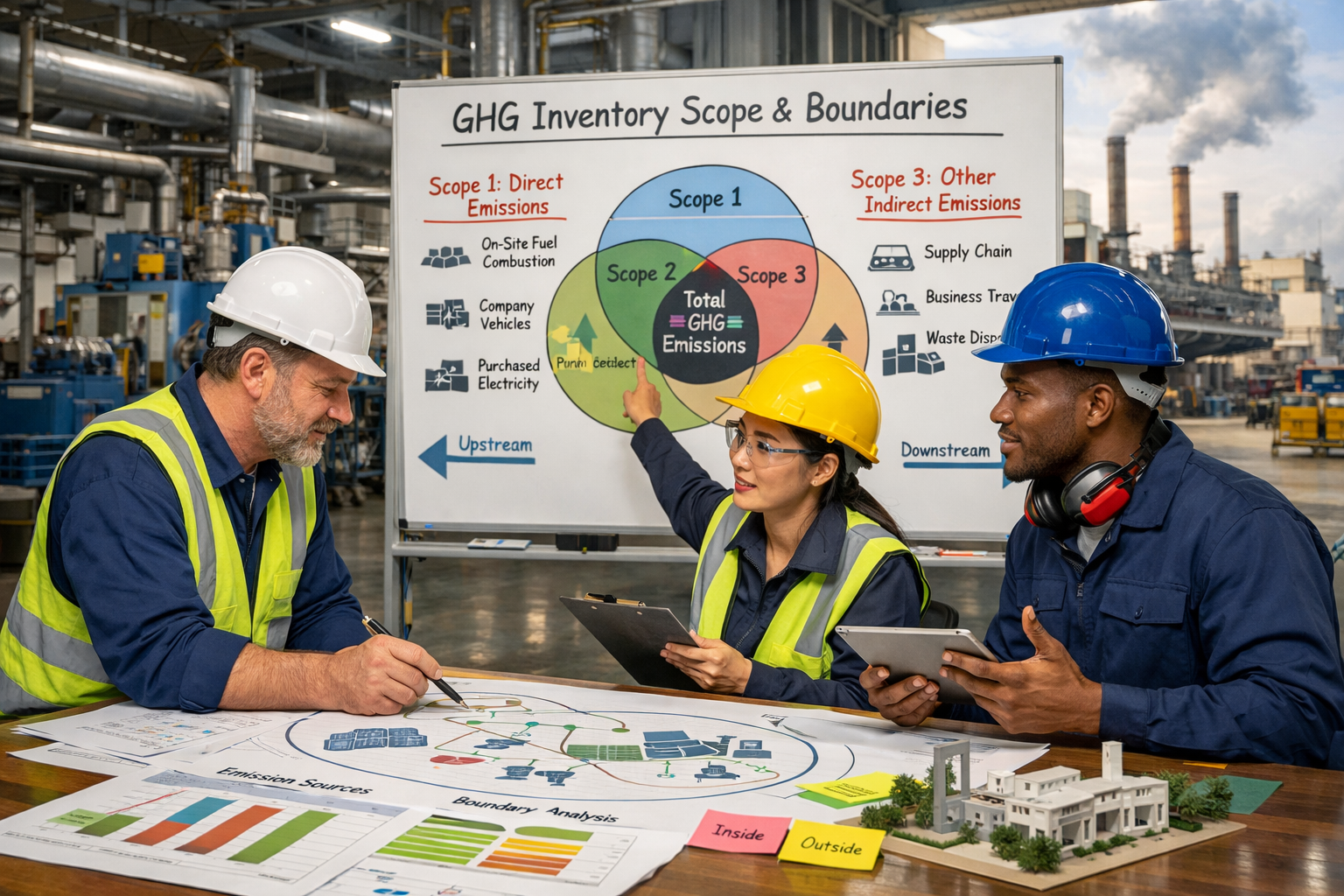
2. Calculate Scope 2 reductions for SECR & ISO 14064
3. Feed verified reductions into PAS 2060 & Carbon Trust applications
4. Highlight renewable contribution in tenders, B Corp, EMAS, and supply
chain credentials
Step 4 – Reporting & Continuous Improvement:
1. Track solar generation vs forecast
2. Update accreditations and ESG reports annually
3. Identify additional efficiency measures to complement solar savings
Commercial & Operational Multiplier Effects
1. Tender Wins:
Verified energy & carbon reductions strengthen ESG scoring
2. Insurance:
Reduced operational risk from lower electricity dependence and consistent generation
3. Finance:
Immediate positive cash flow can support expansion or other green projects
4. Stakeholder Relations:
Transparent renewable adoption improves investor confidence and supplier engagement
5. Operational Efficiency:
Commercial solar solutions reduce grid dependency and electricity volatility
In our next article we’ll bring you commercial solar solutions worked examples, provide some strategic takeaways, and wrap this section up with a measured conclusion.