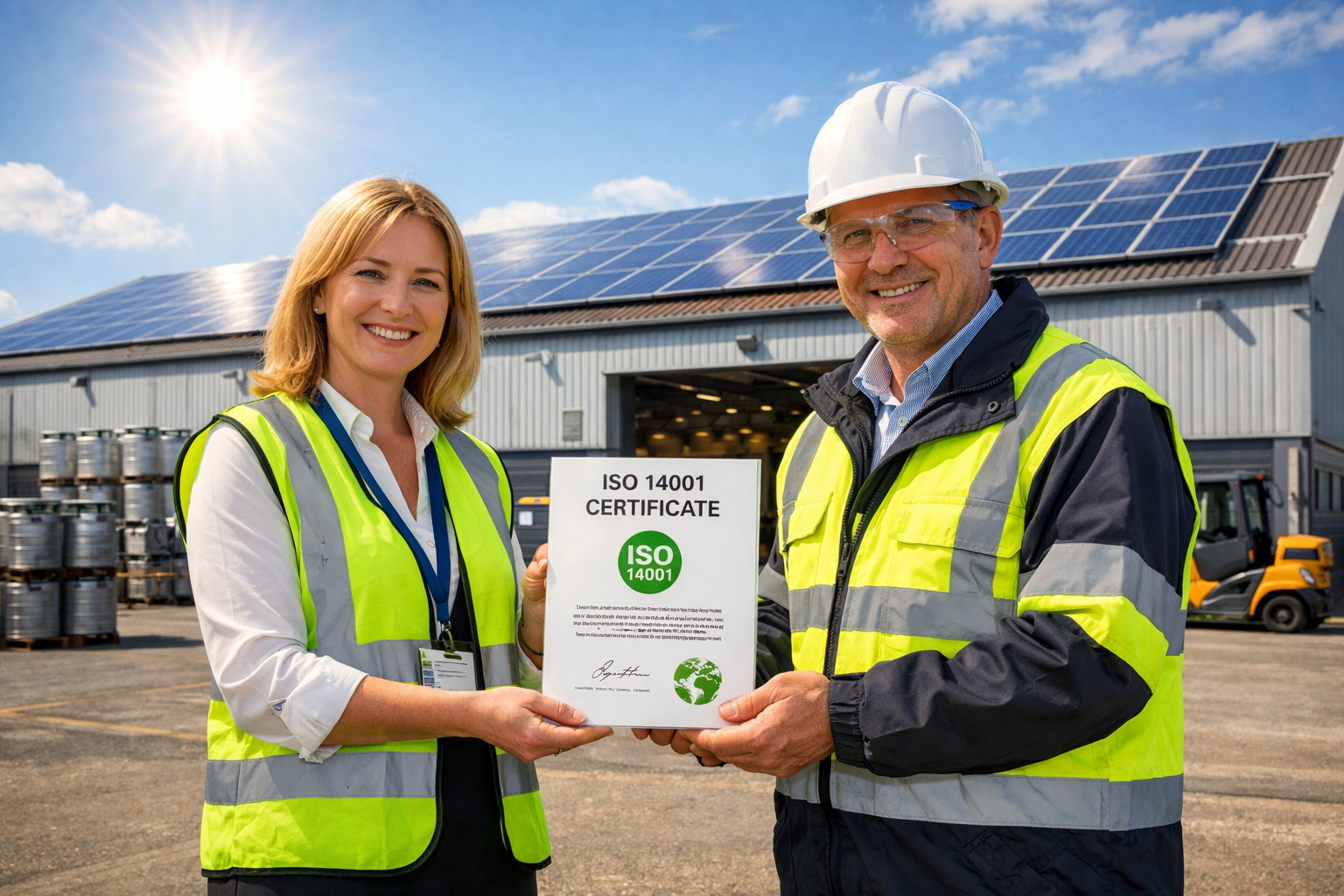
ISO 14001 is the internationally recognised standard for environmental management systems (EMS).
In manufacturing, it provides a structured, auditable framework for identifying, managing and reducing environmental impacts arising from factory operations.
At its core, ISO 14001 requires manufacturers to:
1. Understand how their activities interact with the environment
2. Comply with relevant environmental legislation
3. Control significant environmental impacts
4. Demonstrate continuous environmental improvement
Crucially, ISO 14001 is not a carbon standard, and it is not prescriptive about performance levels. Instead, it focuses on:
1. Management discipline
2. Risk identification
3. Evidence based decision-making
For manufacturers, this makes ISO 14001 both flexible and powerful.
Why ISO 14001 advantages matter to manufacturers and factories?
ISO 14001 has moved from being “nice to have” to commercially significant across many UK manufacturing sectors.
It increasingly:
1. Appears as a tender requirement
2. Features in supplier onboarding questionnaires
3. Influences customer and investor confidence
4. Supports compliance with environmental regulation
Beyond market access, ISO 14001 advantages help manufacturers:
1. Reduce waste and disposal costs
2. Improve energy and resource efficiency
3. Lower risk of environmental incidents
4. Prepare for future carbon and energy reporting obligations
In energy intensive factories, ISO 14001 often becomes the gateway accreditation that legitimises deeper energy and carbon action.
In depth details on how ISO 14001 advantages and how it links with ISO 9001 – and to the range of other accreditations / standards available to manufacturers – is covered in our book – Profit meets Planet.