
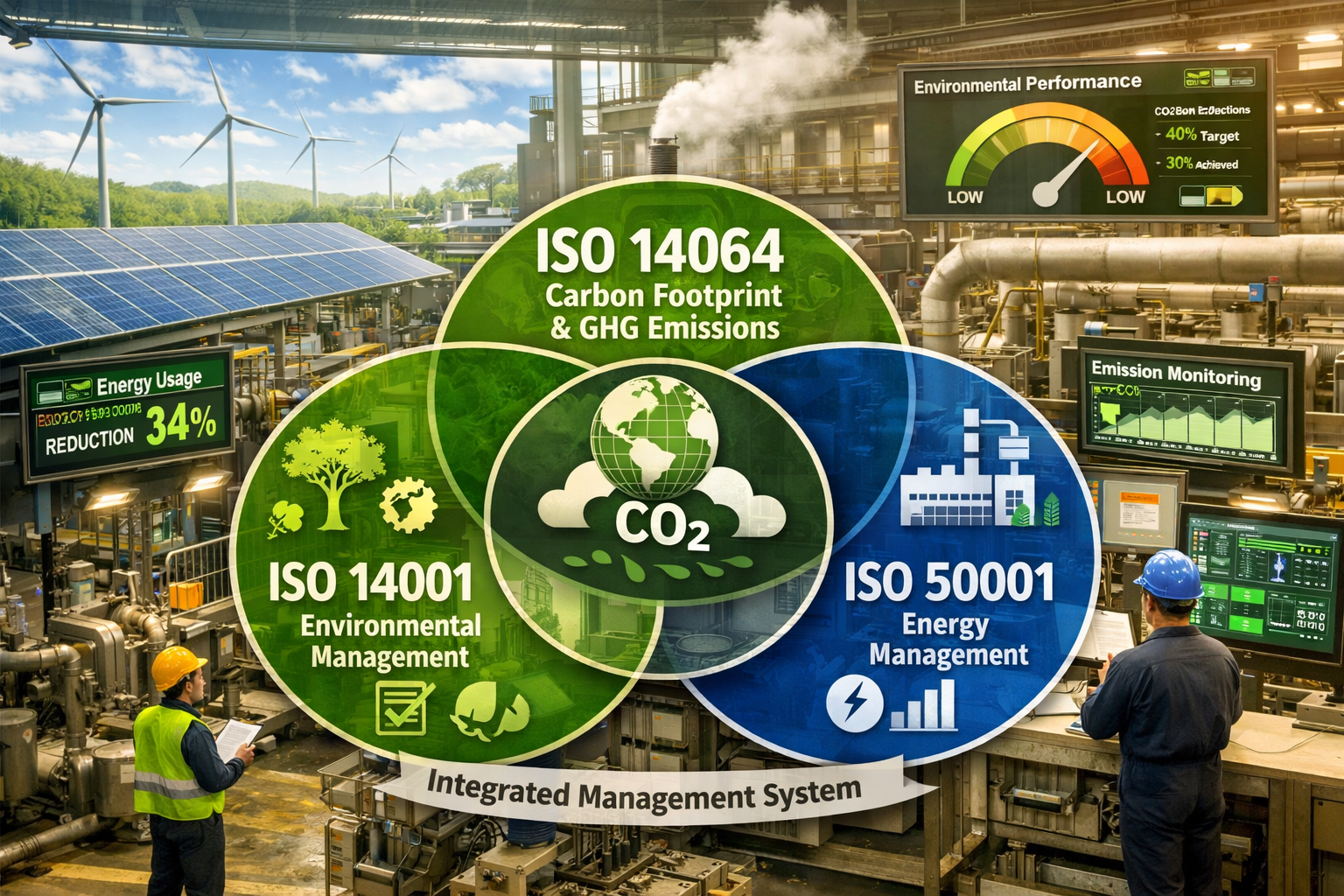
In a factory environment ISO 14064 is most effective when integrated with ISO 14001 and ISO 50001.
1. Integration area: energy data
ISO14001 – monitor energy consumption
ISO50001 – optimisation & targets
ISO14064 Benefit – converts energy use into greenhouse gas emissions (Scope 2)
2. Integration area: operational control
ISO14001 – processes for waste & chemical handling
ISO50001 – energy efficiency measures
ISO14064 Benefit – accurate activity data for Scope 1 & Scope 2 emissions
3. Integration area: management review
ISO14001 – environmental performance
ISO50001 – energy performance
ISO14064 Benefit – provides senior oversight of carbon performance
Integration reduces duplication, improves audit readiness, and demonstrates holistic environmental stewardship.
Common Pitfalls in Manufacturing Greenhouse Gas Accounting
Manufacturers often struggle with:
1. Incomplete scope coverage – only measuring electricity, ignoring fuels or transport
2. Inconsistent data – multiple teams reporting different figures
3. Poor documentation – assumptions and emission factors not recorded
4. Ignoring verification requirements – leading to credibility issues
Solutions:
1. Establish a dedicated greenhouse gas emissions lead or team
2. Use standardised templates for data logging
3. Conduct internal audits before external verification
Addressing these challenges early saves time, cost, and risk later.
Linking Greenhouse Gas Accounting to Commercial Value
ISO 14064 is not just about compliance – it can drive real commercial benefits:
1. Tender success:
Verified emissions are increasingly a prerequisite in public and private procurement
2. Energy investment justification:
Measurable Scope 2 reductions demonstrate ROI for solar or efficiency projects
3. Operational cost savings:
Understanding greenhouse gas drivers often highlights energy and resource inefficiencies
4. Reputation and stakeholder trust:
Verified carbon data supports ESG reporting and investor relations.
For example, a factory installing on site solar can:
1. Reduce Scope 2 greenhouse gas emissions immediately
2. Demonstrate improvement under ISO 14064 verification
3. Translate energy savings into a cash-positive investment
Available Resources
If you’d like to learn more about ISO and other operational improvement / cost reduction related accreditations, please request a complimentary copy of our factories guide book – Planet meets Profit.


