This series specifically for manufacturing and engineering companies has highlighted – in relation to the full spectrum of accreditations, certifications, and schemes available to them – actionable strategies and case examples for:
1. Increased tender success
2. Reduced insurance costs
3. Improved access to finance
4. Enhanced stakeholder and investor confidence
Our first article covered ‘Increased Tender Success’, the second covered ‘Reduced Insurance Costs’, the third covered ‘Improved Access to Finance’, and today we’re covering ‘Enhanced ‘Stakeholder and Investor Confidence’ in conjunction with ‘Cash-Positive Solar as a Commercial Lever’.
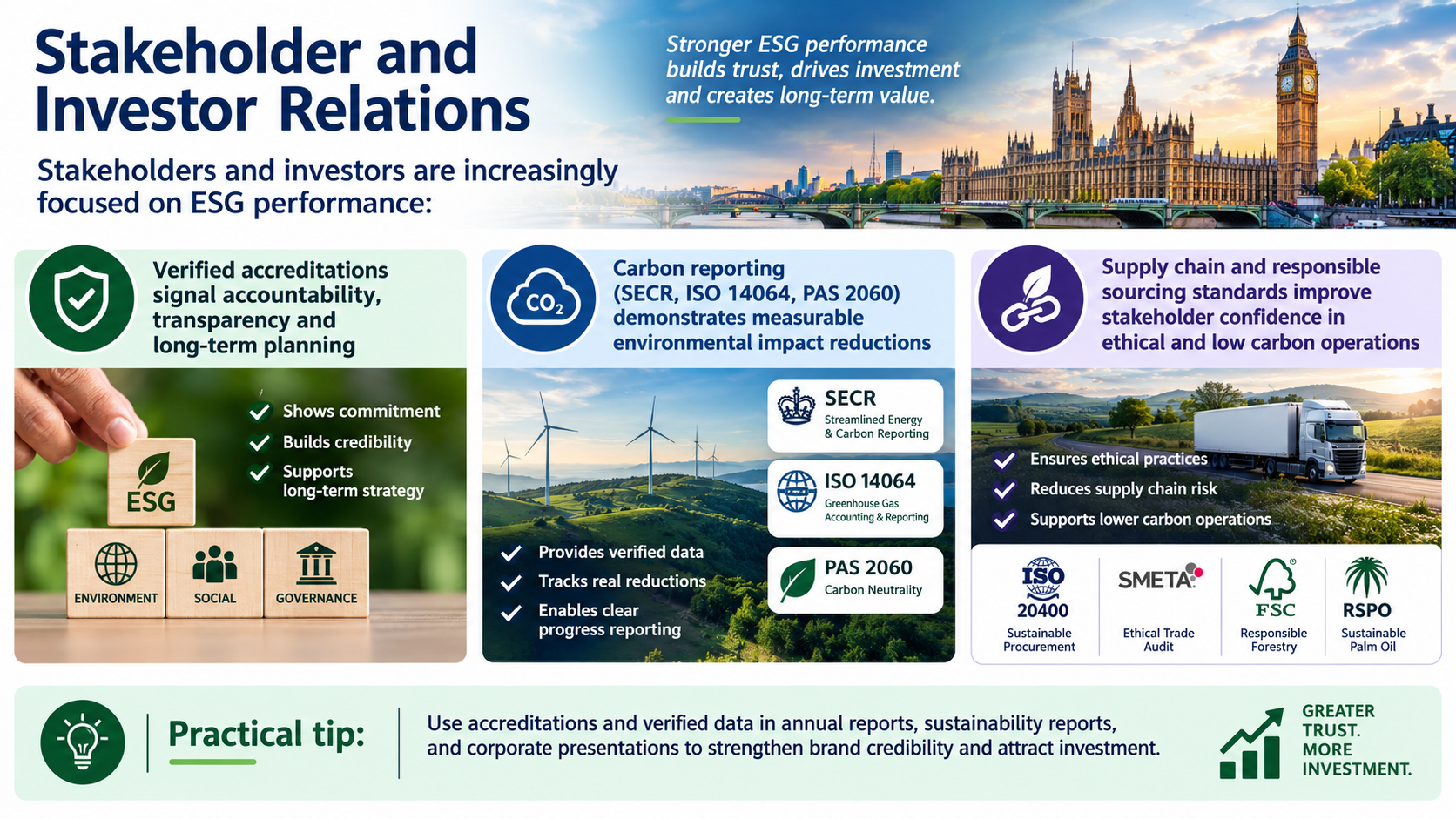
Stakeholder and Investor Relations
Stakeholders and investors are increasingly focused on ESG performance:
1. Verified accreditations signal accountability, transparency, and long-term planning
2. Carbon reporting (SECR, ISO 14064, PAS 2060) demonstrates measurable environmental impact reductions
3. Supply chain and responsible sourcing standards improve stakeholder confidence in ethical and low carbon operations
Practical tip:
Use accreditations and verified data in annual reports, sustainability reports, and corporate presentations to strengthen brand credibility and attract investment
Cost Savings and Operational Efficiency
Beyond reputational and financial benefits, accreditations directly reduce operational costs:
1. Energy – ISO 50001, ESOS, SECR
Reduced electricity and gas costs through efficiency and solar
2. Carbon offsets – PAS 2060, Carbon Trust
Reduced offset volume and associated costs via on-site reductions
3. Materials – Responsible sourcing / BES standards
Reduced waste, improved supply chain efficiency
4. Processes – ISO 9001 / 14001
Minimised defects, improved yield, lower operational losses
Key point:
Operational cost savings contribute directly to profitability while supporting accreditation compliance.
Cash-Positive Solar as a Commercial Lever
Cash positive solar plays a dual role:
1. Reduces operational costs immediately:
Lower electricity bills and improved ROI
2. Enhances accreditation value:
Solar energy projects strengthen ISO 50001, ESOS, SECR, PAS 2060, and Carbon Trust compliance
Example:
A UK plastics manufacturer used a cash positive solar installation to:
1. Reduce grid electricity spend by 50%
2. Demonstrate measurable Scope 2 emission reductions for SECR and Carbon Trust reporting
3. Improve tender scoring for clients prioritising verified low carbon suppliers
4. The result: Immediate cost savings, improved market positioning, and measurable sustainability credentials.
Please tune in to our next article, which conclude and wrap things up.
Additional Resource
If you’d like to learn more about operational improvement / cost reduction related accreditations, please request a complimentary copy of our factories guide book – Planet meets Profit.