But how do we implement UK accreditations, standards, and schemes in practice?
This educational series provides a practical playbook for factories – helping them implement all the UK accreditations, standards, and schemes we’ve explained.
In this series we are covering…
1. Establishing project teams and governance
2. Setting timelines and milestones
3. Sampling, audits, and site assessments
4. Integration of accreditations with renewable energy projects
5. Procurement and supply chain integration
6. Monitoring and reporting
7. Continuous improvement
8. Governance and communication
9. Practical tips and key takeaways
The playbook is designed to ensure operational, financial, and commercial benefits are realised while maintaining compliance.
Our last article covered ‘Integration of accreditations with renewable energy projects’, and today we are covering ‘Procurement and supply chain integration’.
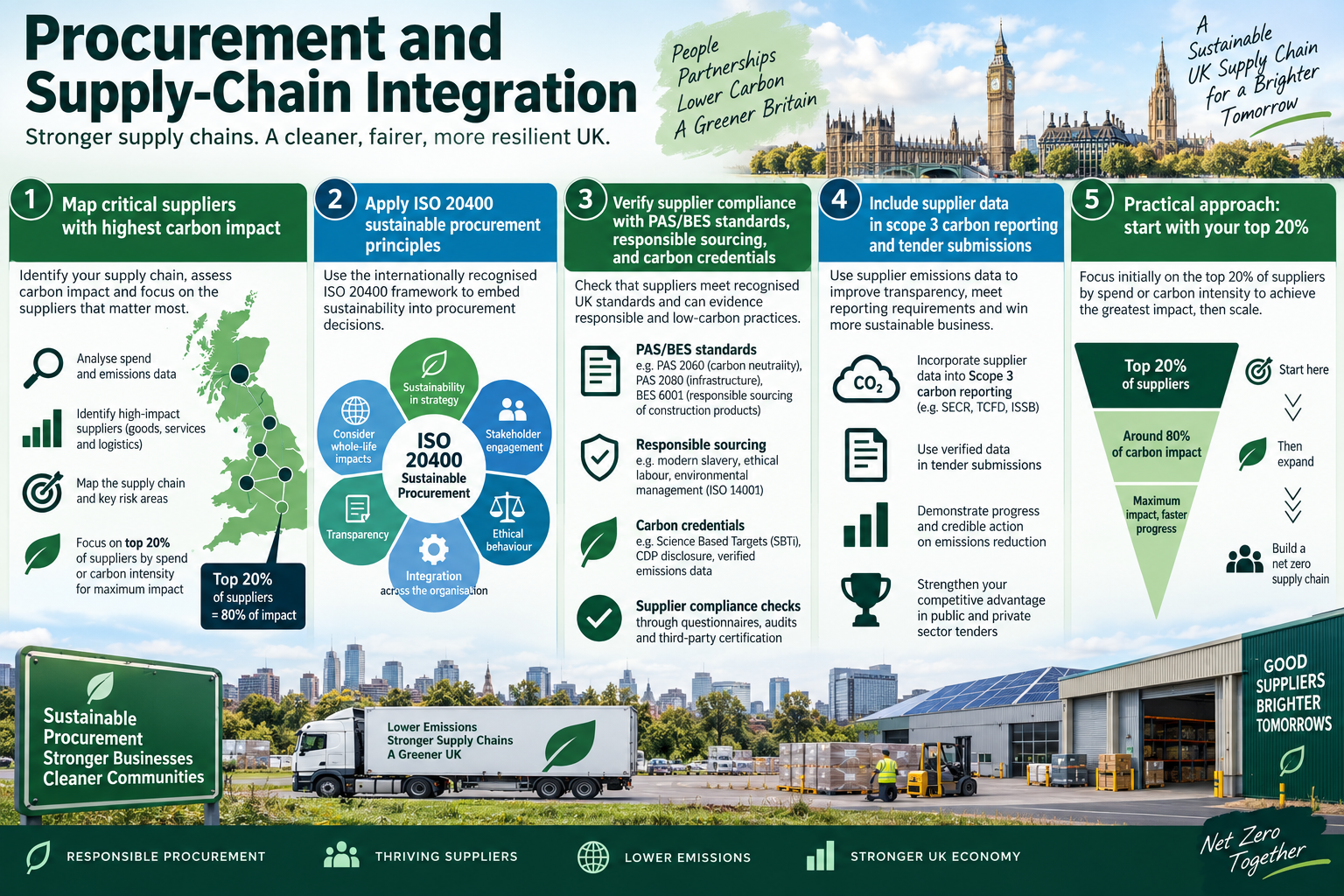
Procurement and Supply-Chain Integration
1. Map critical suppliers with highest carbon impact
2. Apply ISO 20400 sustainable procurement principles
3. Verify supplier compliance with PAS/BES standards, responsible sourcing, and carbon credentials
4. Include supplier data in scope 3 carbon reporting and tender submissions
Practical approach:
Focus initially on top 20% of suppliers by spend or carbon intensity for maximum impact.
Next article:
Look out for our next article which will cover ‘Monitoring and reporting’.
Additional Resource
If you’d like to learn more about operational improvement / cost reduction related accreditations, please request a complimentary copy of our factories guide book – Planet meets Profit.