Implementing UK accreditations, standards, and schemes in practice can be confusing, so how can factories do this efficiently?
This educational series provides a practical playbook for factories – helping them implement all the UK accreditations, standards, and schemes we’ve explained.
In this series we are covering…
1. Establishing project teams and governance
2. Setting timelines and milestones
3. Sampling, audits, and site assessments
4. Integration of accreditations with renewable energy projects
5. Procurement and supply chain integration
6. Monitoring and reporting
7. Continuous improvement
8. Governance and communication
9. Practical tips and key takeaways
The playbook is designed to ensure operational, financial, and commercial benefits are realised while maintaining compliance.
Our last article covered ‘Procurement and supply chain integration’, and today we are covering ‘Monitoring and reporting’.
Monitoring and Reporting
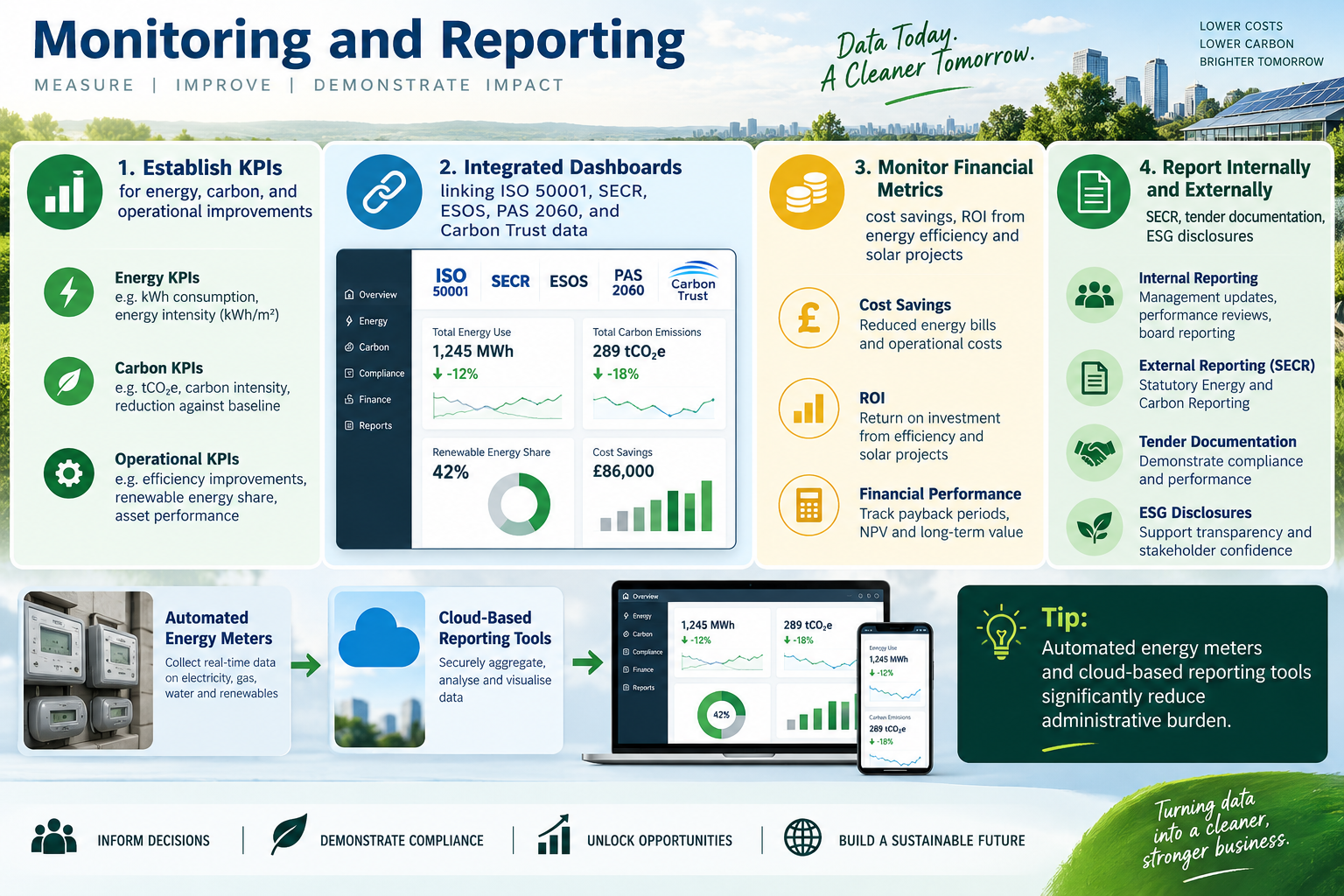
1. Establish KPIs for energy, carbon, and operational improvements
2. Use integrated dashboards linking ISO 50001, SECR, ESOS, PAS 2060, and Carbon Trust data
3. Monitor financial metrics: cost savings, ROI from energy efficiency and solar projects
4. Report internally and externally: SECR, tender documentation, ESG disclosures
Tip:
Automated energy meters and cloud-based reporting tools significantly reduce administrative burden.
Next article:
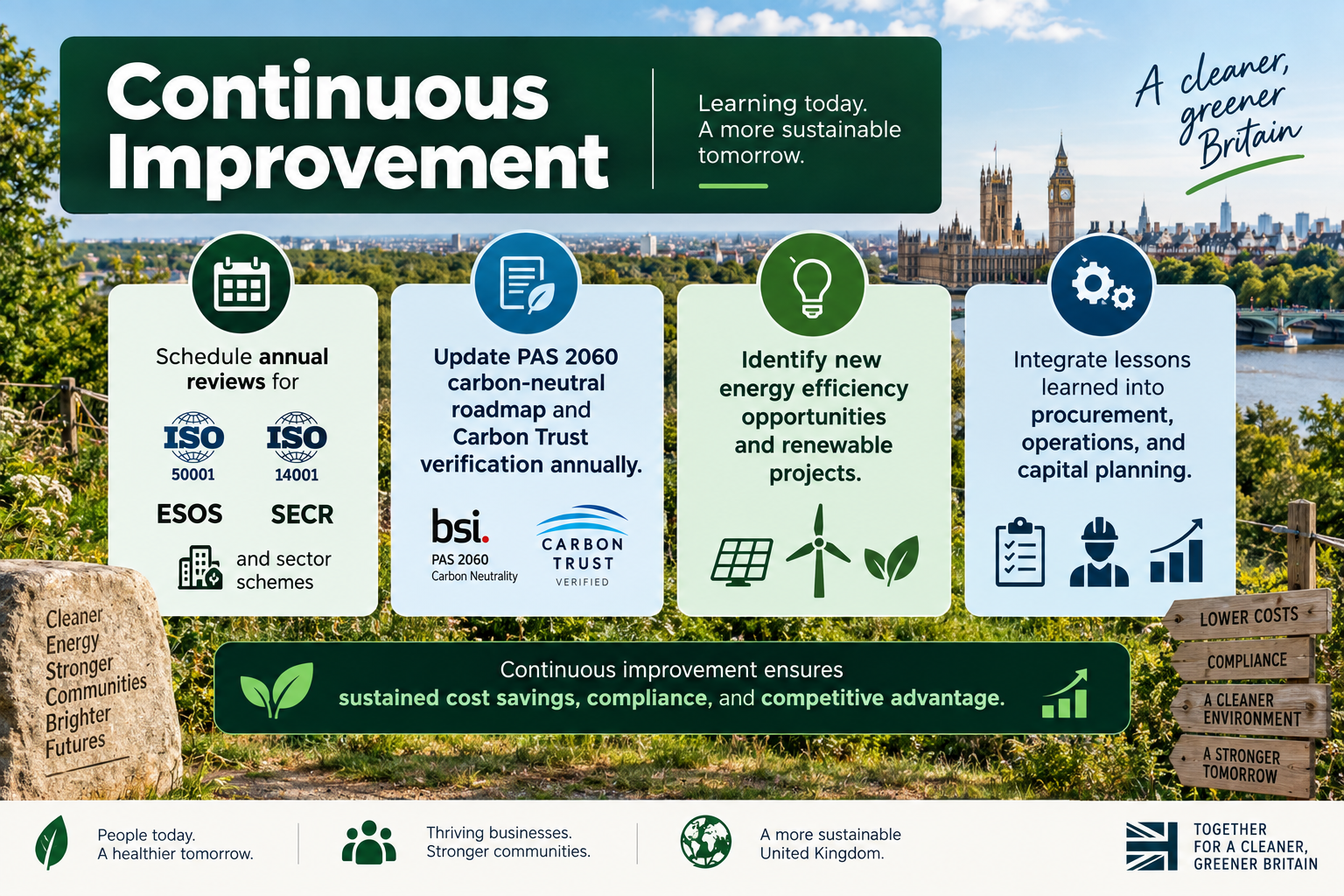
Look out for our next article which will cover ‘Continuous improvement’.
Additional Resource
If you’d like to learn more about operational improvement / cost reduction related accreditations, please request a complimentary copy of our factories guide book – Planet meets Profit.