How does PAS 2060 aid on-site solar and carbon neutrality for factories?
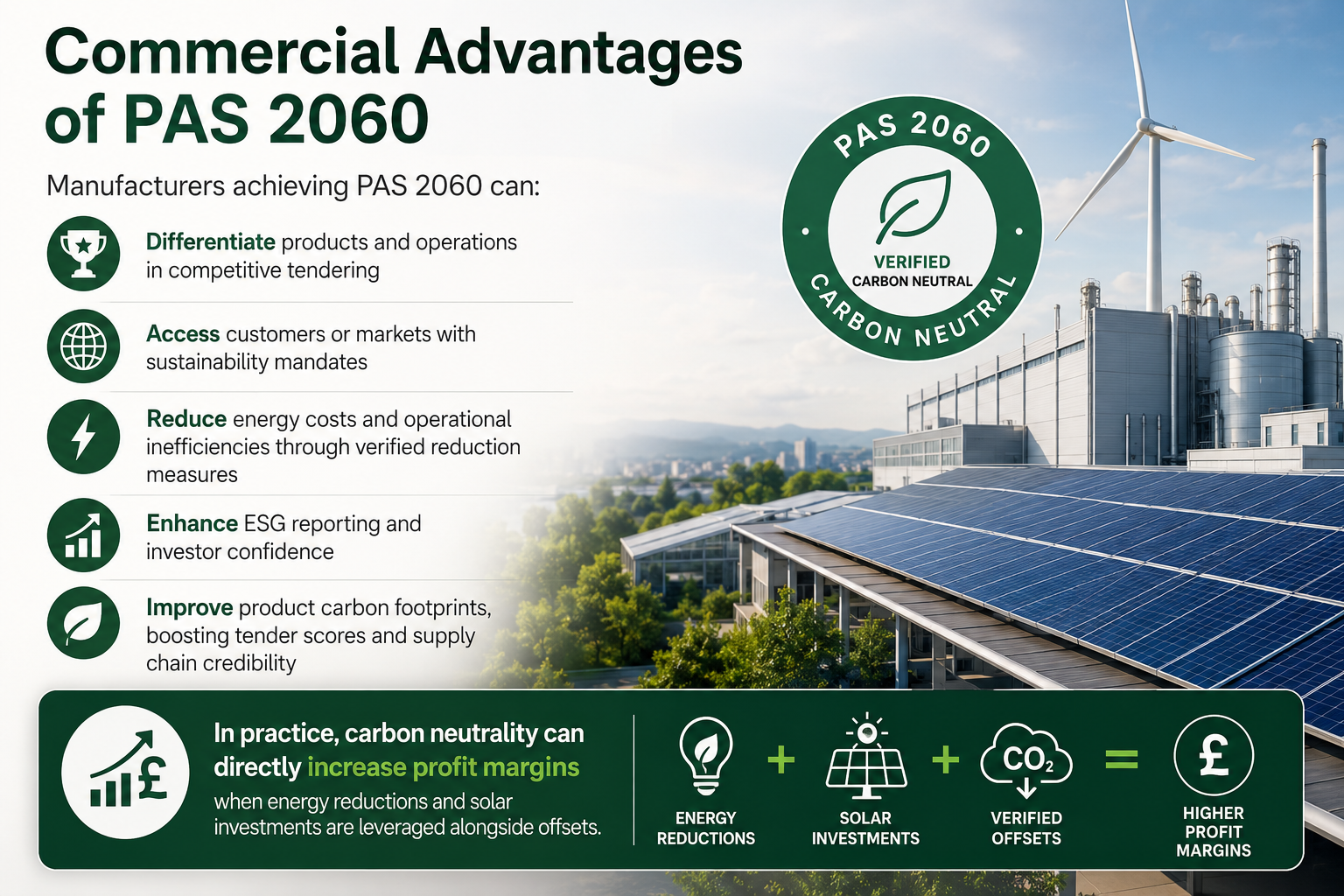
Cash-positive solar is a key enabler of PAS 2060 compliance:
1. Directly reduces grid electricity consumption (Scope 2)
2. Lowers operational energy costs immediately
3. Provides measurable and verifiable carbon reductions
4. Strengthens independent verification of reduction claims
Solar, combined with energy efficiency measures, reduces the volume of offsets required, further enhancing the financial return.
Common Challenges for Factories
Challenge – Defining boundaries and scope
Solution – Align with ISO 14064 (organisational) and ISO 14067 (product)
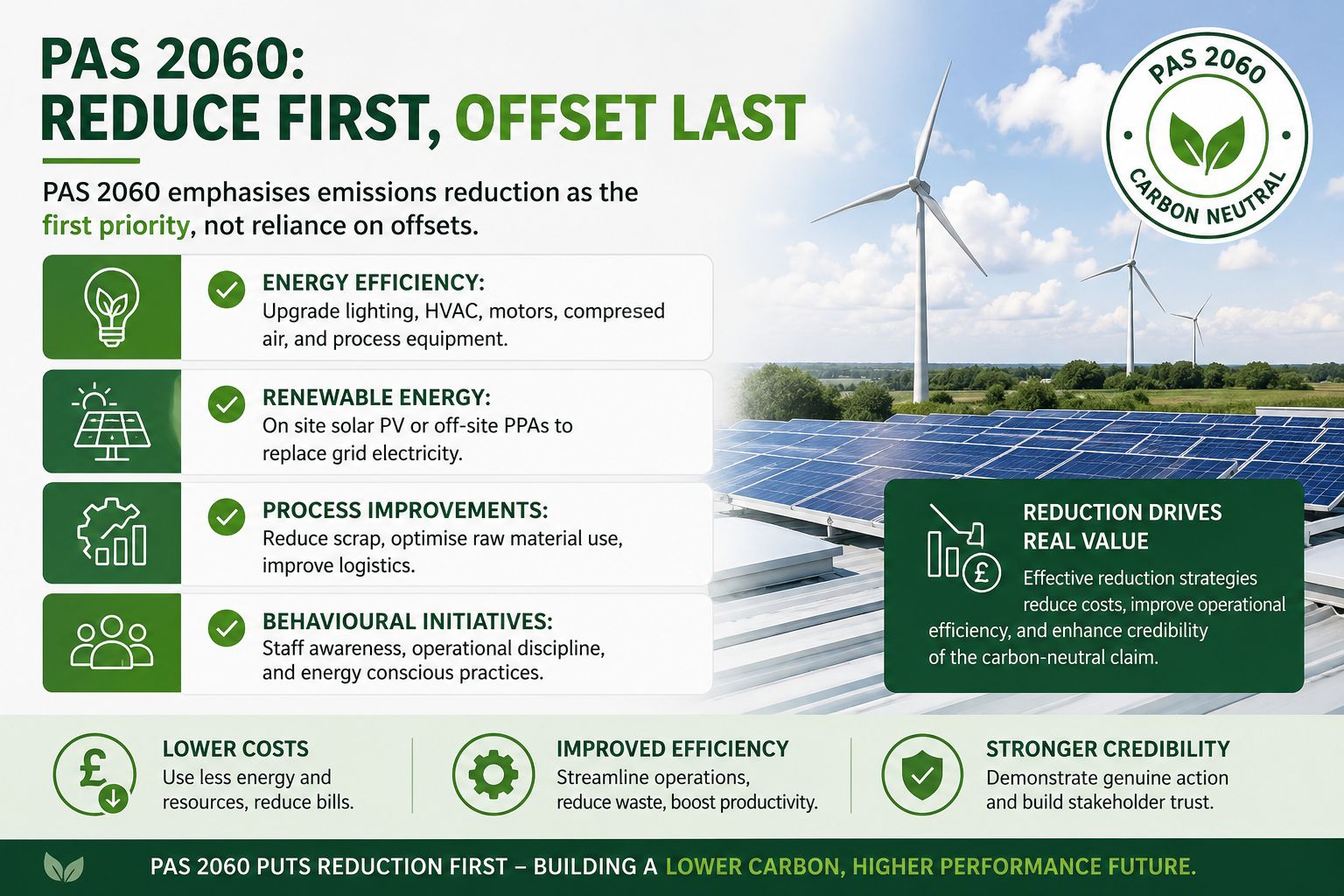
Challenge – Reducing emissions before offsets
Solution – Prioritise ISO 50001 energy management and process efficiency projects
Challenge – Ensuring credible offsets
Solution – Use recognised, verified carbon credit standards
Challenge – Verification readiness
Solution – Maintain comprehensive documentation and integrate with existing audits
Addressing these challenges ensures PAS 2060 claims are credible, verifiable, and commercially valuable.
Implementation Timeline
Typical timeline for a UK manufacturing or engineering site:
1. Scope definition and emissions inventory: 1 – 2 months
2. Reduction implementation: 3 – 6 months (energy efficiency, process improvements, renewable integration)
3. Offset purchase and documentation: 1 month
4. Verification audit: 1 – 2 months
Integrated with ISO 50001 and ISO 14064, the entire pathway to carbon neutrality can be completed efficiently, with immediate financial and reputational benefits.
Key Takeaways for Factories
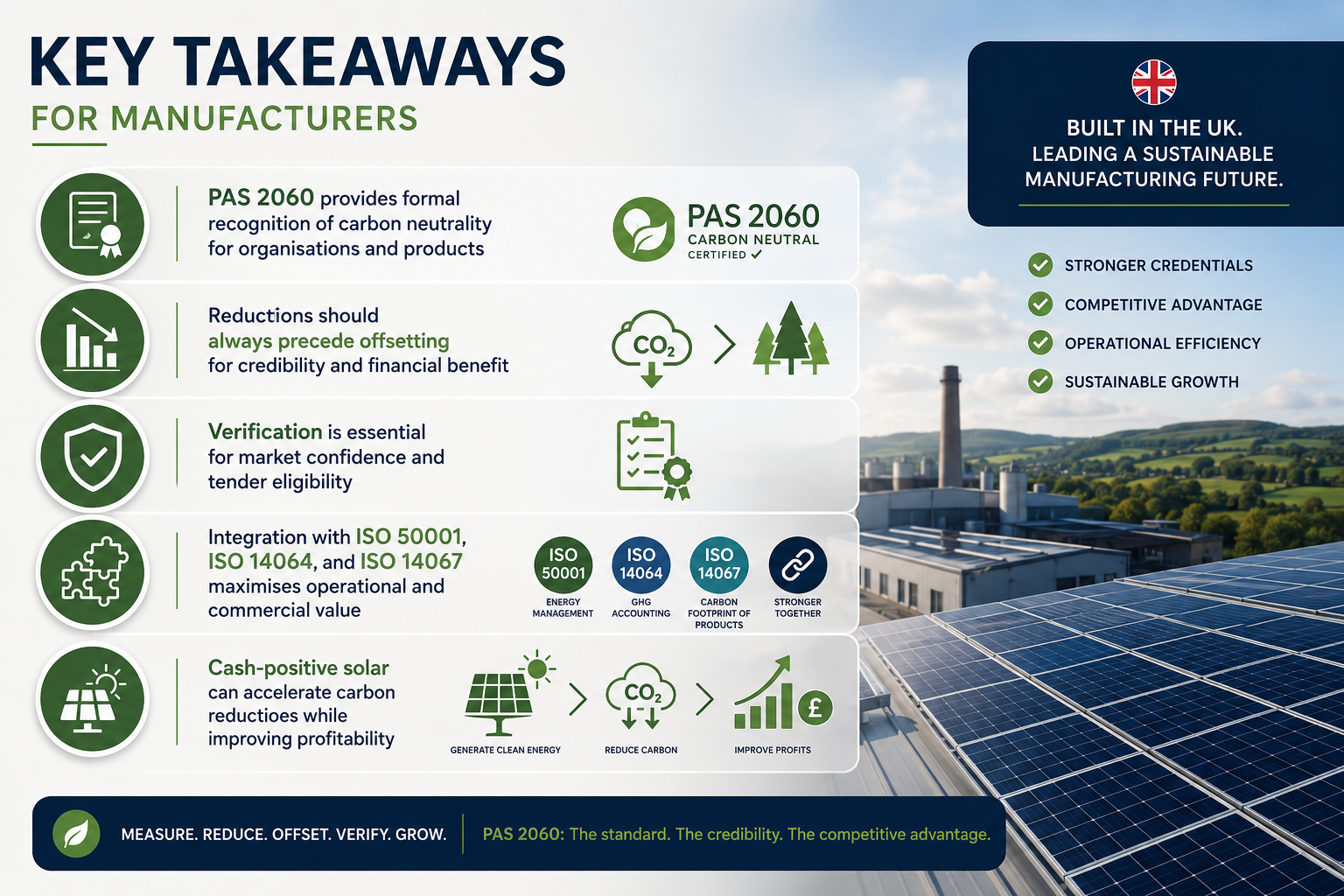
1. PAS 2060 provides formal recognition of carbon neutrality for organisations and products
2. Reductions should always precede offsetting for credibility and financial benefit
3. Verification is essential for market confidence and tender eligibility
4. Integration with ISO 50001, ISO 14064, and ISO 14067 maximises operational and commercial value
5. Cash-positive solar can accelerate carbon reductions while improving profitability
What Comes Next
With PAS 2060, manufacturers and engineers have reached the apex of verified carbon management, demonstrating:
1. Reduced energy consumption and operational cost
2. Verified organisational and product carbon footprints
3. Carbon neutrality for products or factories
Additional Resource
If you’d like to learn more about ISO and other operational improvement / cost reduction related accreditations, please request a complimentary copy of our factories guide book – Planet meets Profit.