
What are the common Energy Savings Opportunity Scheme (ESOS) opportunities or manufacturing and engineering companies?
1. Opportunity 1
Area: Compressed air
Typical Energy Use: 10 – 25%
Potential Improvement: Leak detection, pressure optimisation
1. Opportunity 2
Area: Lighting
Typical Energy Use: 5 – 10%
Potential Improvement: LED retrofits, motion sensors
3. Opportunity 3
Area: HVAC
Typical Energy Use: 10 – 20%
Potential Improvement: Optimisation, variable speed drives, insulation
4. Opportunity 4
Area: Process heating
Typical Energy Use: 20 – 30%
Potential Improvement: Heat recovery, insulation, efficiency upgrades
5. Opportunity 5
Area: Motors & drives
Typical Energy Use: 15 – 25%
Potential Improvement: High-efficiency motors, scheduling
6. Opportunity 6
Area: Transport & logistics
Typical Energy Use: 5 – 15%
Potential Improvement: Fleet efficiency, route optimisation
Identifying and implementing these measures can generate immediate cost savings and contribute to verified carbon reductions.
ESOS and ISO 50001 Integration
ESOS and ISO 50001 are highly complementary when integrated:
1. An ISO 50001 energy management system streamlines energy data collection for ESOS
2. Performance metrics & monitoring covered in ISO 50001 provides evidence for an ESOS Lead Assessor
3. Operational control and significant energy use (SEU) as detailed in ISO 50001 supports prioritisation of audit findings
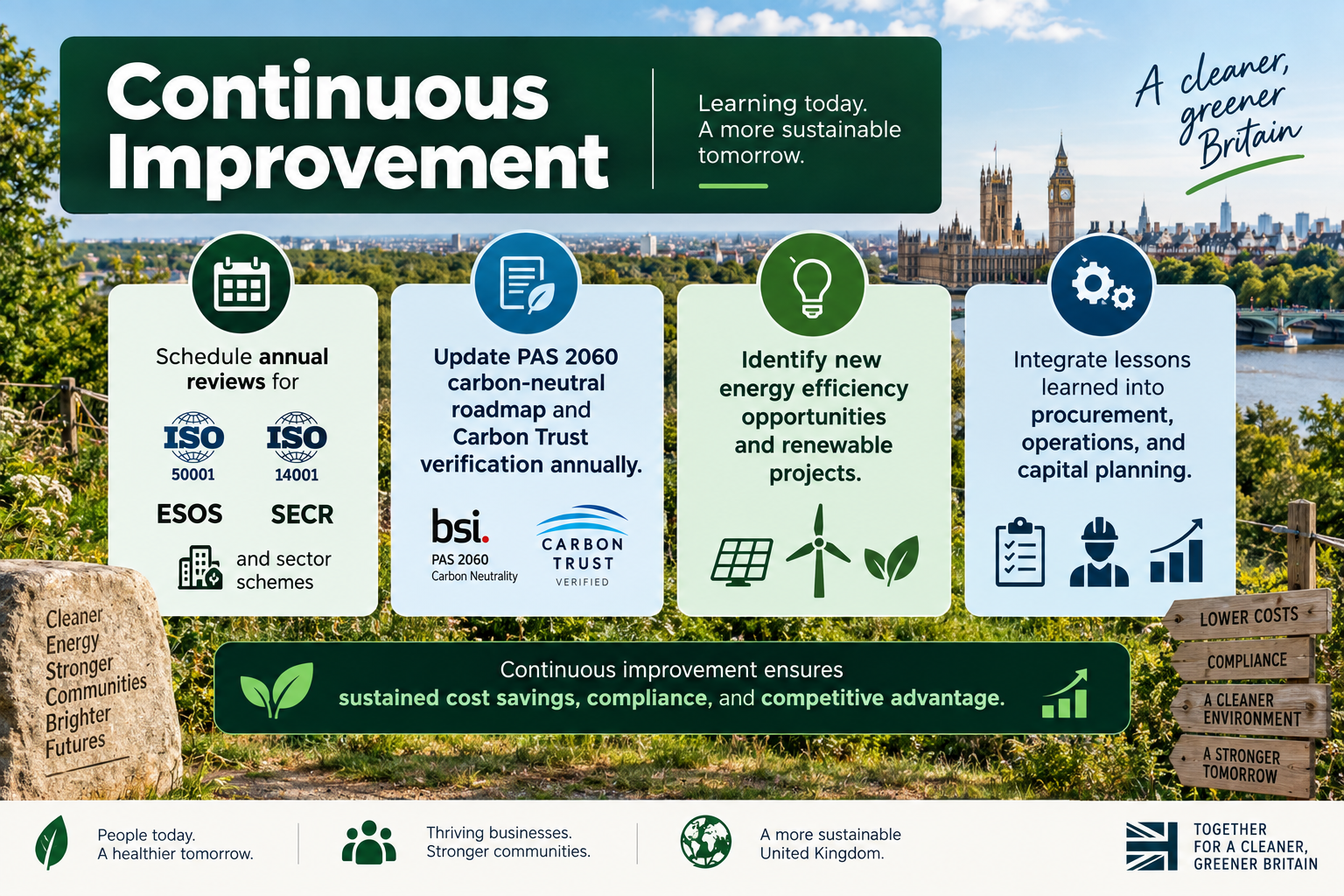
4. The continual improvement within ISO 50001 facilitates follow up on energy saving opportunities
Integration reduces duplication, accelerates compliance, and maximises the commercial and environmental impact of energy projects.
Additional Resource
If you’d like to learn more about ESOS and other operational improvement / cost reduction related accreditations, please request a complimentary copy of our factories guide book – Planet meets Profit.