
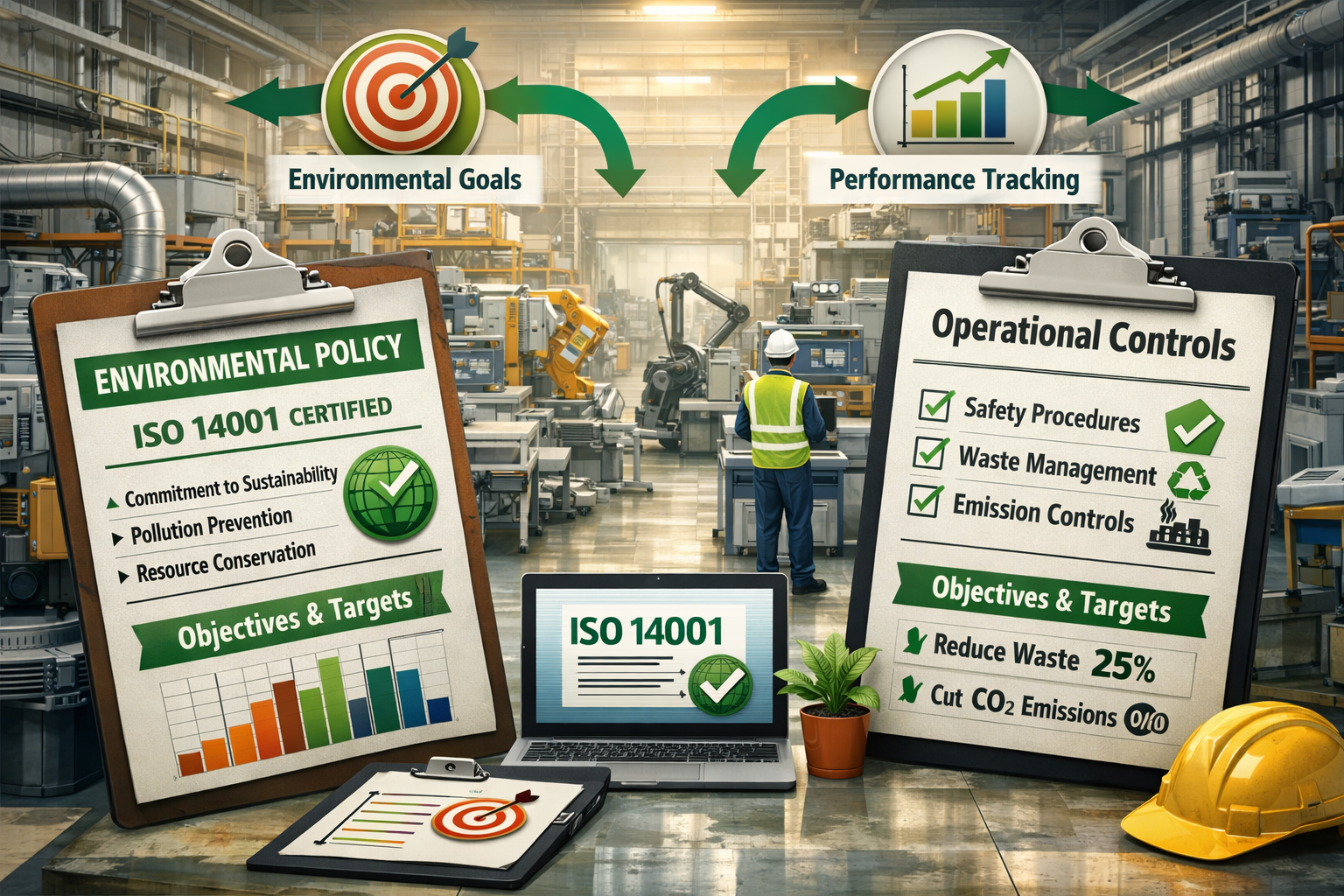
In a factory environment ISO 14001 requires a documented environmental policy and operational control, both of which need to be supported by objectives and targets.
Environmental Policy
An environmental policy sets out a manufacturers commitment to managing its environmental impact.
Effective manufacturers:
1. Keep the policy concise and meaningful
2. Align objectives with operational reality
3. Focus on measurable improvements
Typical environmental objectives include:
1. Reducing energy consumption per unit of output
2. Increasing recycling rates
3. Reducing waste to landfill
4. Improving spill prevention and response
Energy related objectives are often the most impactful because they deliver both:
1. Environmental benefit
2. Direct financial savings
This is where ISO 14001 starts to move from compliance into value creation.
Operational Control
Operational control ensures that significant environmental aspects are managed consistently.
In manufacturing, this may involve:
1. Standard operating procedures for waste handling
2. Controls on chemical storage and use
3. Maintenance schedules to prevent leaks or emissions
4. Contractor and supplier controls
Good operational control:
1. Reduces variability
2. Minimises environmental incidents
3. Improves audit outcomes
It also creates the discipline needed for more advanced energy management systems.
Available Resources
If you’d like to learn more about ISO 14001, and how it can help you with a documented environmental policy, operational control, energy and carbon reduction, please contact us and request a complimentary copy of our factory accreditations and standards guide book – Profit meets Planet.