
Accreditations. Carbon. Solar: Three words guaranteed to strike fear into the heart of any UK factory owner.
Today’s factories are expected to juggle an alphabet soup of standards – ISO 9001, ISO 14001, ISO 50001, SECR, ESOS, PAS, BES – all while keeping costs down, auditors happy, and investors reassured.
It often feels less like sustainability and more like survival by paperwork.
Below – and to help you – we’ve detailed a practical checklist for manufacturing and engineering companies to maximise the commercial benefits available by integrating these accreditations.
Practical Checklist for Factories
To maximise commercial benefits:
1. Map all relevant accreditations and certifications
2. Integrate ISO, PAS, ESOS, SECR, Carbon Trust, and sector specific standards
3. Identify and implement high-impact energy and carbon reduction projects (including solar)
4. Use verified metrics in tenders, ESG reporting, and stakeholder communications
5. Monitor and maintain records to demonstrate continuous improvement and credibility
Key Takeaways
1. Accreditations are not just regulatory tools; they drive tangible commercial benefits
2. Integrated energy, carbon, and sustainability systems enhance tender success, reduce insurance premiums, improve access to finance, and strengthen stakeholder relations
3. Operational efficiency, cost savings, and renewable energy investments amplify both profitability and sustainability credentials
4. Strategic communication of verified performance boosts market differentiation and competitive advantage
Conclusion
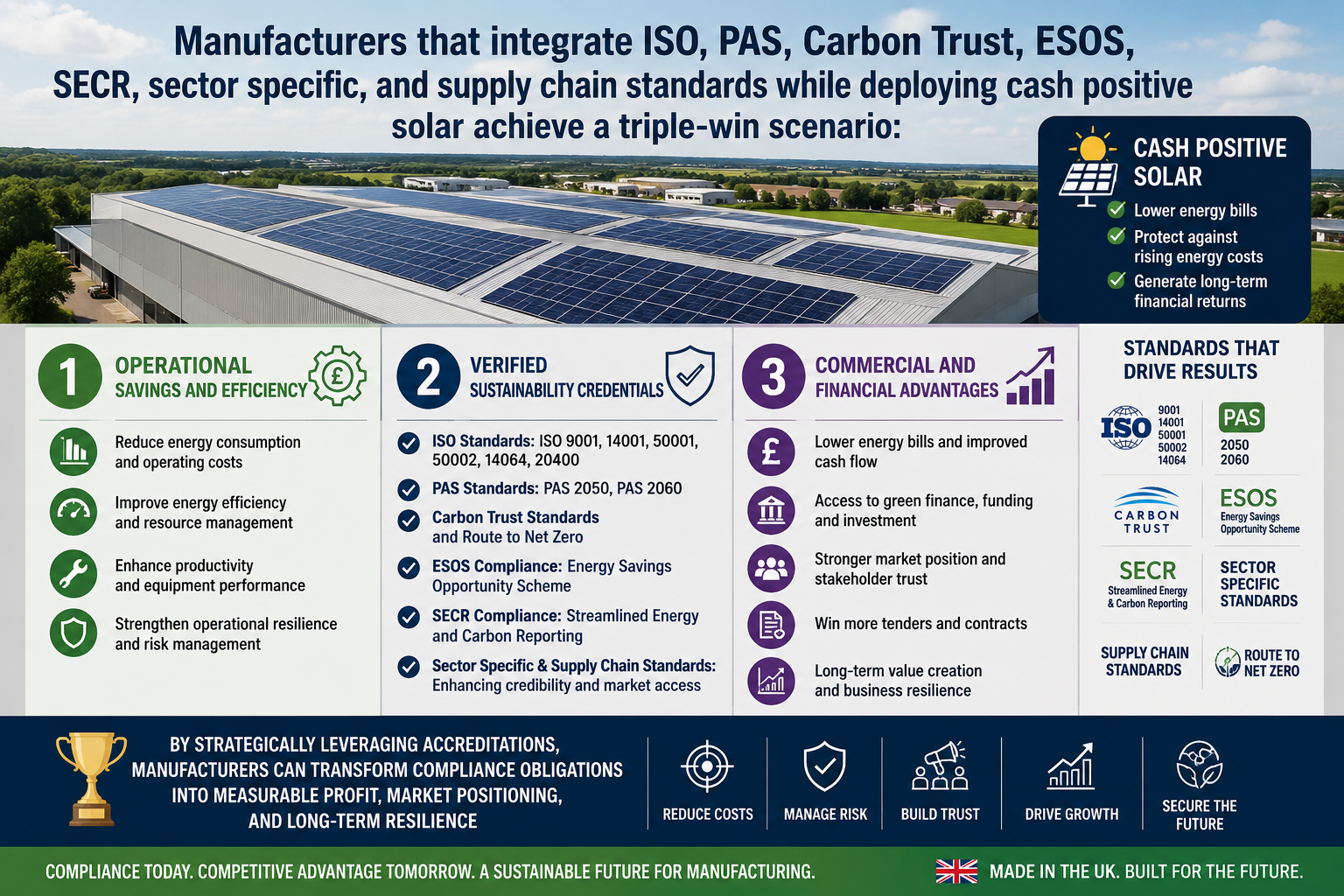
Manufacturers that integrate ISO, PAS, Carbon Trust, ESOS, SECR, sector specific, and supply chain standards while deploying cash positive solar achieve a triple-win scenario:
1. Operational savings and efficiency
2. Verified sustainability credentials
3. Commercial and financial advantages
By strategically leveraging accreditations, factory owners can transform compliance obligations into measurable profit, market positioning, and long-term resilience.
Additional Resource
If you’d like to learn more about operational improvement / cost reduction related accreditations, please request a complimentary copy of our factories guide book – Planet meets Profit.