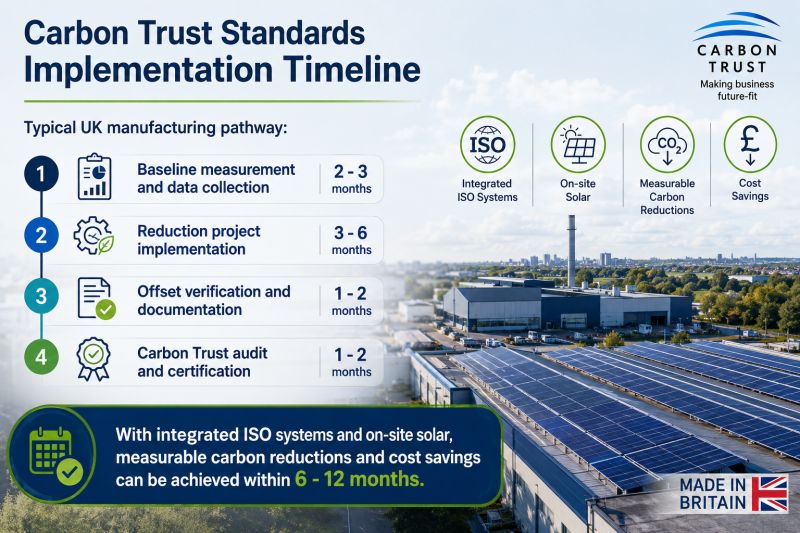
This is the typical manufacturing and engineering company pathway for The Carbon Trust standards implementation:
1. Baseline measurement and data collection: 2 – 3 months
2. Reduction project implementation: 3 – 6 months
3. Offset verification and documentation: 1 – 2 months
4. Carbon Trust audit and certification: 1 – 2 months
With integrated ISO systems and on-site solar, measurable carbon reductions and cost savings can be achieved within 6 – 12 months.
Key Takeaways for Manufacturers & Engineers
1. Carbon Trust Standards provide independent verification of carbon and energy reductions
2. Route to Net Zero certification formalises a credible pathway to net zero emissions
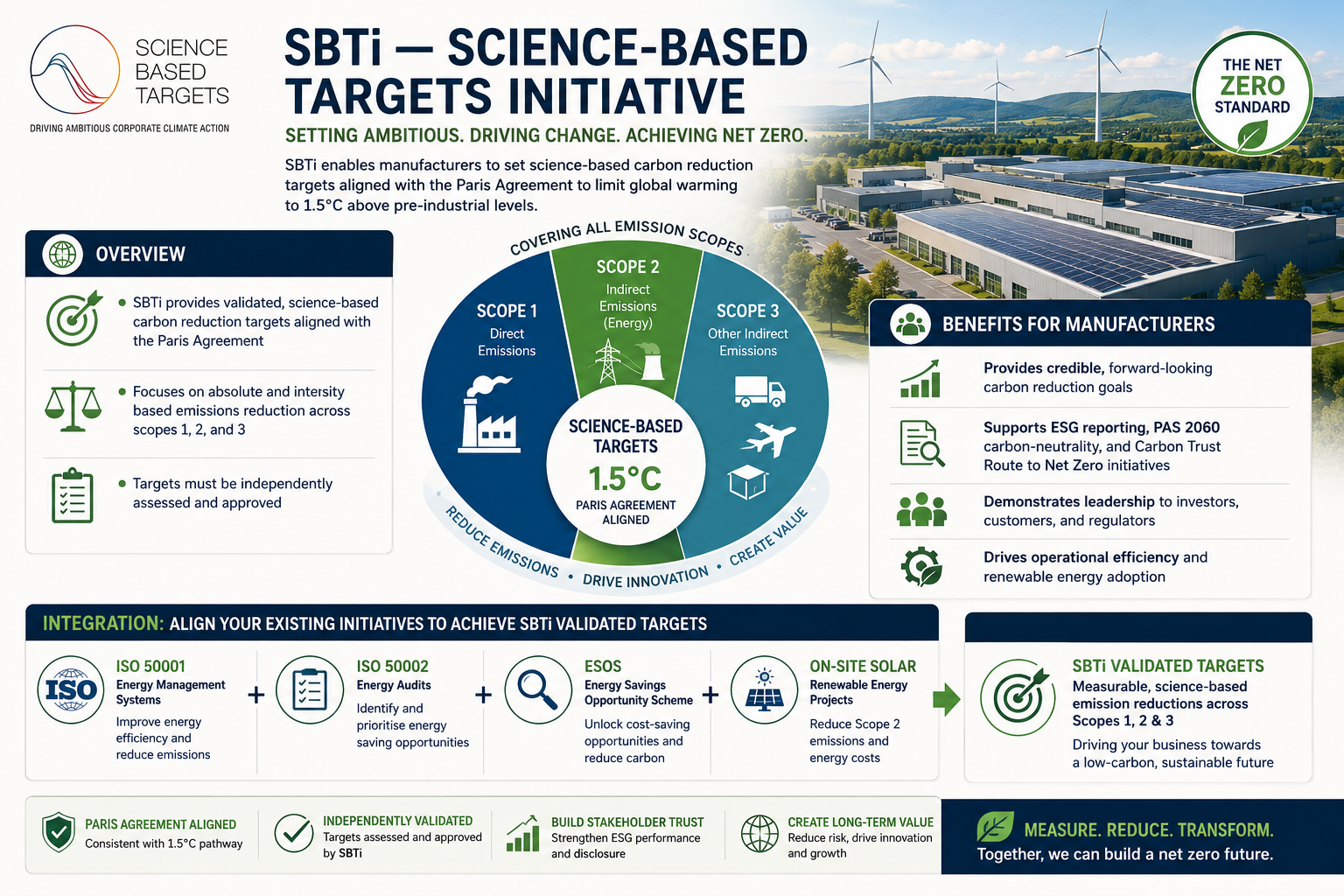
3. Integration with ISO 50001, ISO 14001, ISO 14064, ISO 14067, and PAS 2060 maximises operational and commercial benefits
4. Cash positive solar provides immediate energy cost savings, verified carbon reductions, and ROI
5. Verified certification strengthens tender eligibility, investor confidence, and market competitiveness
What Comes Next
With Carbon Trust Standards and Route to Net Zero certification, manufacturers and engineers:
1. Have a verified, integrated carbon and energy reduction strategy
2. Can claim carbon neutral products (PAS 2060)
3. Can demonstrate measurable energy and operational savings (ISO 50001 & ISO 50002)
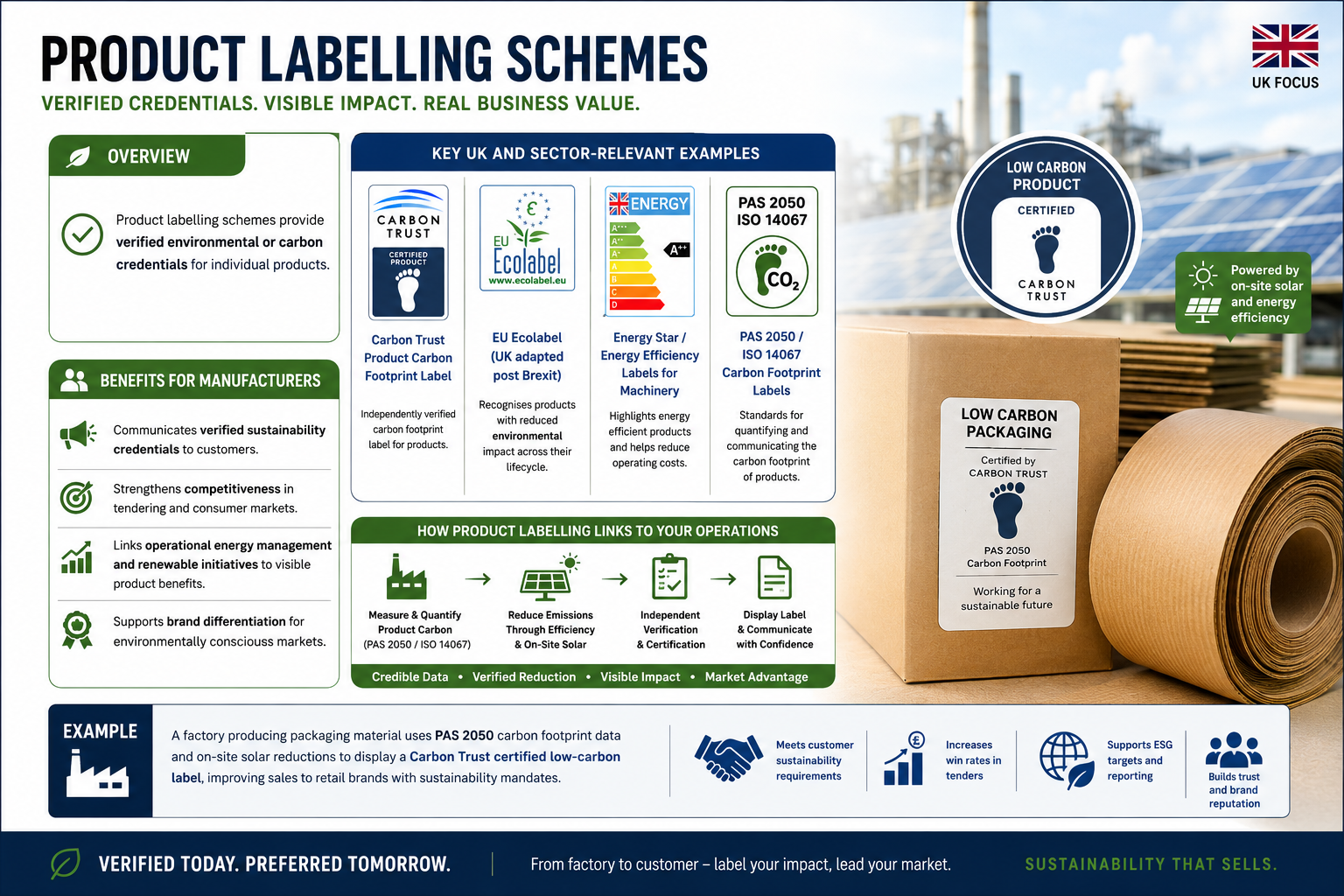
4. Are fully prepared for product level carbon footprint verification (ISO 14067 / PAS 2050)
5. Have a clear, credible pathway to net-zero emissions that enhances profitability and market competitiveness
Additional Resource
If you’d like to learn more about ISO and other operational improvement / cost reduction related accreditations, please request a complimentary copy of our factories guide book – Planet meets Profit.