What is ‘Responsible Sourcing Standards’ and how does it benefit UK manufacturing and engineering companies?
Beyond ISO standards, PAS, ESOS, SECR, and Carbon Trust certifications, UK manufacturers and engineers have access to a range of sector specific or voluntary schemes.
We’re providing you with an overview – whilst detailing the benefits – in this latest manufacturing and engineering education series.
Key schemes include EMAS, B Corp, Responsible Sourcing Standards, SBTi validation, and product labelling schemes.
These can:
1. Complement energy, carbon, and environmental management efforts
2. Provide additional credibility for tenders, investors, and customers
3. Enable differentiation in competitive markets
4. Support ESG and corporate responsibility objectives
Our third scheme showcased is ‘Responsible Sourcing Standards’
Overview:
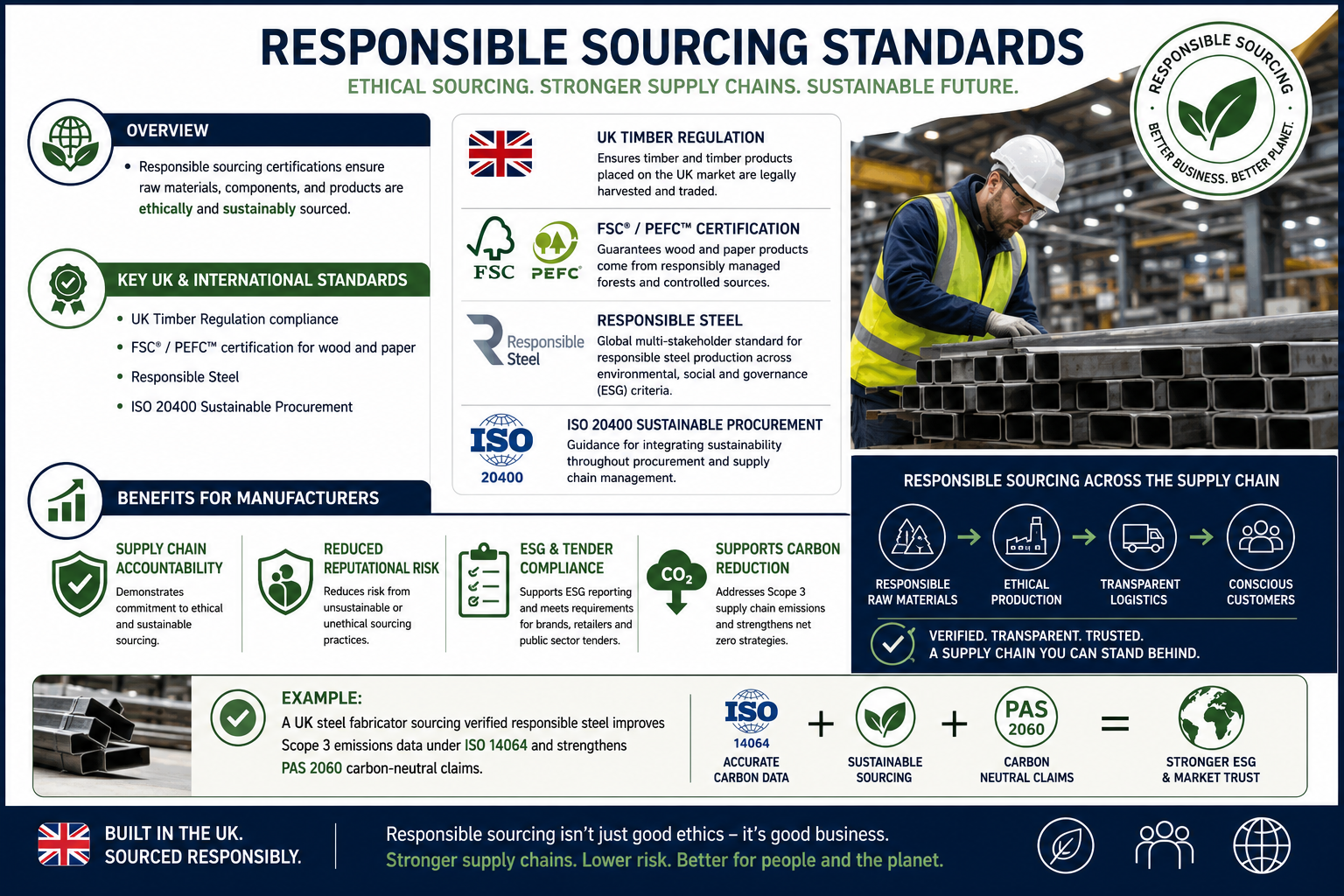
1. Responsible sourcing certifications ensure raw materials, components, and products are ethically and sustainably sourced
2. Key UK and international standards include:
a. UK Timber Regulation compliance
b. FSC / PEFC certification for wood and paper
c. Responsible Steel and ISO 20400 sustainable procurement
Benefits for manufacturers:
1. Demonstrates supply chain accountability and sustainability
2. Reduces reputational risk from unsustainable sourcing practices
3. Supports ESG reporting and tender compliance for brands and retailers
4. Complements carbon reduction schemes by considering scope 3 supply chain emissions
Example:
A UK steel fabricator sourcing verified responsible steel improves Scope 3 emissions data under ISO 14064 and strengthens PAS 2060 carbon-neutral claims.
Additional Resource
If you’d like to learn more about Responsible Sourcing Standards, and other operational improvement / cost reduction related accreditations, please request a complimentary copy of our factories guide book – Planet meets Profit.