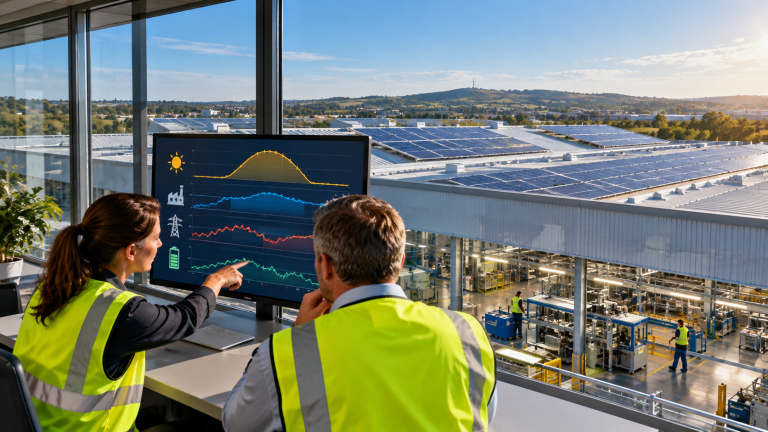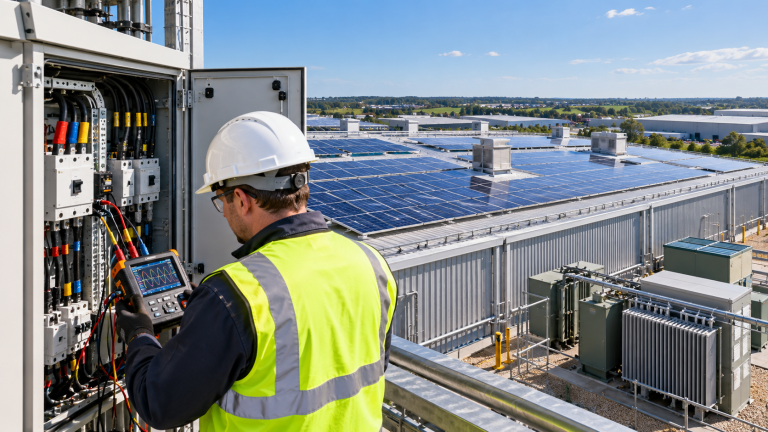
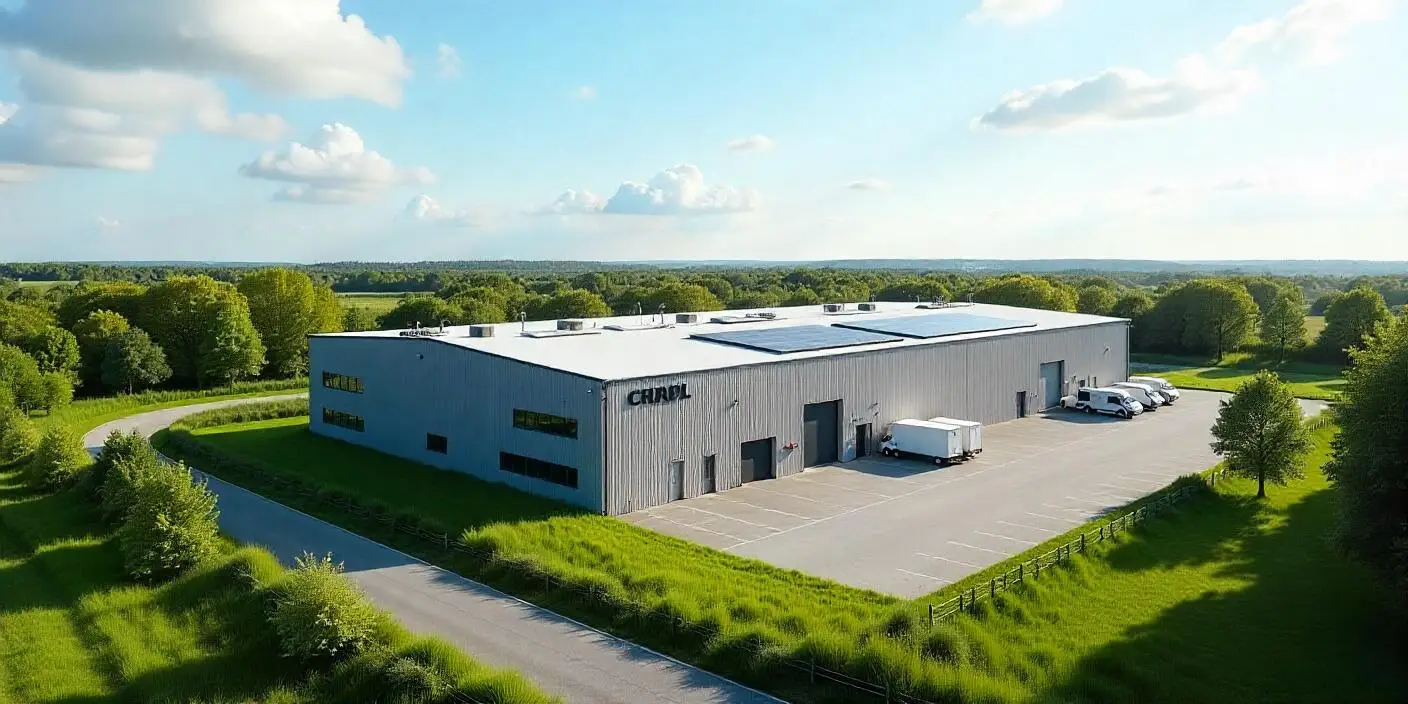
Let’s dive into why your big, underutilised rooftop is a solar goldmine.
1. Big Roofs, Big Potential
Think of your rooftop as prime real estate. Every square meter up there represents an opportunity to capture sunlight and turn it into savings.
The bigger the roof, the more panels you can install. The more panels you install, the more energy you generate. And the more energy you generate, the more you save.
It’s like playing Tetris but with sunlight – and the only thing you’re stacking is profit.
Here’s a fun fact…
A typical industrial solar panel can generate about 300 watts of power.
With just 1,000 square meters of rooftop space, you could install roughly 600 panels, producing enough electricity to power dozens of homes – or, more importantly, your energy-hungry operations.
2. A Rooftop with Solar That Works Overtime
Your roof is already working full-time protecting your building.
But why stop there?
Solar panels let your roof pull double duty. While it keeps the weather out, the panels soak up sunlight and convert it into electricity for your business.
And the best part?
Solar panels don’t need lunch breaks, health insurance, or overtime pay.
They just sit there, soaking up the sun, and generating energy like the reliable overachievers they are.
3. Energy Where You Need It
One of the biggest advantages of installing solar panels on your roof is that the energy they generate is used right where it’s produced.
No need for long-distance power transmission that wastes energy along the way.
Your rooftop with solar generates the electricity, and your machines, lights, and coffee machines use it.
It’s the shortest supply chain you’ll ever see – and it’s 100% efficient.
4. Free Real Estate, No Rent to Pay
Here’s the beauty of your roof…
It’s already paid for. No monthly rent, no mortgage.
It’s just sitting there, waiting for you to turn it into an asset.
Installing your rooftop with solar doesn’t require you to buy more land or build new infrastructure. You’re simply making better use of what you already have.
Think of it like finding a forgotten £50 note in your jacket pocket – except this £50 – keeps giving back for the next 25 years.
5. Perfect for Large-Scale Energy Needs
If your business consumes a lot of electricity, a large rooftop solar system is a no-brainer.
Industrial operations often run machines, lights, HVAC systems, and more – all of which gulp down electricity faster than a dehydrated camel.
With a rooftop solar setup, you can offset a significant portion of your electricity use.
For example…
A manufacturing facility spending £20,000 a month on electricity could easily reduce its energy costs by 50% or more with the right solar installation.
That’s like giving yourself an annual raise of £120,000 – and who doesn’t love a raise?
6. Solar Panels Are Low-Maintenance Workhorses
Let’s address a common worry…
“But won’t I have to spend a fortune maintaining all those panels?”
Absolutely not.
Solar panels are practically the golden retrievers of technology – reliable, low-maintenance, and always ready to work.
Once installed, they require very little attention.
A simple annual cleaning and inspection are usually enough to keep them in top shape. They have no moving parts, so there’s nothing to wear out or break down. They just sit there, silently working for you, year after year.
7. Climate Control for Your Building
Here’s a bonus perk…
Solar panels can actually help regulate the temperature inside your building. By covering your roof, they act as a barrier that reduces heat absorption during the summer. This means your building stays cooler, and you spend less on airconditioning.
Think of it as giving your roof a stylish pair of sunglasses – it’s functional and fabulous.
8. The Green Factor: Marketing Gold
In today’s world, being eco-friendly isn’t just good for the planet – it’s good for business.
Customers, partners, and investors love companies that take sustainability seriously.
By installing solar panels, you’re making a bold statement: “We care about the environment, and we’re doing something about it.”
Your rooftop solar system isn’t just an energy solution; it’s a giant green billboard.
Every client or customer who visits your facility will see those gleaming panels and know you are part of the solution, not the problem.
9. Government Incentives and Perks
Installing solar panels isn’t just good for your bottom line – it’s often subsidised by the government.
Depending on where you’re located, you might qualify for tax breaks, grants, or feed-in tariffs.
For example, in the UK…
- The Smart Export Guarantee (SEG) allows you to sell excess electricity back to the grid.
- The government allow you to write off the full installation cost against company profits – saving you the corporation tax – making the return on investment much quicker.
It’s like the government saying, “Thanks for helping the planet. Here’s some extra cash.”
10. Futureproofing Your Business
Energy prices are unpredictable, but one thing’s for sure – they’re not going down anytime soon.
By investing in solar, you’re locking in lower energy costs for the next 25 years or more.
It’s like buying a lifetime supply of coffee at today’s prices – except instead of caffeine, you’re getting clean, renewable energy.
And with every energy price hike, you’ll feel like a genius for making the switch.