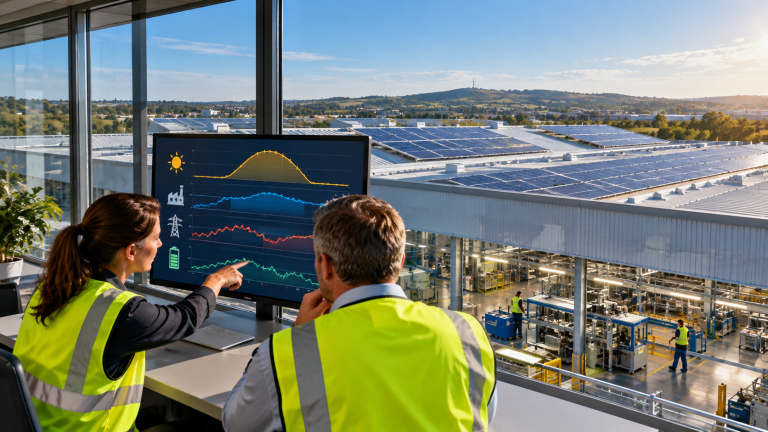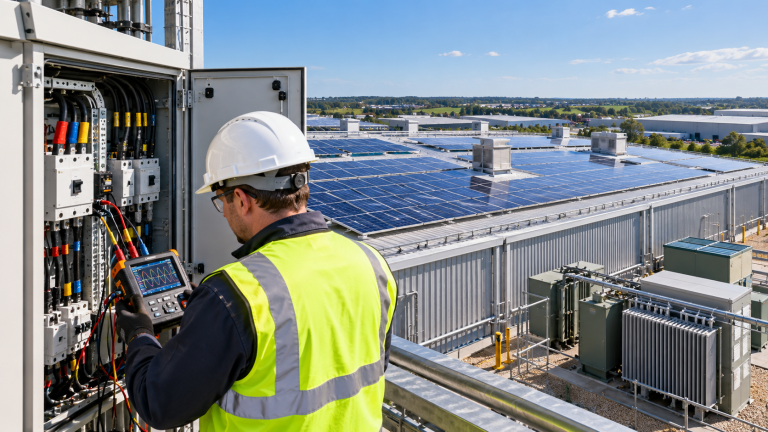
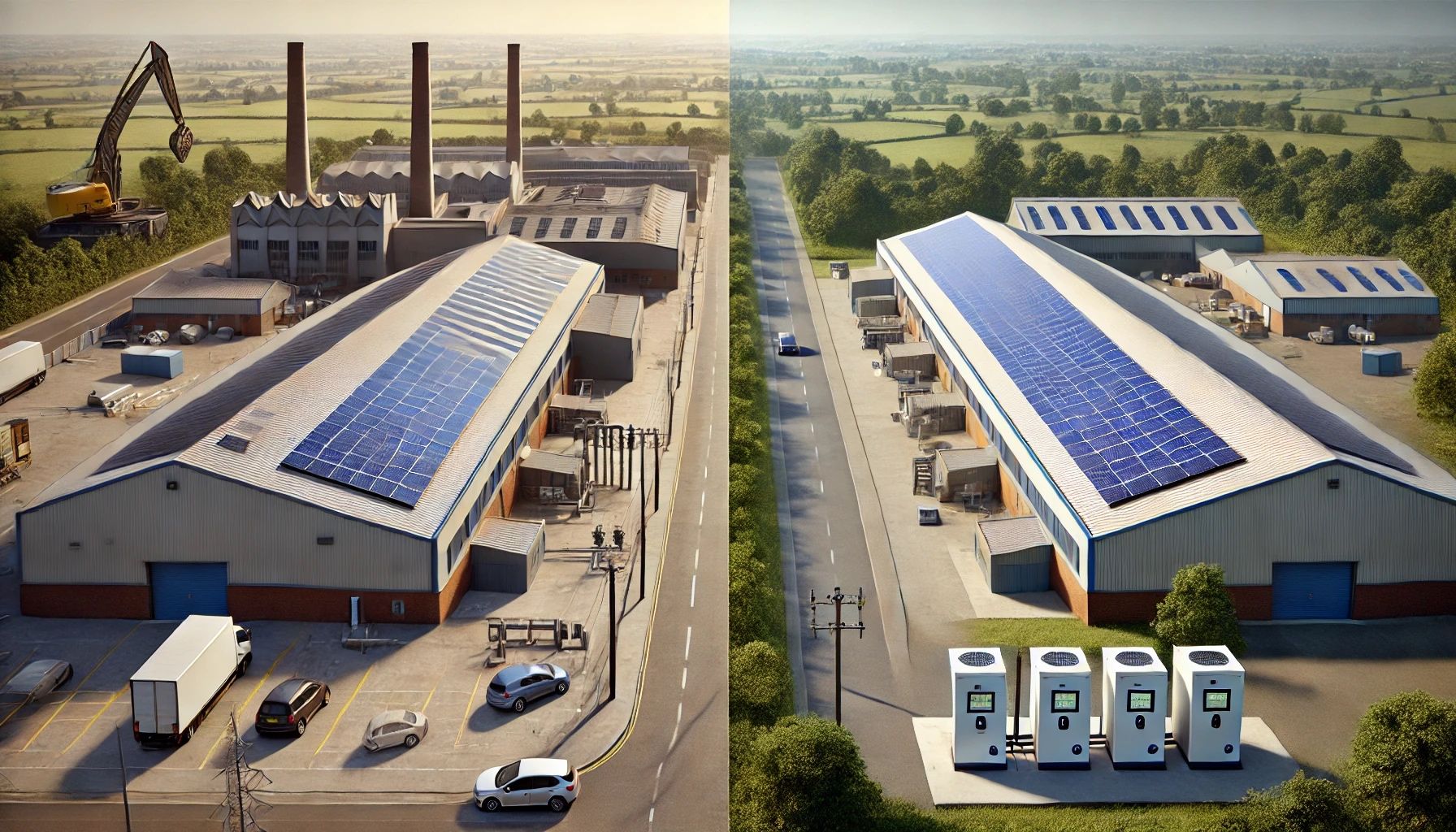
As UK factories increasingly adopt solar energy, a crucial decision is whether to choose a grid-tied or an off-grid solar system.
Each approach has its advantages, but the best fit depends on your factory’s energy needs, operational priorities, and budget.
This post explores the differences, benefits, and considerations of both systems – helping you decide the the best solar system for factories in 2025 and beyond.
1. What Are Grid-Tied and Off-Grid Systems?
Grid-Tied Systems:
These systems are connected to the national electricity grid.
During sunny hours, solar panels power your factory and any excess energy can be exported back to the grid.
When solar production is insufficient, your factory draws power from the grid as usual.
Off-Grid Systems:
Off-grid setups are completely independent from the grid.
They rely on solar panels combined with battery storage (and sometimes backup generators) to meet all your factory’s energy needs at all times.
2. Benefits of Grid-Tied Systems for Factories
Grid-tied solar is the most common and cost-effective choice for UK factories:
✅ Lower upfront costs:
No need for large battery systems.
✅ Sell excess power:
Benefit from the Smart Export Guarantee (SEG), earning for surplus energy fed back into the grid.
✅ Grid reliability:
You draw power when solar isn’t generating, ensuring continuous operations.
✅ Simpler maintenance:
Fewer components mean less upkeep and lower complexity.
For factories with reliable grid connections and daytime operations, grid-tied systems provide predictable savings and financial returns, so are probably the best solar solution for factories in this situation.
3. When Off-Grid Makes Sense
Off-grid solar is less common for factories but can be advantageous when:
✅ Grid supply is unreliable or unavailable:
Remote sites or areas prone to outages.
✅ Critical operations need guaranteed power:
Off-grid systems with batteries and generators can provide high resilience.
✅ Desire for complete energy independence:
Factories seeking to control every aspect of their power usage.
However, off-grid requires significant investment in batteries and backup systems, with higher maintenance and complexity.
4. Cost Considerations
Grid-Tied:
Typically 20 – 30% cheaper upfront since no large battery bank is needed. Operating costs are generally lower due to simpler technology.
Off-Grid:
Higher upfront costs driven by batteries, inverters, and possibly backup generators. Lifespan of batteries and replacement costs should be factored in.
Factoring in maintenance and replacement cycles is crucial for total cost of ownership analysis.
5. Regulatory & Incentive Landscape
Grid-tied systems benefit from existing incentives like the Smart Export Guarantee (SEG), which rewards exporting surplus solar energy.
Off-grid systems do not export power, so they miss out on these revenue streams.
However, off-grid can enhance sustainability credentials for factories aiming for complete independence from fossil fuels.
Conclusion…
For most UK factories, grid-tied solar systems offer the best balance of cost, simplicity, and financial return. Making them the best solar system for factories in most situations.
Off-grid is an option for specialised cases with critical power needs or poor grid access.
Consult with a solar expert who can assess your factory’s energy use, immediate cash positive payment solutions, site conditions, and goals to recommend the ideal setup.