ISO 50001 integrates naturally with:
1. ISO 9001 – providing quality processes ensuring production consistency and efficiency
2. ISO 14001 – positioning energy as a significant environmental aspect; supports reduction targets
3. ISO 14064 – positioning verified energy data to support Scope 2 emissions accounting
4. ISO 14067/PAS 2050 – helping to reduce product carbon footprints by lowering energy intensity
This integration reduces duplication, strengthens audit readiness, and increases the commercial value of energy initiatives for manufacturers.
Linking ISO 50001 to Cash-Positive Solar
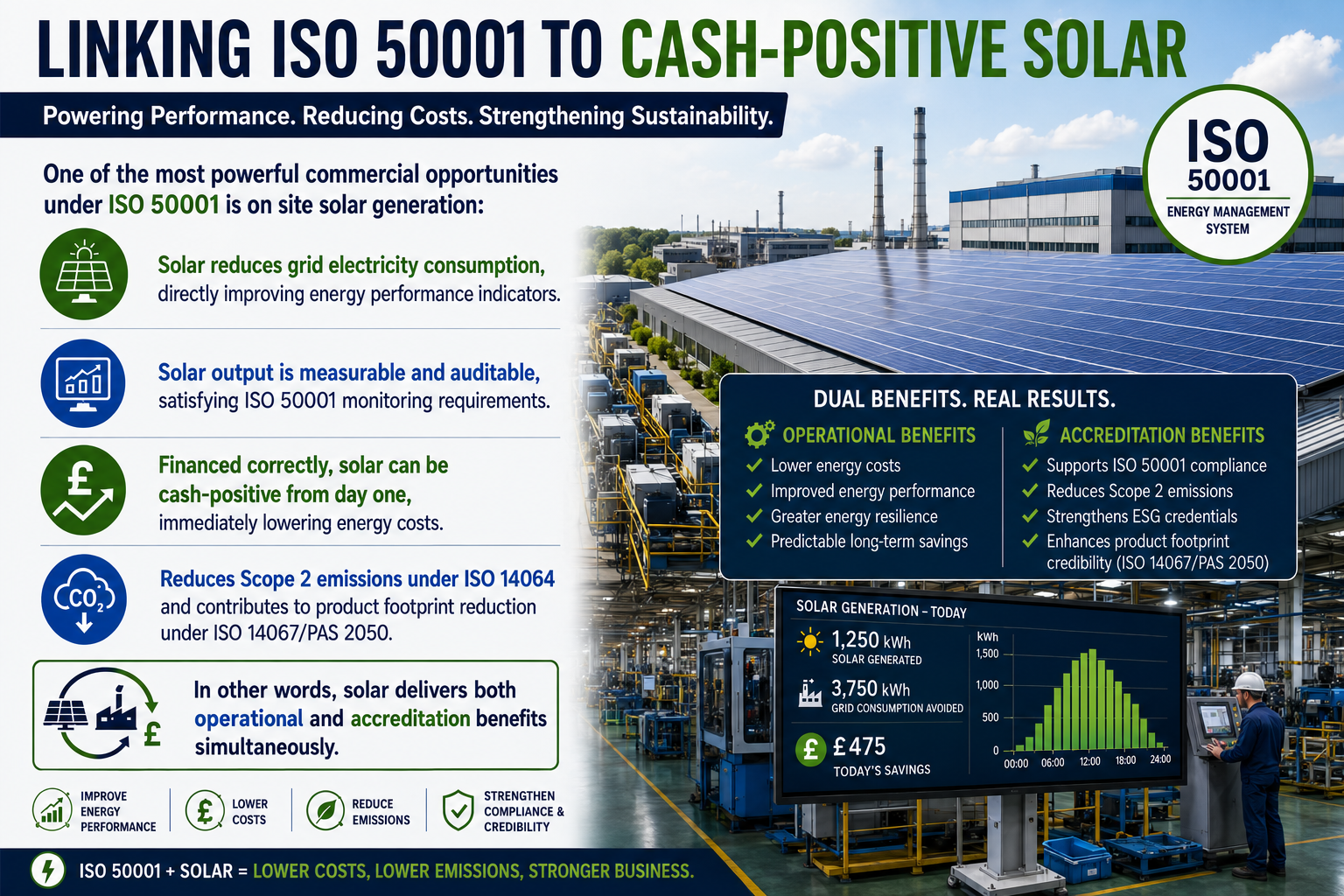
One of the most powerful commercial opportunities under ISO 50001 is on site solar generation:
1. Solar reduces grid electricity consumption, directly improving energy performance indicators
2. Solar output is measurable and auditable, satisfying ISO 50001 monitoring requirements
3. Financed correctly, solar can be cash-positive from day one, immediately lowering energy costs
4. Reduces Scope 2 emissions under ISO 14064 and contributes to product footprint reduction under ISO 14067/PAS 2050
In other words, solar delivers both operational and accreditation benefits simultaneously.
ISO 50001 Implementation Timeline and Typical Costs
For UK manufacturers and engineers:
1. Initial energy review and planning: 1 – 2 months
2. Operational control setup and monitoring: 2 – 3 months
3. Management review and performance tracking: ongoing
4. Certification audit: 1 – 2 months
Costs depend on:
1. Factory size and complexity
2. Current metering infrastructure
3. Level of integration with existing management systems
ROI is typically very attractive, especially when combined with energy efficiency projects and on-site renewable generation.
Key Takeaways for Manufacturers and Engineers
1. ISO 50001 is the most commercially impactful energy standard for UK factories
2. Focuses on measurable energy reductions and operational efficiency
3. Integration with ISO 9001, ISO 14001, ISO 14064, and ISO 14067 maximises value
4. Energy intensive processes represent the greatest opportunity for cost and carbon reduction
5. Cash positive solar is a high impact way to achieve energy targets while improving profit
What Comes Next
With ISO 50001 in place, manufacturers and engineers can:
1. Achieve verified carbon reductions under ISO 14064
2. Reduce product carbon footprints under ISO 14067 / PAS 2050
3. Demonstrate tangible cost savings and energy efficiency to customers, investors, and auditors
Additional Resource
If you’d like to learn more about ISO and other operational improvement / cost reduction related accreditations, please request a complimentary copy of our factories guide book – Planet meets Profit.