
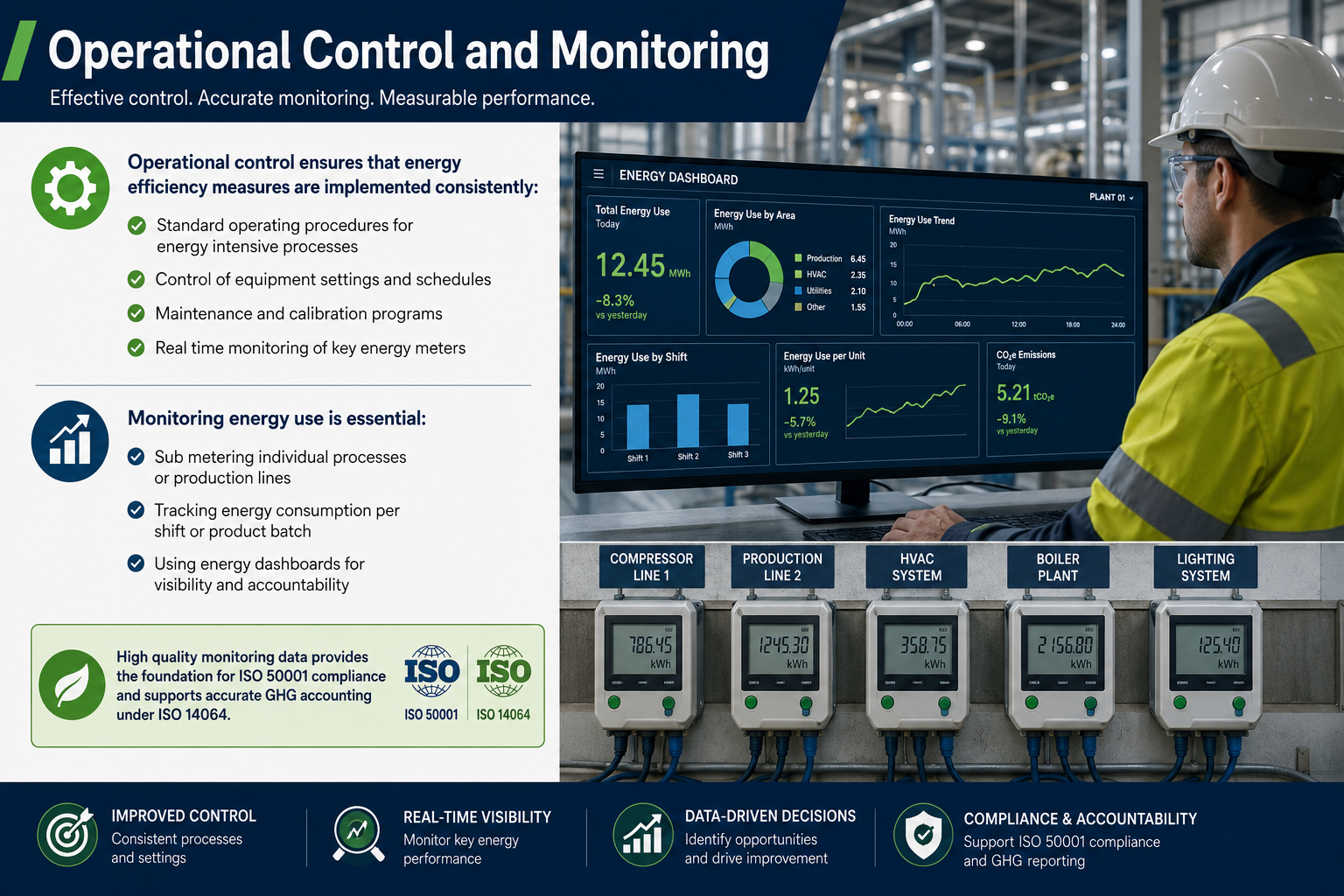
Because operational control ensures that energy efficiency measures are implemented consistently:
1. Standard operating procedures for energy intensive processes
2. Control of equipment settings and schedules
3. Maintenance and calibration programs
4. Real time monitoring of key energy meters
Monitoring energy use is essential to:
1. Sub metering individual processes or production lines
2. Tracking energy consumption per shift or product batch
3. Using energy dashboards for visibility and accountability
High quality monitoring data – through operational control – provides the foundation for ISO 50001 compliance and supports accurate GHG accounting under ISO 14064.
Management Review and Continuous Improvement
ISO 50001 also mandates regular management review, which should include:
1. Progress against energy objectives
2. Analysis of energy performance indicators
3. Status of energy efficiency projects
4. Opportunities for further improvement
Continuous improvement is achieved by:
1. Reviewing trends and variances
2. Conducting energy audits
3. Implementing cost effective energy saving measures
4. Updating energy baselines as efficiency measures are implemented
This cycle ensures that energy management is proactive rather than reactive.
Common Challenges for Manufacturers and Engineers
Common pitfalls in implementing ISO 50001 include:
1. Lack of senior management engagement
2. Incomplete operational control covering energy monitoring or metering
3. Energy management seen as a facility rather than operational responsibility
4. Poor communication of objectives to production teams
5. Failure to integrate with other ISO standards
Solutions:
1. Secure leadership buy in and energy policy alignment
2. Invest in sub-metering and monitoring systems for total operational control
3. Make energy KPIs visible on the shop floor
4. Integrate energy into existing ISO 9001 and ISO 14001 systems
Additional Resource
If you’d like to learn more about ISO and other operational improvement / cost reduction related accreditations, please request a complimentary copy of our factories guide book – Planet meets Profit.