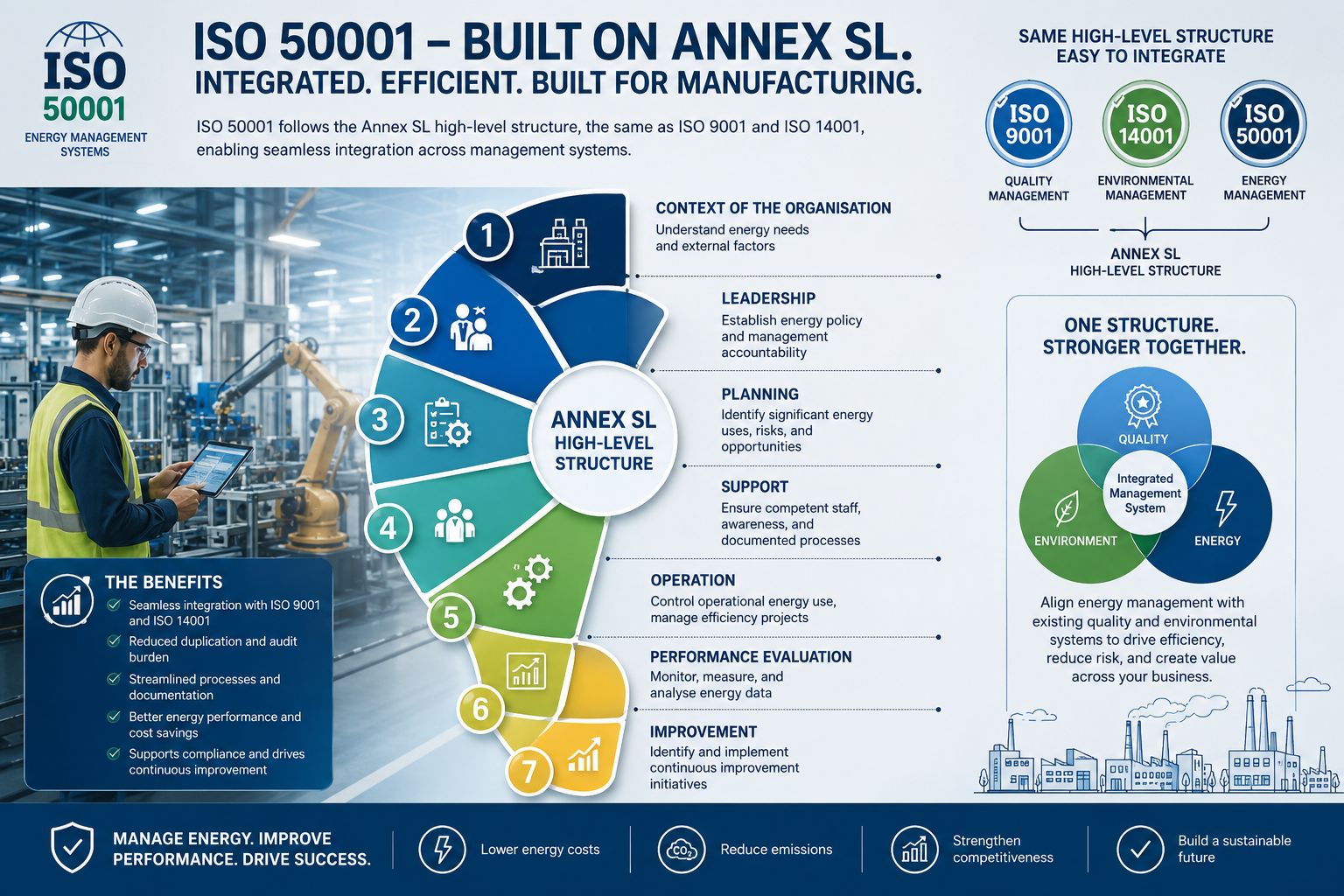
ISO 50001 follows the Annex SL high-level structure, like ISO 9001 and ISO
14001, which allows for seamless integration for manufacturing and engineering companies.
Here’s an example of the Annex SL high-level structure:
1. Context of the organisation – Understand energy needs and external factors
2. Leadership – Establish energy policy and management accountability
3. Planning – Identify significant energy uses, risks, and opportunities
4. Support – Ensure competent staff, awareness, and documented processes
5. Operation – Control operational energy use, manage efficiency projects
6. Performance evaluation – Monitor, measure, and analyse energy data
7. Improvement – Identify and implement continuous improvement initiatives
The Annex SL high-level structure allows manufacturers to align energy management with existing quality and environmental systems, reducing duplication and audit burden.
Energy Review – The Core of ISO 50001
The energy review is the central requirement of ISO 50001.
The energy review involves:
1. Identifying significant energy uses (SEUs) in the factory
2. Analysing energy consumption patterns
3. Determining energy efficiency opportunities
4. Establishing baseline energy performance
Example areas…
1: Compressed air system
Energy use: 25% of electricity
Opportunity: Leak detection and reduction
2: HVAC
Energy use: 15% of electricity
Opportunity: Optimisation and variable speed drives
3: Lighting
Energy use: 10% of electricity
Opportunity: LED upgrades and motion sensors
4: Process heating
Energy use: 30% of electricity
Opportunity: Heat recovery or improved insulation
5: Production equipment
Energy use: 20% of electricity
Opportunity: Scheduling and downtime management
By targeting SEUs, manufacturers and engineers can prioritise energy saving projects with the highest return on investment.
Setting Energy Objectives and Targets
ISO 50001 requires measurable energy objectives and performance
indicators, such as:
1. kWh per unit of product
2. Gas or electricity intensity per tonne produced
3. Reduction in peak demand charges
Effective objectives are:
1. Specific, measurable, achievable, relevant, time-bound (SMART)
2. Reviewed regularly and integrated into management review
3. Supported by operational staff to ensure practical implementation
Objectives must balance cost reduction, operational feasibility, and energy performance improvement.
Additional Resource
If you’d like to learn more about ISO and other operational improvement / cost reduction related accreditations, please request a complimentary copy of our factories guide book – Planet meets Profit.