
Why is energy auditing best practise for manufacturing and engineering companies?
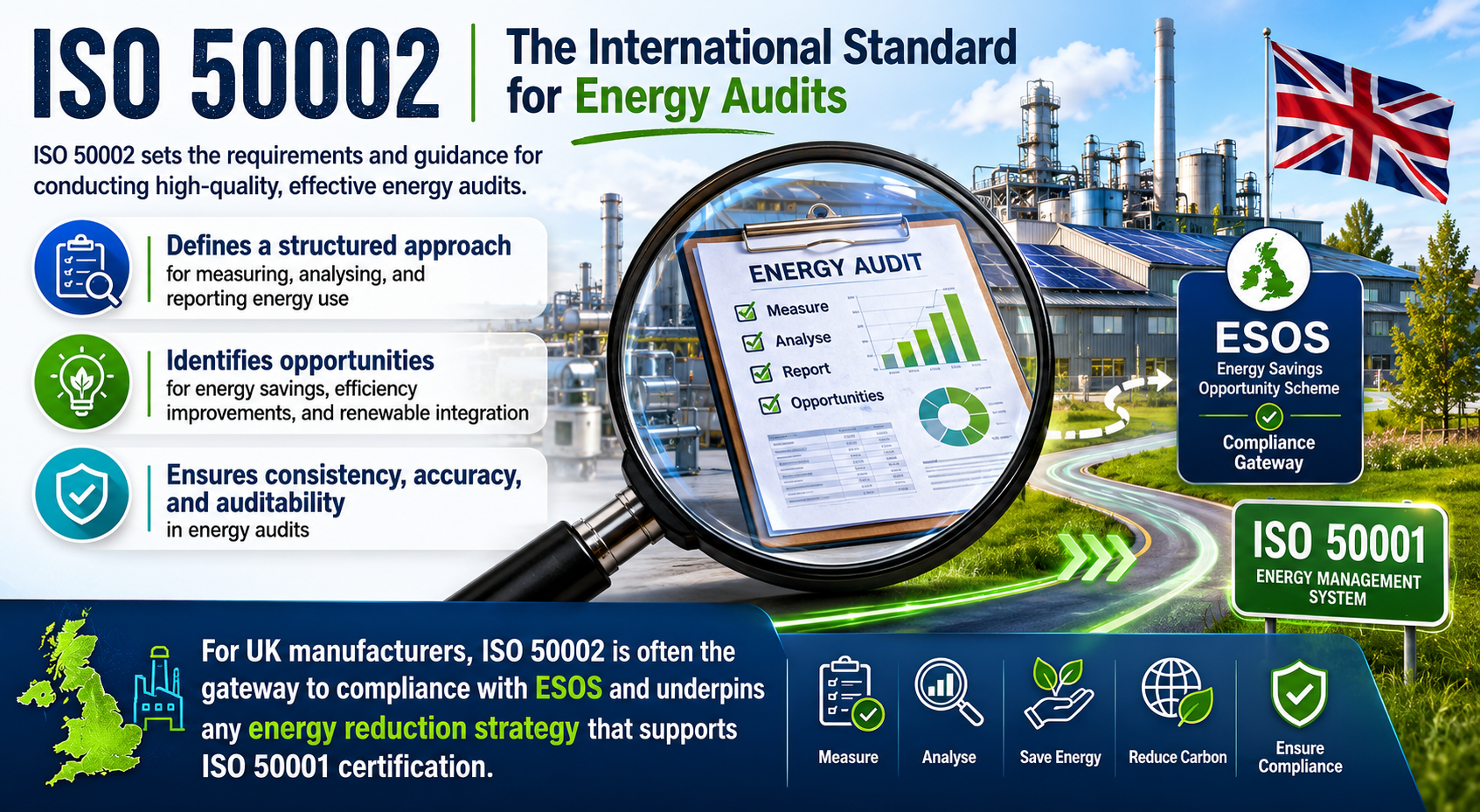
ISO 50002 is the international standard providing requirements and guidance for conducting energy audits.
Unlike ISO 50001, which establishes an energy management system, ISO 50002:
1. Defines a structured approach for measuring, analysing, and reporting energy use
2. Identifies opportunities for energy savings, efficiency improvements, and renewable integration
3. Ensures consistency, accuracy, and auditability in energy audits
For UK manufacturers and engineers, ISO 50002 is often the gateway to compliance with ESOS (Energy Savings Opportunity Scheme) and underpins any energy reduction strategy that supports ISO 50001 certification.
Why Energy Auditing Matters to Manufacturers and Engineers
Energy audits are a financially and operationally critical tool for factories:
1. Energy typically represents 5 – 20% of total manufacturing costs
2. Unidentified inefficiencies increase operational expenditure and reduce competitiveness
3. Verified audit findings provide justification for capital investment in efficiency and on site generation
Energy audits also provide the data required for:
1. ISO 50001 EnMS (Energy Management System) performance indicators
2. ISO 14064 Scope 2 emission calculations
3. Product carbon foot printing (ISO 14067/PAS 2050)
Without formal audits, energy saving opportunities may remain hidden and untapped.
Additional Resource
If you’d like to learn more about ISO and other operational improvement / cost reduction related accreditations, please request a complimentary copy of our factories guide book – Planet meets Profit.