
Common Challenges and Solutions for manufacturers and engineers when integrating ISO 50002 with ISO 50001
1st Challenge:
Incomplete historical energy data
Solution:
Implement sub metering and standardised data logging
2nd Challenge:
Lack of engagement from operational teams
Solution: Communicate ROI and link audit recommendations to daily workflow
3rd Challenge: Difficulty prioritising opportunities
Solution: Use cost-benefit analysis with payback period and carbon reduction metrics
4th Challenge: Slow implementation
Solution: Integrate recommendations with ISO 50001 objectives and management review
Addressing these challenges ensures audits lead to actionable, measurable, and profitable outcomes.
Implementation Timeline
Typical timeline for a medium sized UK factory:
1. Preparation and scoping: 2 – 3 weeks
2. Data collection: 4 – 6 weeks
3. Analysis and reporting: 2 – 3 weeks
4. Implementation tracking: ongoing
Combined with ISO 50001, the entire audit to implementation cycle can deliver measurable cost and carbon reductions within 3 – 6 months.
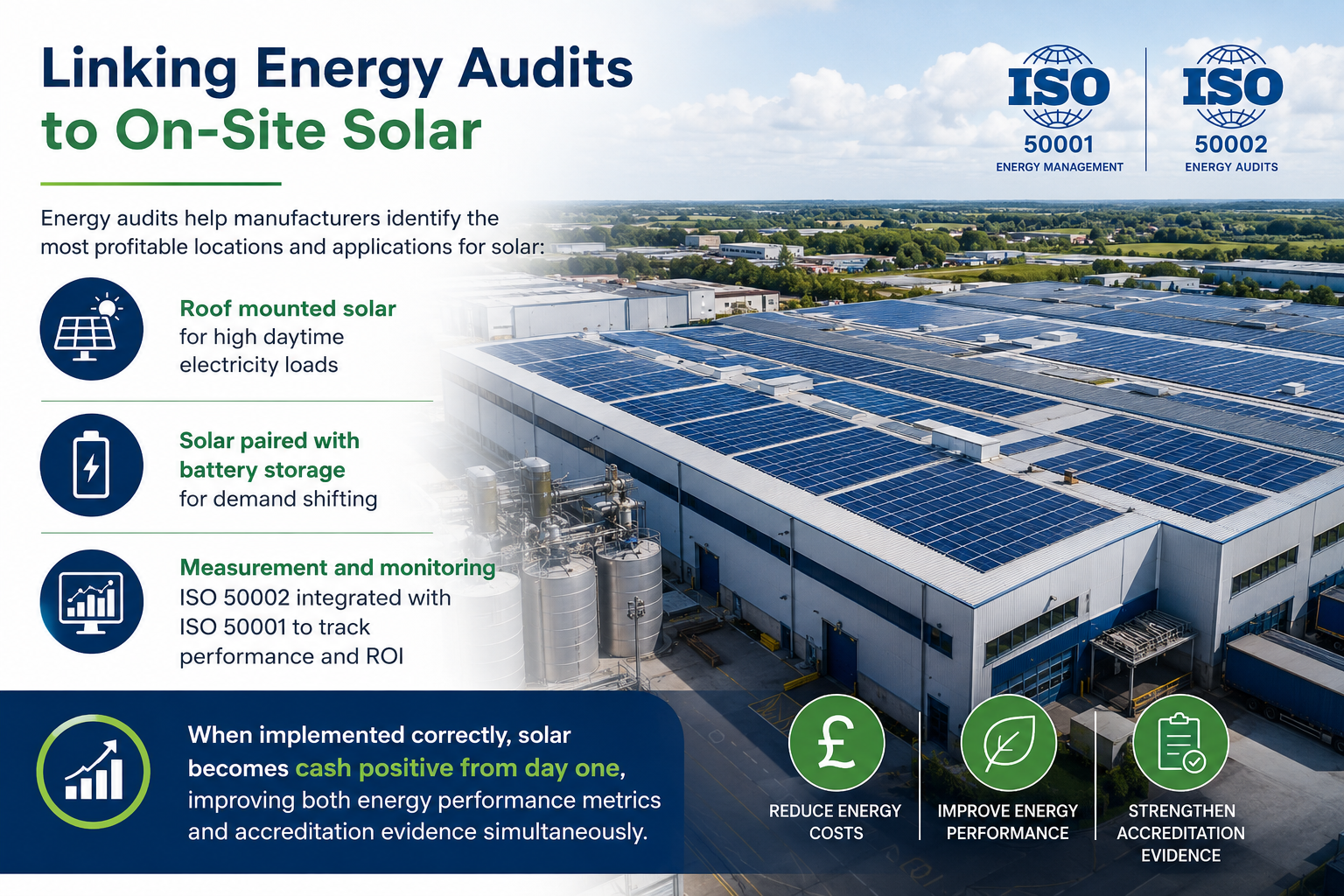
Linking Energy Audits to Onsite Solar
Energy audits help manufacturers identify the most profitable locations and applications for onsite solar:
1. Roof mounted onsite solar for high daytime electricity loads
2. Onsite solar paired with battery storage for demand shifting
3. Measurement and monitoring integrated with ISO 50001 to track performance and ROI
When implemented correctly, onsite solar becomes cash positive from day one, improving both energy performance metrics and accreditation evidence simultaneously.
Key Takeaways for Manufacturers
1. ISO 50002 provides a structured, auditable approach to energy audits
2. Audits identify cost savings, efficiency improvements, and carbon reduction opportunities
3. Integration with ISO 50001, ISO 14001, ISO 14064, and product carbon foot printing maximises both operational and commercial value
4. On site solar can be strategically deployed based on audit findings, delivering immediate cash positive results
5. Energy audits are both a compliance requirement and a profit driver
What Comes Next
With ISO 50002 audits completed, manufacturers are equipped to:
1. Optimise energy management under ISO 50001
2. Verify emissions reductions under ISO 14064
3. Reduce product carbon footprints under ISO 14067/PAS 2050
4. Plan profitable energy and solar investments
Additional Resource
If you’d like to learn more about ISO and other operational improvement / cost reduction related accreditations, please request a complimentary copy of our factories guide book – Planet meets Profit.