What’s the impact for manufacturers and engineers when linking PAS 2060 to other accreditations?
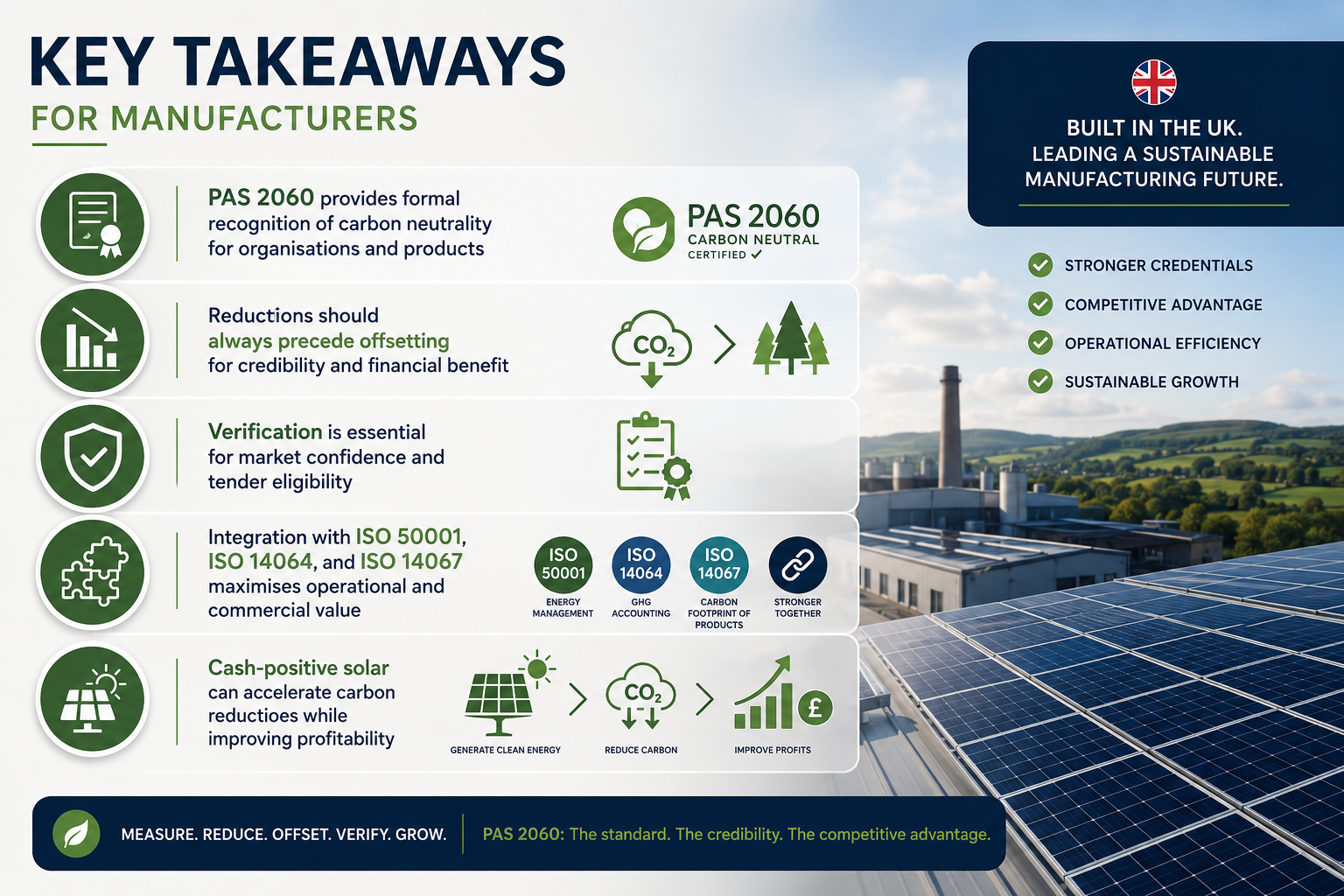
PAS 2060 is most effective when integrated with existing standards:
Standard – ISO 50001
Benefit – Demonstrates measured energy reductions for Scope 2 emissions
Standard: ISO 14064
Benefit: Provides verified organisational GHG emissions baseline
Standard: ISO 14067 / PAS 2050 Benefit: Links product carbon footprints to carbon neutral claims
Standard: ISO 14001
Benefit: Ensures operational control and environmental management support
Integration with other accreditations ensures efficiency, consistency, and audit readiness, while also improving commercial outcomes.
Commercial Advantages of PAS 2060
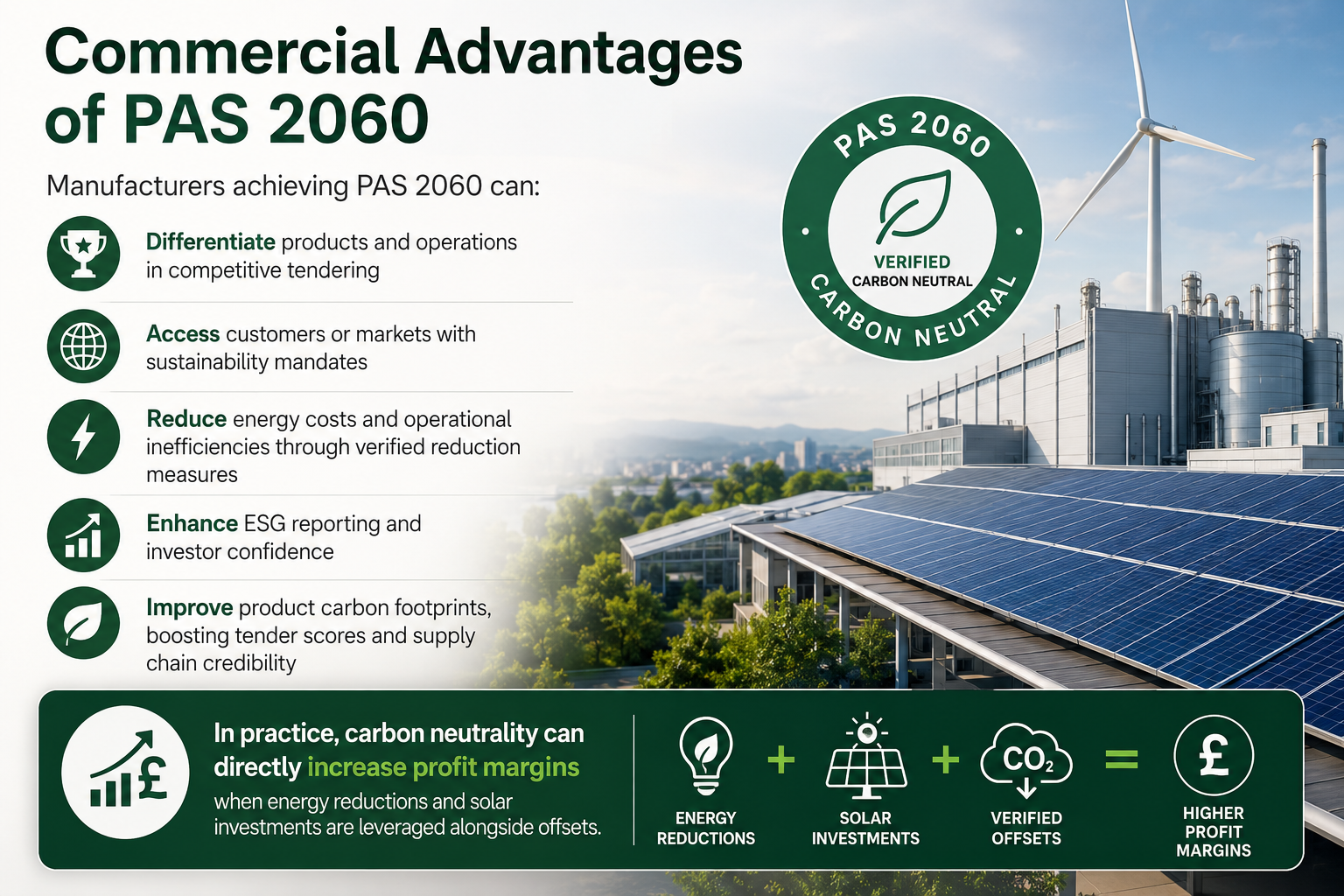
Manufacturers and engineers achieving PAS 2060 can:
1. Differentiate products and operations in competitive tendering
2. Access customers or markets with sustainability mandates
3. Reduce energy costs and operational inefficiencies through verified reduction measures
4. Enhance ESG reporting and investor confidence
5. Improve product carbon footprints, boosting tender scores and supply chain credibility
In practice, carbon neutrality can directly increase profit margins when energy reductions and solar investments are leveraged alongside offsets.
Additional Resource
If you’d like to learn more about ISO and other operational improvement / cost reduction related accreditations, please request a complimentary copy of our factories guide book – Planet meets Profit.