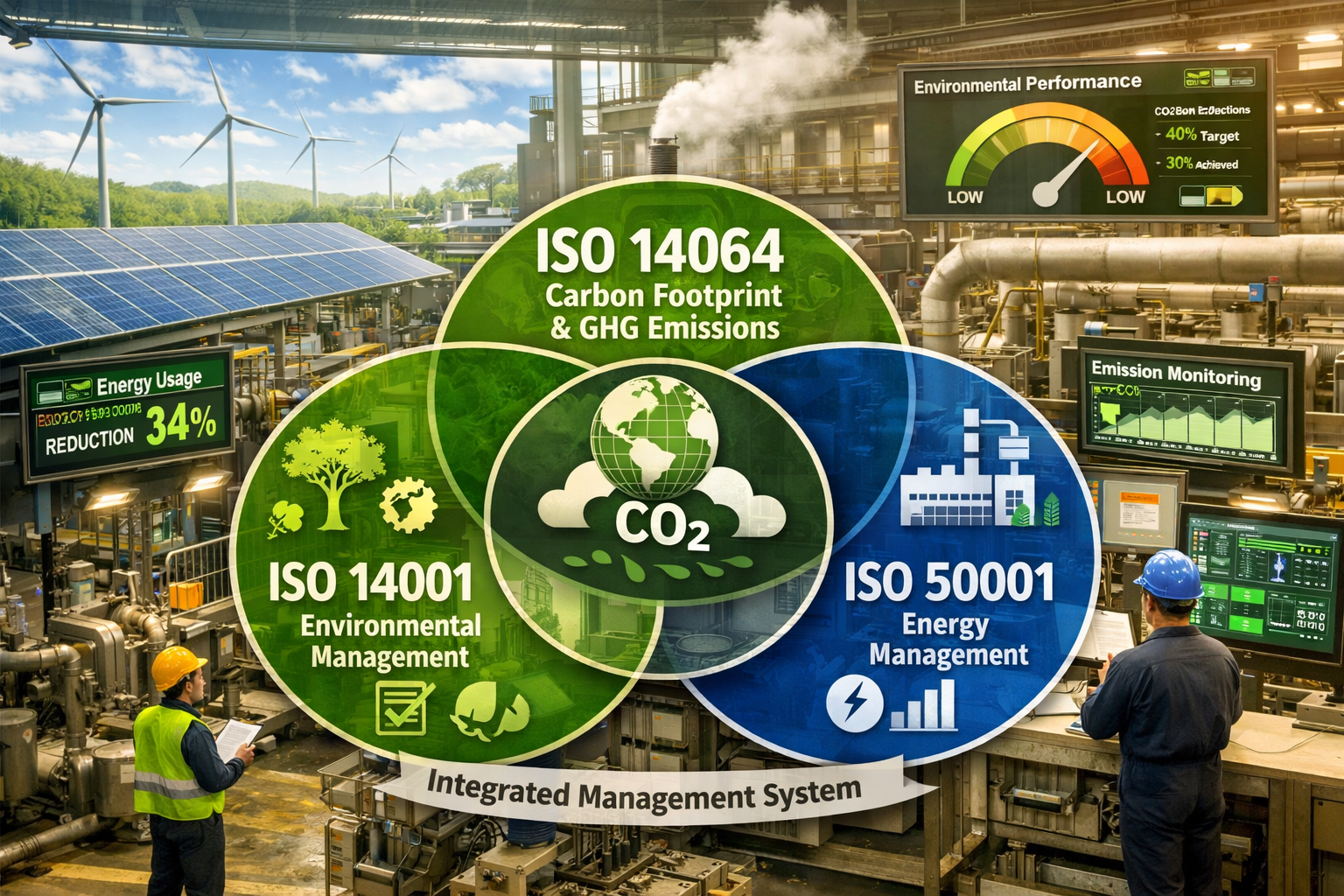

UK manufacturing is operating in a fundamentally different environment than it was even five years ago.
Energy costs have become volatile and structurally higher, supply chains are under unprecedented scrutiny, customers are demanding verifiable environmental performance, and regulators now expect transparent reporting on energy use and carbon emissions.
What was once “good practice” is now commercially essential.
Accreditations covering quality, environmental management, energy efficiency and carbon reduction are no longer optional extras reserved for large multinationals.
They are fast becoming:
1. Gatekeepers to contracts and tenders
2. Proof points for supply chain inclusion
3. Evidence demanded by investors, insurers and lender
4. Frameworks that unlock real operational savings
For manufacturers and factory owners, the question is no longer whether to engage with ISO standards, energy schemes and carbon frameworks – but how to do so in a way that improves profitability rather than adding cost and complexity.
Our new book has been written to answer that exact challenge.
Who This Book Is For?
This book is designed specifically for:
1. Owners and directors of UK manufacturing businesses
2 Factory managers and operations directors
3. Energy, facilities and environmental managers
4. Finance directors and commercial decision makers
5. Sustainability and compliance leads
It assumes:
1. You are running a real factory with real energy bills
2. You care about profit, resilience and competitiveness
3. You want practical clarity, not abstract sustainability theory
No prior expertise in ISO standards, carbon accounting or energy regulation is required. Each chapter is written to be understandable, commercially grounded, and directly applicable to operational manufacturing environments.
Why Accreditations Matter?
Historically, accreditations were often pursued for one of three reasons:
1. A major customer demanded them
2. A sector norm made them unavoidable
3. A quality or environmental manager championed them internally
Today, accreditations serve a much broader and more powerful role.
They now:
1. Standardise how performance is measured, making claims credible
2. Reduce operational risk through structured management systems
3. Lower costs by identifying inefficiencies (particularly energy waste)
4. Strengthen negotiating position with customers and suppliers
5. Future proof businesses against regulatory change
What do Accreditations Now Directly Influence?
In many sectors, accreditations now directly influence:
1. Tender scoring models
2. Preferred supplier lists
3. Long term framework agreements
4. Financing terms and insurance conditions
This is especially true where energy use and carbon emissions are material, which applies to almost all manufacturing environments.
Contact us for a complementary copy, or utilise your Amazon Prime account for free and fast delivery 😉