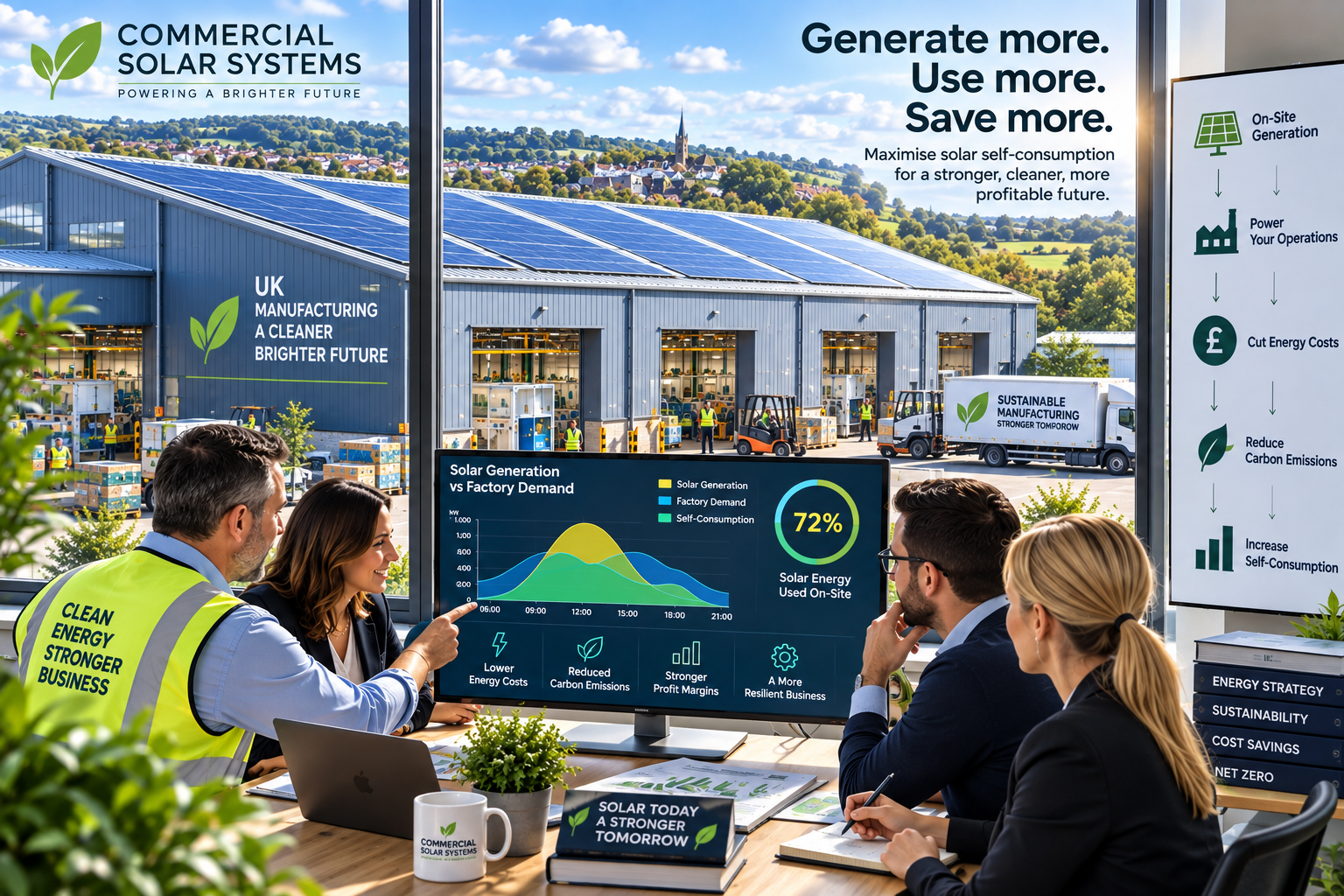

In the West Midlands, one of the UK’s busiest hubs for automotive supply chains, a manufacturer of precision car components was facing mounting cost pressures.
Their state-of-the-art CNC machinery, robotic welders, and paint spraying systems ran around the clock to meet just-in-time demands from global carmakers.
Electricity bills had reached £50,000 per month, and volatility in energy pricing made long-term planning nearly impossible.
The finance director described it bluntly:
“We can budget for raw materials, we can forecast labour, but energy? It’s a guessing game – and every spike in prices wipes out weeks of margin.”
When solar was first proposed, there was initial scepticism.
The managing director worried about downtime during installation and whether the factory’s roof structure could handle the load.
The finance team’s bigger concern was capital. Investing over a million pounds upfront wasn’t an option – not when cash needed to stay liquid for production expansion and R&D.
The breakthrough came with a rental model for solar. Under the arrangement, the company avoided any capital expense entirely.
Instead, it agreed to a fixed monthly payment for the solar system, which was much lower than what they were already paying for grid electricity.
From the very first day, the project was cash-positive, with no financial risk and no disruption to operations.
Installation took less than three months. Once live, the solar array began supplying 70% of their electricity demand.
Electricity bills that had averaged £50,000 were reduced to £15,000, with the solar rental coming in at £20,000.
The net result was a £15,000 immediate monthly saving on their electricity bills, projected to grow significantly as grid electricity costs inevitably rise in the future.
Over 20 years, the financial model forecasted savings in excess of £5 million, along with carbon emission reductions equating to more than 1,200 tonnes of CO₂ avoided.
For a supplier under constant scrutiny from major automotive brands pushing for greener supply chains, this was a pivotal advantage.
Soon after completing the installation, the factory used the solar project as a centrepiece in its marketing to customers.
Procurement teams from two global carmakers specifically highlighted the solar initiative as part of the reason they renewed supply contracts.
The managing director noted:
“We realised sustainability isn’t just good PR. It’s increasingly part of the contract requirements. Our panels are paying us back not just in savings on electricity bills, but in customer trust.”
Internally, staff morale also rose – employees took pride in working for a company actively investing in the future of the planet – and the HR team reported an easier time recruiting skilled engineers who valued sustainability minded employers.
For factories in the automotive supply chain, the case is clear:
‘Solar is not a distraction from core operations – it’s an enabler of stability, growth, customer retention – and much higher profits.’