
For years, a Yorkshire based textiles manufacturer had been fighting an uphill battle with rising operating expenses.
Specialising in high quality fabrics for both domestic and export markets, the business was heavily reliant on energy intensive machinery.
Dyeing vats, weaving looms, and humidity control systems consumed vast amounts of electricity.
By 2024, monthly energy bills had surged past £50,000, threatening to erode already tight margins.
When the managing director gathered his senior team to discuss options, one truth stood out:
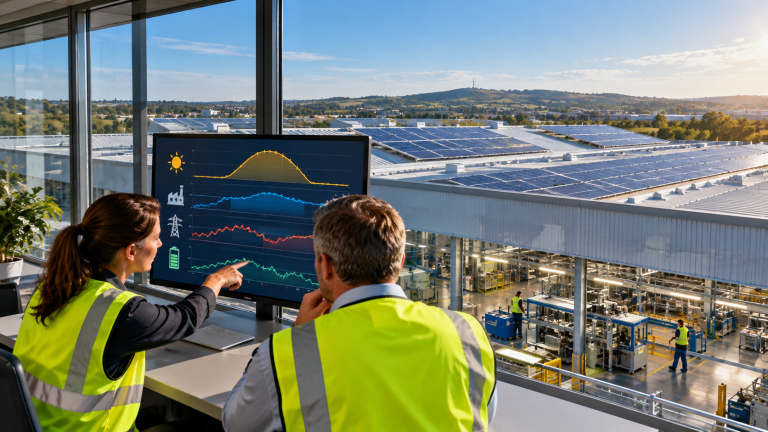
‘Their expansive factory roof was an underutilised asset – almost the entire rooftop (70,000 sq ft) was empty.’
Yet when a solar transformation was first mentioned, the finance director was concerned:
“We can’t tie up millions of pounds in panels when we need cash for materials and staff.”
That concern shifted once they explored immediate cash positive asset finance.
The factory could install a 1.5MW solar system without any capital outlay.
The financing plan meant fixed monthly repayments that were significantly lower than the equivalent grid energy cost.
From day one, the project was structured to be cash-positive, with the solar transformation generating more than enough savings to cover the financing charges.
Within five months, installation was complete, and the results were visible immediately:
✅ Grid purchased electric fell by over 60% during peak production hours.
✅ Monthly electric bills reduced by £18,000
✅ The monthly repayment for the solar asset was just £12,000.
✅ The first 5-year net effect was a monthly saving of £6,000.
✅ The post 5-year net effect was a monthly saving of £18,000.
The long-term projections were amazing…
Over 20 years, the company expects to save £5 – 6 million in avoided electricity purchases, while enjoying much needed protection against volatile energy prices.
The finance director described it as:
“The most impactful financial decision we’ve made in decades – better than renegotiating supplier contracts, better than automation upgrades. The solar transformation stabilises our future costs in a way no other investment can.”
But the numbers only tell half the story – in the competitive textiles market, sustainability is increasingly a differentiator.
By publishing their reduced emissions data – a direct result of the solar trandformation – the textile factory not only protected margins but also gained a marketing advantage.
Within months, two European apparel brands signed new supply contracts citing the factory’s demonstrable carbon reductions as a key reason for selection.
The managing director reflected:
“We didn’t just save money. We positioned ourselves as a supplier of choice in a crowded market.”
For finance directors across UK manufacturing, the lesson is clear:
By turning unused roof space into a power plant, companies can cut costs today, secure stability tomorrow, and win the loyalty of environmentally conscious customers.
…and this solar transformation was achieved with no capital outlay.