
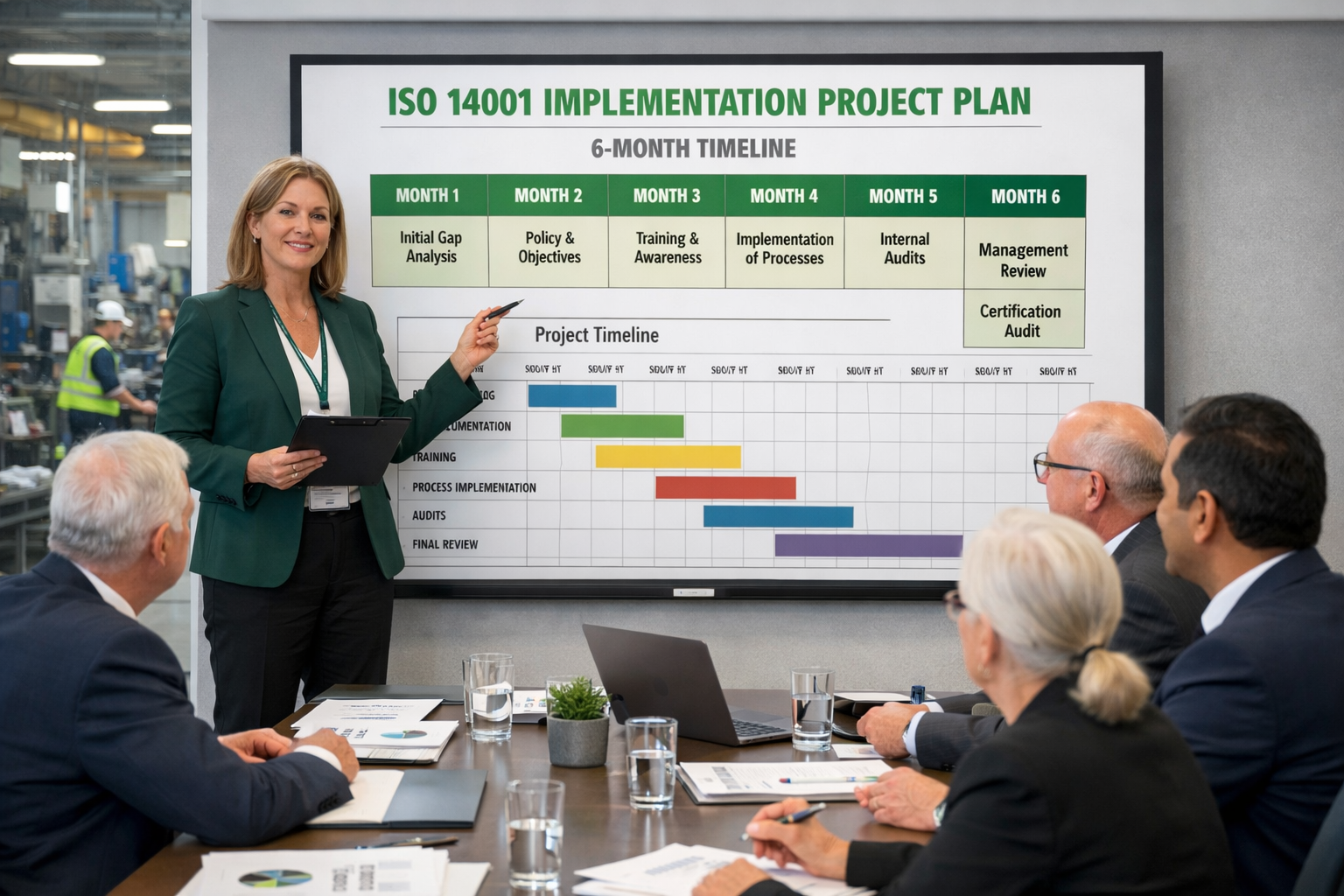
Here’s some practical considerations to help factories when implementing ISO 14001:
1. ISO 14001 implementation takes 4 – 6 months
2. Certification audits are annual
3. Recertification occurs every three years
Costs depend on:
1. Site complexity
2. Existing ISO 9001 maturity
3. Internal resource
Factories that integrate ISO 14001 with quality systems, environmental management systems, and an energy strategy, consistently achieve better outcomes at lower cost.
Key Takeaways
1. ISO 14001 provides a structured framework for environmental management systems
2. Energy is almost always a significant environmental aspect
3. The standard reduces risk and improves operational discipline
4. It unlocks measurable cost savings through efficiency
5. ISO 14001 is the natural bridge to energy and carbon accreditations
What Comes Next?
With quality and environmental management systems in place, manufacturers and engineers are ready to address energy in a structured, strategic way.
Our next series of articles examines ISO 14064 – Greenhouse Gas Quantification and Reporting, which introduces formal carbon measurement and verification – a critical step for modern supply chains.
Available Resources
If you’d like to learn more about ISO and other operational improvement / cost reduction related accreditations, please request a complimentary copy of our factories guide book – Planet meets Profit.