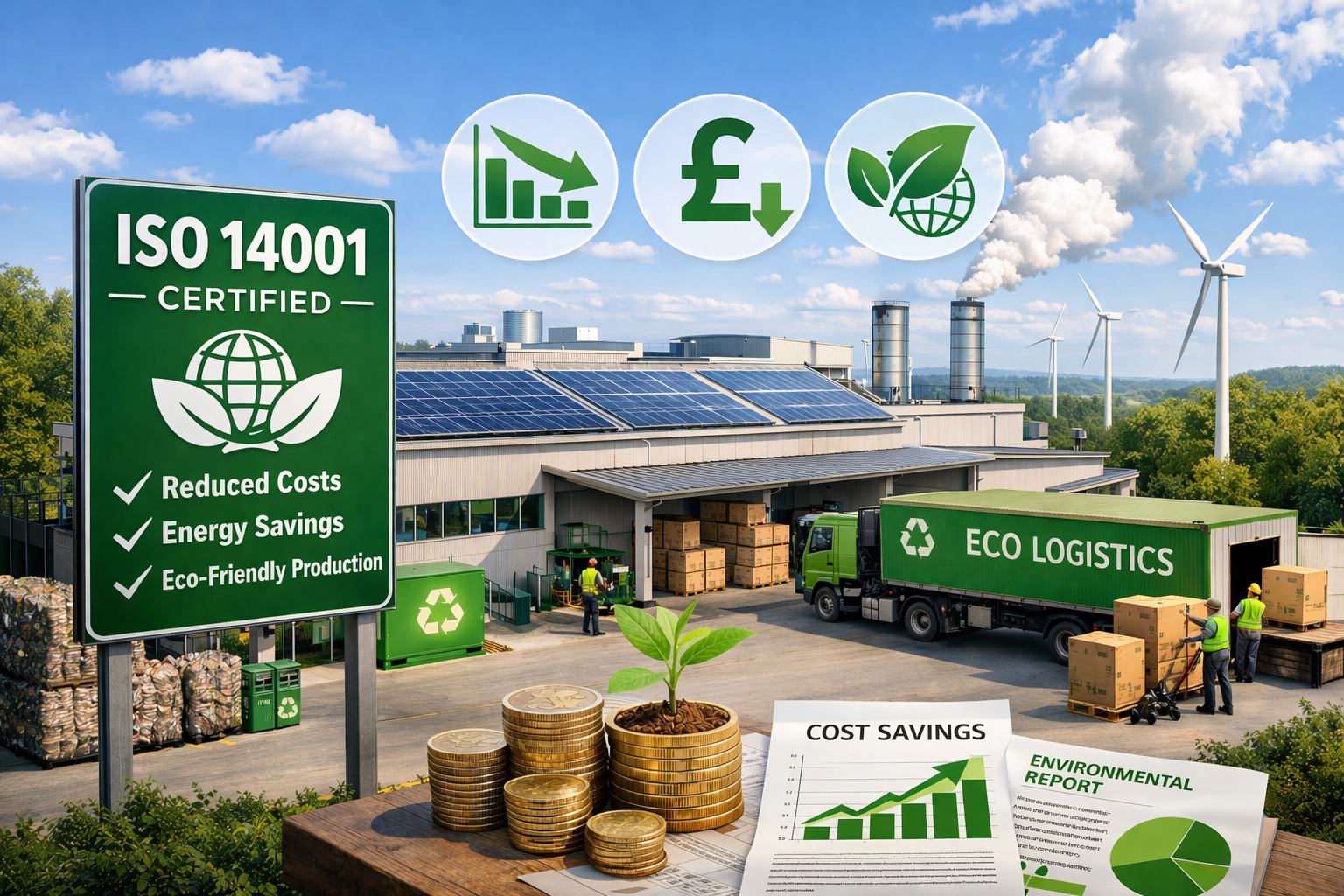
Manufacturers can benefit in three ways when implementing ISO 14001 correctly:
1. Commercially
2. Carbon footprint reduction
3. Increase in profits
The Commercial Benefits of ISO 14001
When implemented properly, ISO 14001 delivers:
1. Lower waste and disposal costs
2. Reduced environmental risk
3. Improved customer confidence
4. Better preparedness for carbon reporting
For many manufacturers, the financial gains from energy and waste reductions alone can far exceed certification costs.
ISO 14001 as a Bridge to Energy and Carbon Standards
ISO 14001 is often the stepping stone to:
1. ISO 50001 (Energy Management)
2. ISO 14064 (GHG accounting)
3. Carbon footprint reduction and net-zero frameworks
Because it:
1. Identifies energy as a significant aspect
2. Requires monitoring and improvement
3. Engages senior management
Manufacturers with ISO 14001 in place typically find energy and carbon accreditations far easier to implement.
The Role of On-Site Energy in ISO 14001
Although ISO 14001 does not mandate renewable energy, on-site generation such as solar:
1. Directly reduces a significant environmental aspect
2. Provides clear, auditable improvement evidence
3. Strengthens objective and target achievement
When financed correctly, solar:
1. Improves environmental performance
2. Reduces operating cost
3. Requires no upfront capital
This dual benefit is why solar features prominently in integrated accreditation strategies.
Available Resources
If you’d like to learn more about ISO 14001, and how it can help you with a documented environmental policy, operational control, energy and carbon footprint reduction, please request a complimentary copy of our factory accreditations and standards guide book – Planet meets Profit.