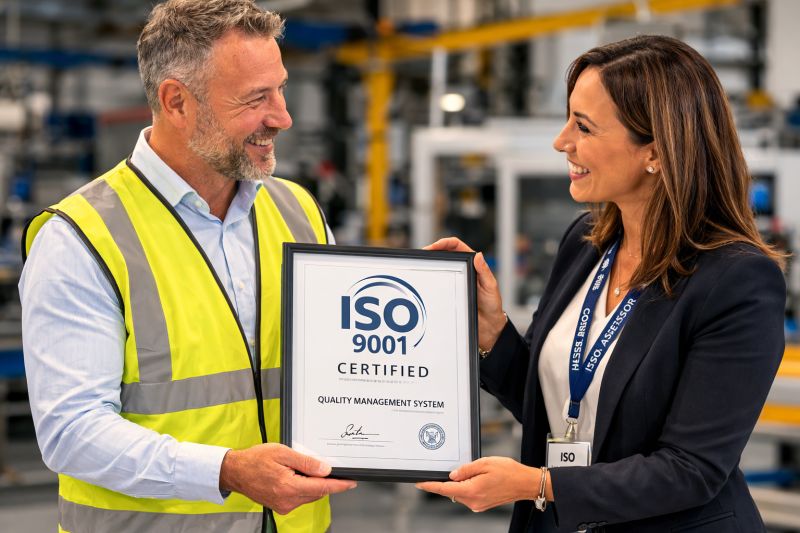
ISO 9001 is the world’s most widely recognised quality management standard.
In UK manufacturing, it has become the baseline accreditation against which operational credibility is judged, and ISO 9001 compliance for manufacturing is fast becoming a necessity.
At its core, ISO 9001 compliance for manufacturing:
1. Defines how a business consistently delivers products that meet customer and regulatory requirements
2. Requires processes to be documented, measured and improved
3. Focuses on prevention of defects rather than correction after the fact
What ISO 9001 compliance for manufacturing is not:
1. A product certification
2. A guarantee of perfect quality
3. A bureaucratic paperwork exercise (when implemented correctly)
ISO 9001 compliance for manufacturing is best understood as a management framework that stabilises operations, reduces risk and supports growth.
Why ISO 9001 Matters to Manufacturers?
In many manufacturing sectors, ISO 9001 is effectively a license to trade.
It is commonly:
1. A mandatory requirement for supplier approval
2. A pass/fail criterion in tenders
3. An expectation for contract manufacturing
Beyond market access, ISO 9001 delivers tangible internal benefits:
1. Reduced scrap and rework
2. Improved process consistency
3. Clearer accountability
4. Better customer satisfaction
These benefits directly impact:
1. Margin
2. Throughput
3. Reputation
For factories operating on tight margins, small improvements driven by ISO 9001 can have outsized financial impact.
Installing solar panels will also ease cash flow for factories operating on small margins, but is not the only link with ISO 9001.
ISO 9001:2015 emphasizes identifying risks and opportunities:
Installing solar panels is a strategic move to manage the risk of rising energy prices and potential grid failures, aligning with the “context of the organisation” requirement.
And modern quality management often incorporates environmental sustainability, viewing energy efficiency as a key component of operational efficiency.
In depth details on how ISO 9001 links to solar and the range of accreditations available to manufacturers is covered in our book – Profit meets Planet.
Contact us and ask for a complementary copy.