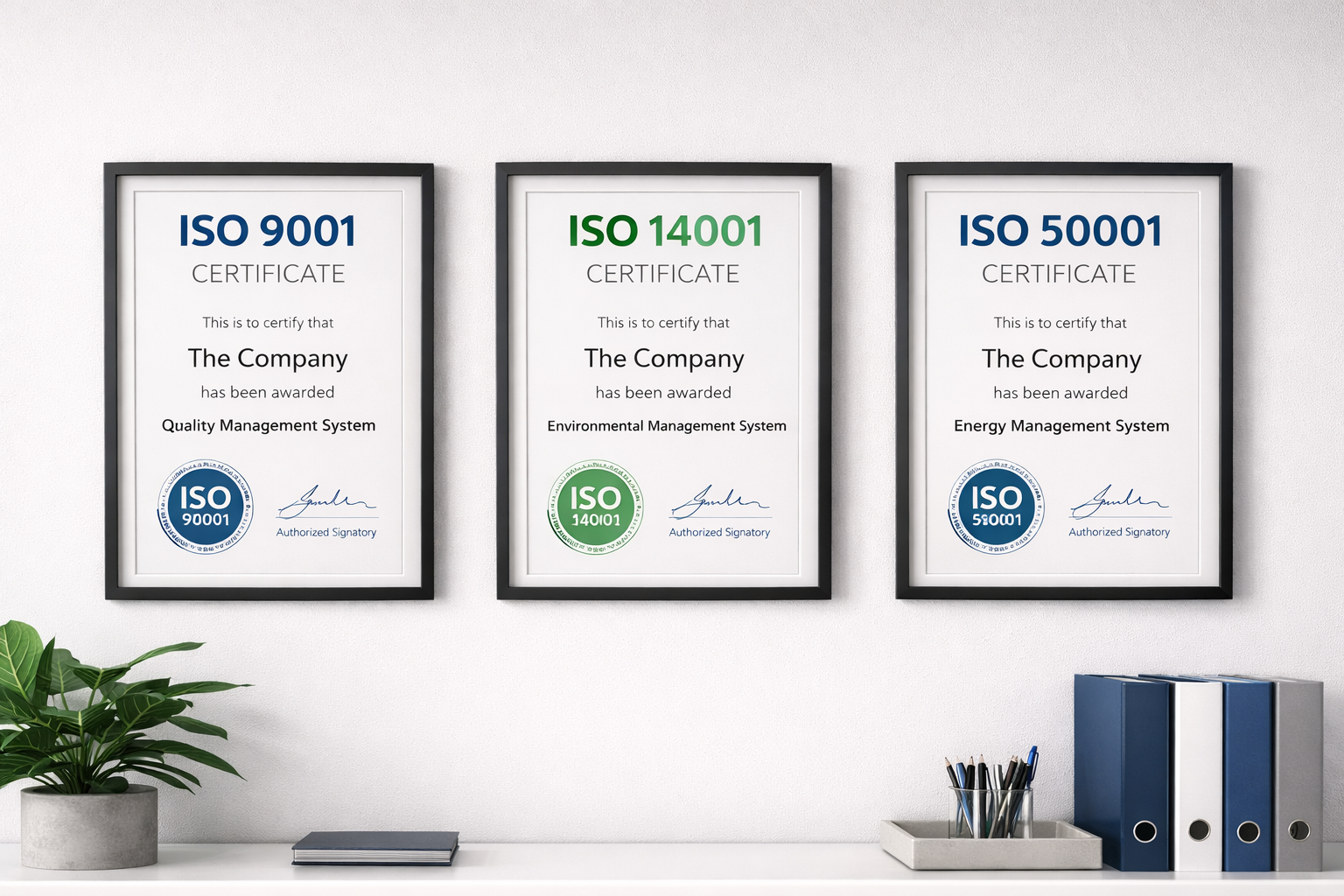
ISO 9001 follows the Annex SL high level structure, which aligns it with other ISO standards – which help ISO certified manufacturers become waste and energy efficient – such as ISO 14001 and ISO 50001.
The main clauses are:
1. Context of the organisation
2. Leadership
3. Planning
4. Support
5. Operation
6. Performance evaluation
7. Improvement
For ISO certified manufacturers, this structure:
1. Encourages integration across departments
2. Makes it easier to combine multiple standards
3. Reduces duplication when adding energy or environmental certifications
This alignment is crucial when building a long-term accreditation strategy.
Understanding “Context of the Organisation”
One of the most misunderstood areas of ISO 9001 is the requirement to define organisational context.
In practice, this means:
1. Understanding internal and external issues that affect quality
2. Identifying interested parties (customers, regulators, suppliers)
3. Defining the scope of the quality management system
For ISO certified manufacturersmanufacturers, relevant context often includes:
1. Supply chain reliability
2. Workforce skills and retention
3. Energy reliability and cost
4. Regulatory requirements
This is where ISO 9001 subtly begins to intersect with energy and operational resilience
Leadership, Accountability and Culture
ISO 9001 places strong emphasis on leadership involvement.
Auditors expect to see:
1. Senior management ownership of the quality policy
2. Clear roles and responsibilities
3. Evidence that quality objectives influence decision-making
In well-run factories, ISO 9001:
1. Clarifies who owns processes
2. Aligns operational and commercial goals
3. Creates a shared language across departments
In poorly run implementations, it becomes:
1. A document owned by one individual
2. Detached from day to day operations
The difference lies in leadership engagement, not documentation volume.
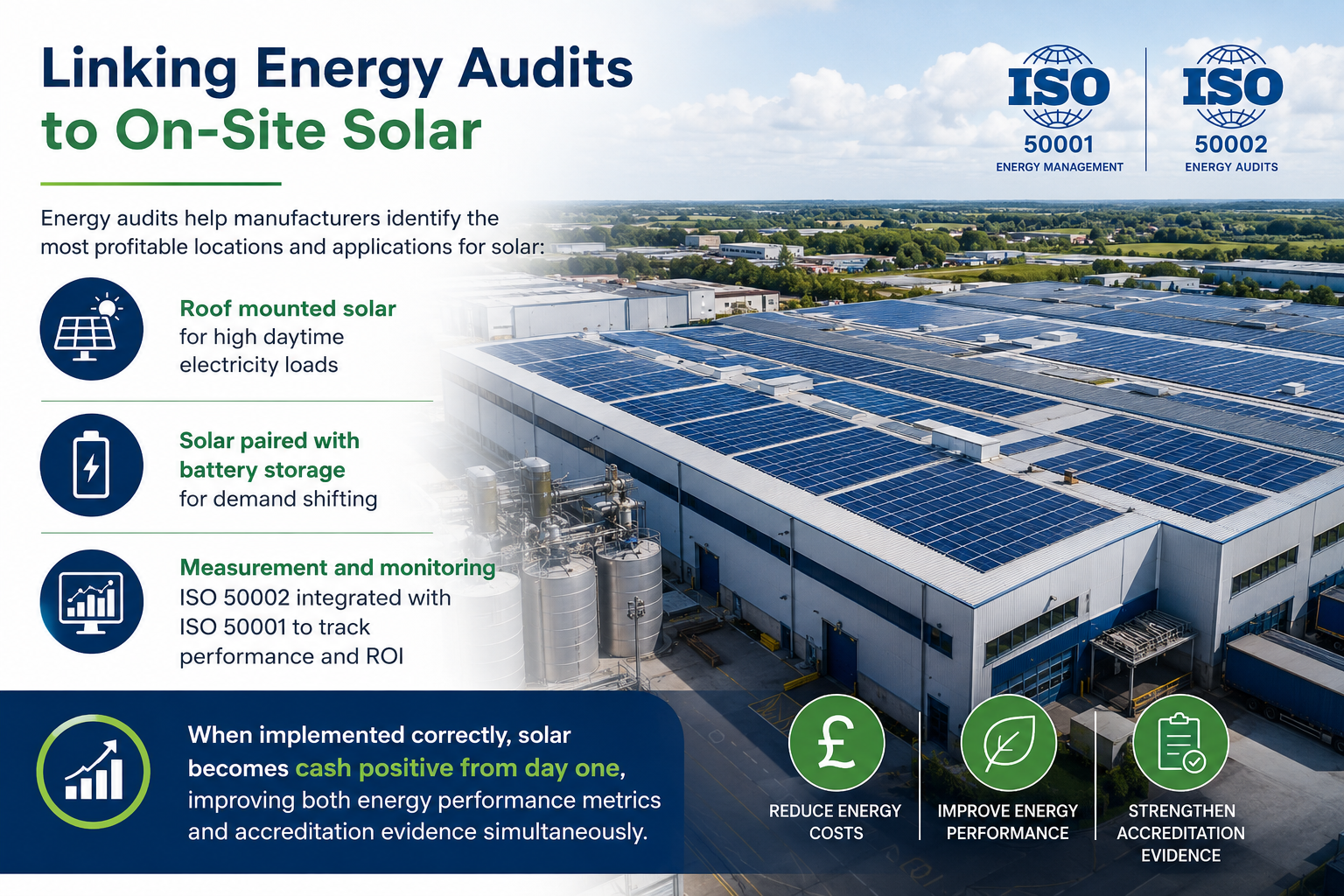
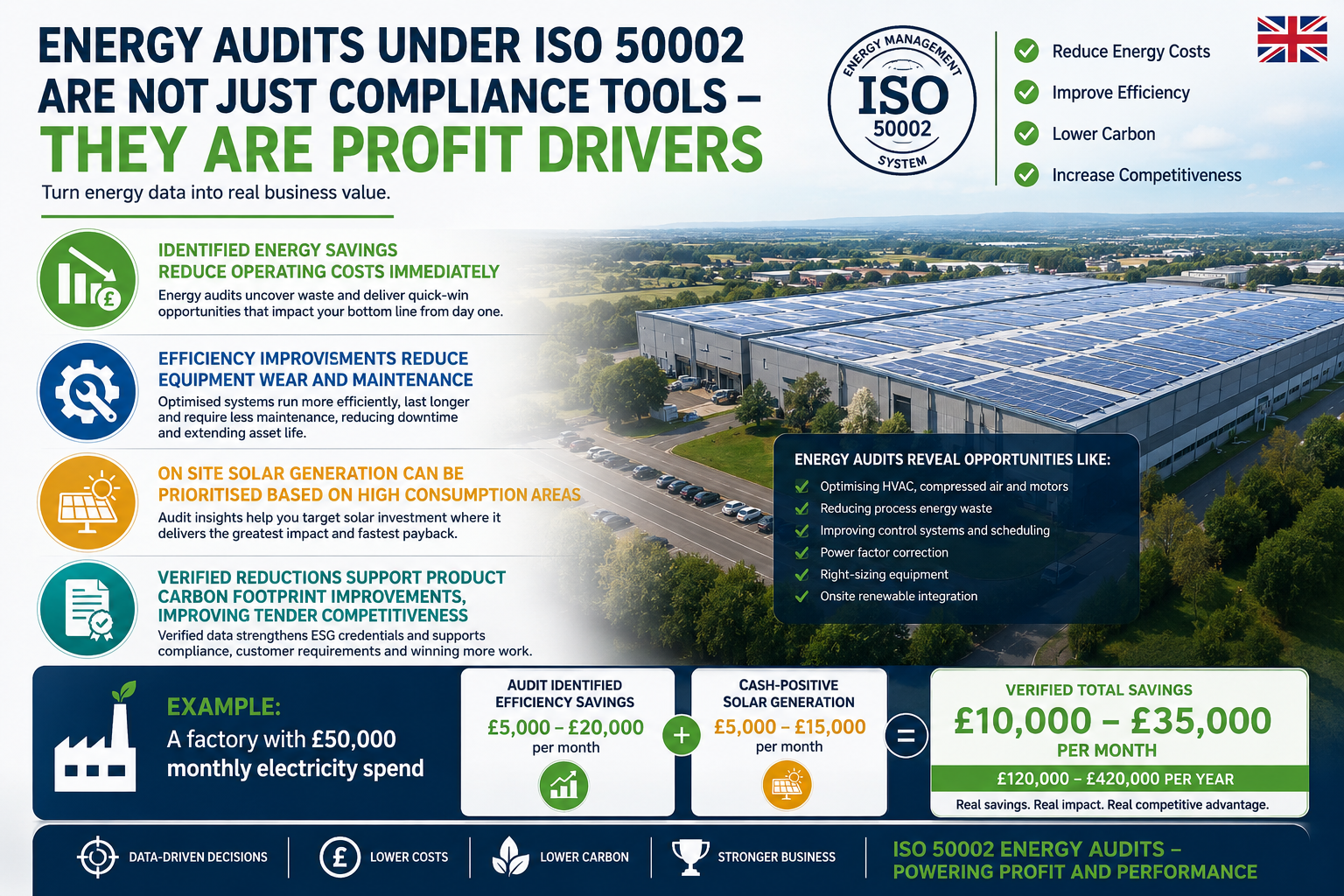
ISO 9001 link to Solar
For factories operating on tight margins, small improvements driven by ISO 9001 can have outsized financial impact.
Installing solar panels will also ease cash flow for factories operating on small margins, but is not the only link with ISO 9001.
ISO 9001:2015 emphasizes identifying risks and opportunities.
Installing solar panels is a strategic move to manage the risk of rising energy prices and potential grid failures, aligning with the “context of the organisation” requirement.
And modern quality management often incorporates environmental sustainability, viewing energy efficiency as a key component of operational efficiency.
In depth details on how ISO 9001 links to solar and the range of accreditations available to manufacturers is covered in our book – Profit meets Planet.