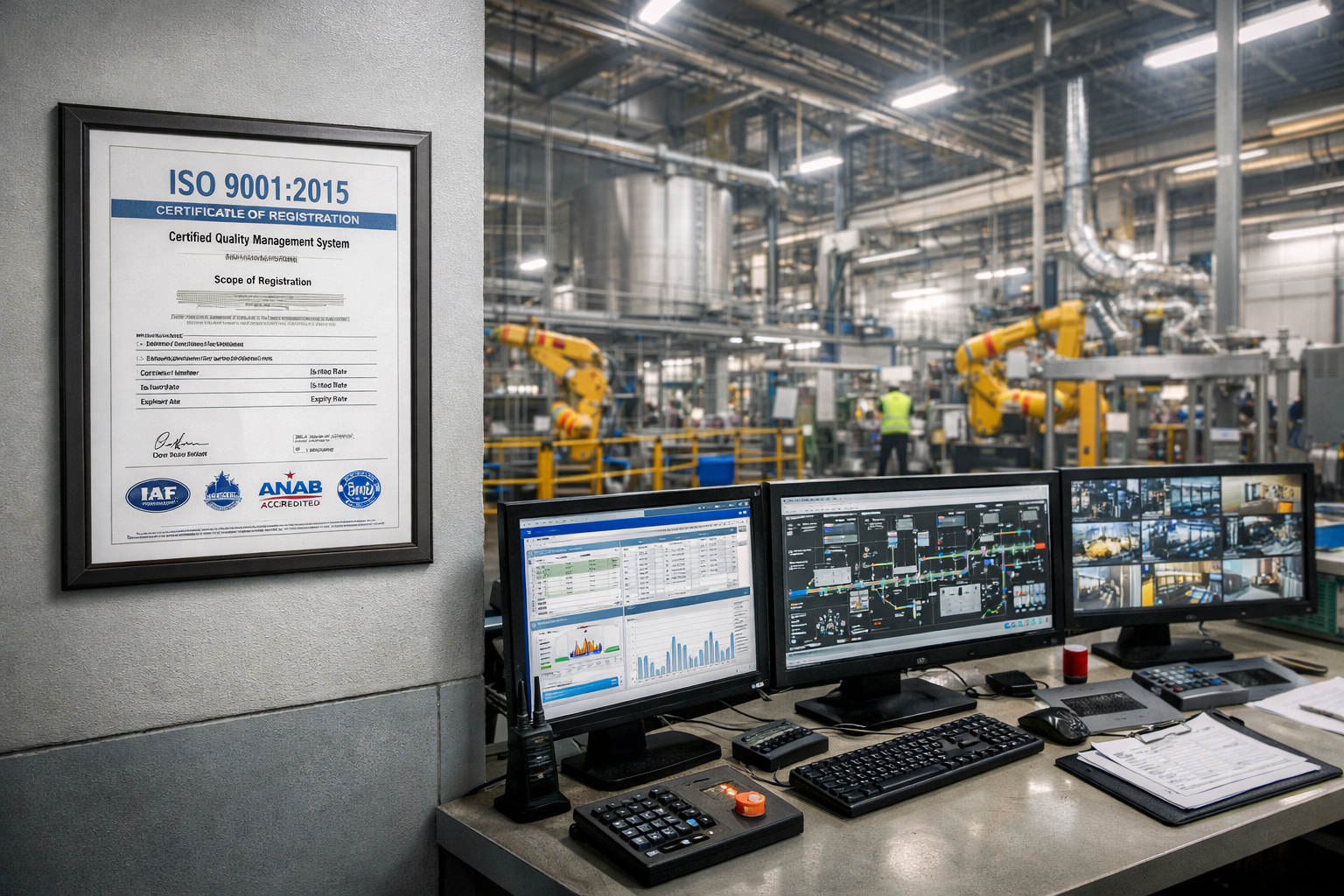
The operational heart of ISO 9001 for manufacturers lies in process control.
Manufacturers must:
1. Define key processes
2. Control inputs and outputs
3. Monitor performance
4. Address deviations
Typical processes include:
1. Order review
2. Production planning
3. Manufacturing operations
4. Inspection and testing
5. Non-conformance handling
When implemented effectively, this:
1. Reduces variability
2. Improves repeatability
3. Supports scaling production
Process discipline also provides the foundation needed for energy and efficiency improvements discussed later in the book.
Risk-Based Thinking and Preventative Action
Modern ISO 9001 for manufacturers emphasises risk based thinking rather than corrective action alone.
For manufacturers, this means:
1. Identifying where things could go wrong
2. Prioritising controls based on risk
3. Preventing defects before they occur
Common manufacturing risks include:
1. Supplier failure
2. Equipment breakdown
3. Process drift
4. Human error
This mindset is transferable to:
1. Energy risk
2. Carbon exposure
3. Cost volatility
Manufacturers that embrace risk based thinking find it easier to adopt later standards such as ISO 50001.
ISO 9001 for Manufacturers link to Solar
For factories operating on tight margins, small improvements driven by ISO 9001 can have outsized financial impact.
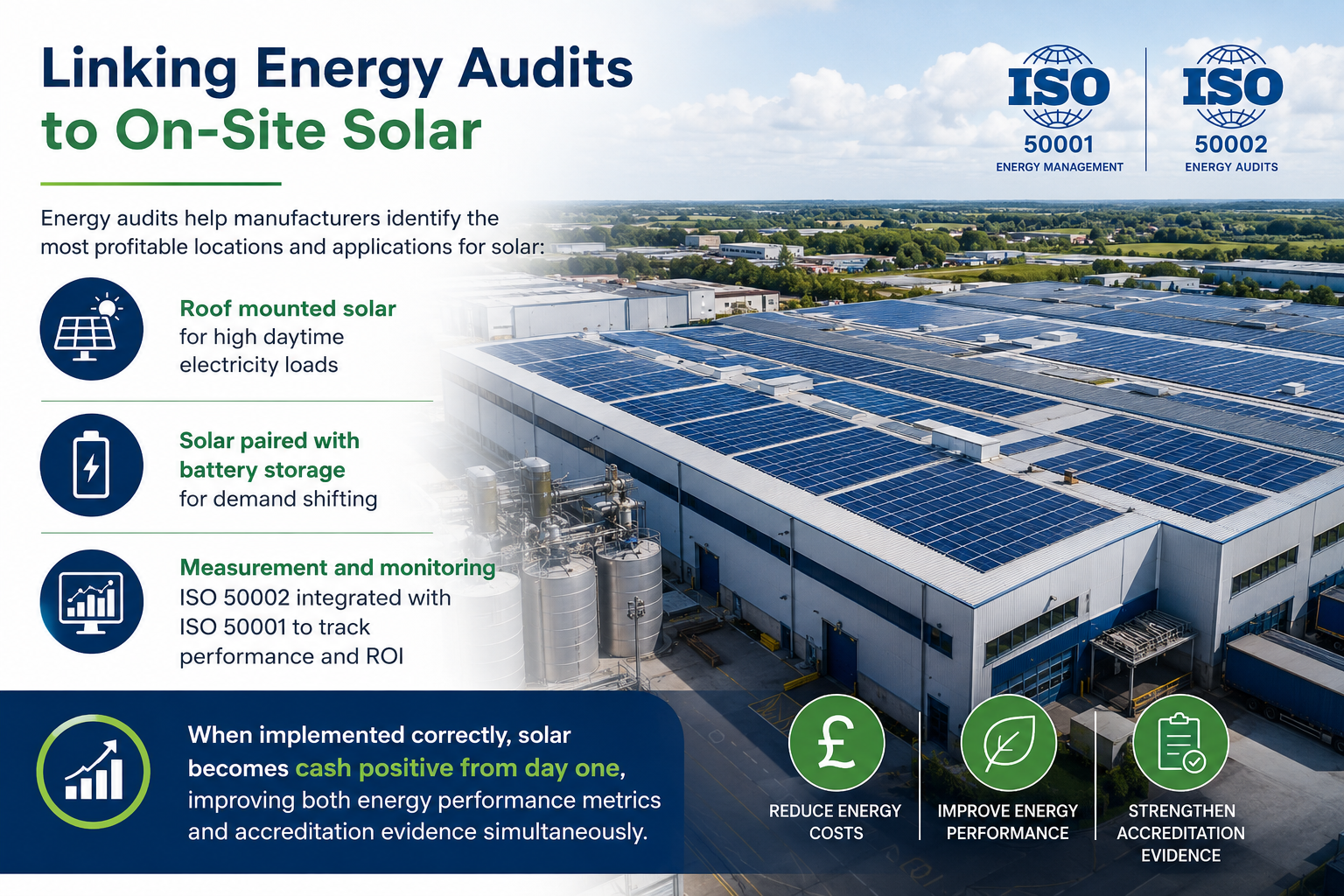
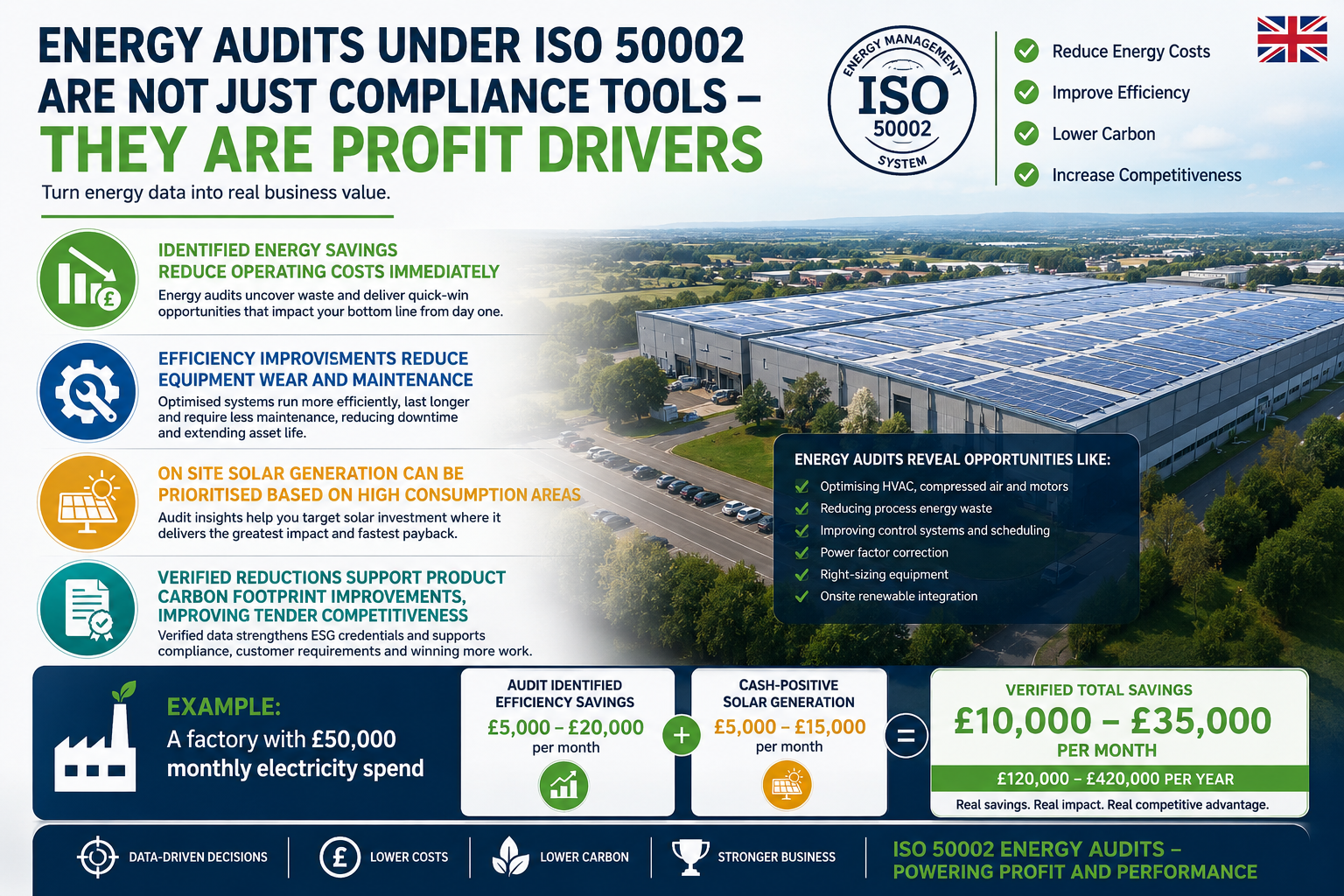
Installing solar panels will also ease cash flow for factories operating on small margins, but is not the only link with ISO 9001.
ISO 9001:2015 emphasizes identifying risks and opportunities.
Installing solar panels is a strategic move to manage the risk of rising energy prices and potential grid failures, aligning with the “context of the organisation” requirement.
And modern quality management often incorporates environmental sustainability, viewing energy efficiency as a key component of operational efficiency.
In depth details on how ISO 9001 links to solar and the range of accreditations available to manufacturers is covered in our book – Profit meets Planet.