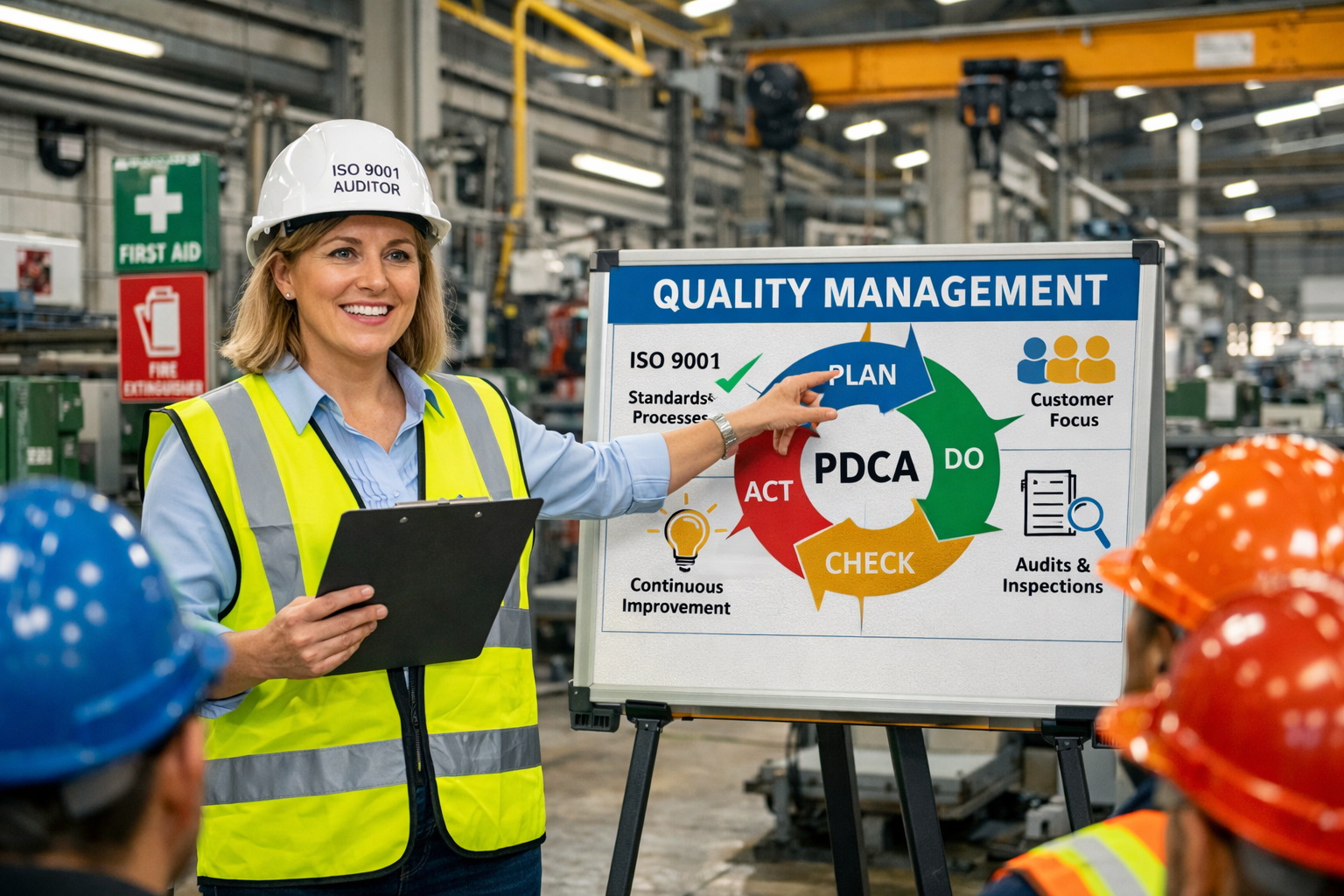
One of the biggest concerns for manufacturers around ISO 9001 quality management system is documentation.
The standard requires:
1. Documented information where necessary for effective control
2. Evidence of conformity
It does not require:
1. Excessive manuals
2. Complex flowcharts for simple processes
3. Documentation disconnected from reality
Best practice manufacturers:
1. Document only what adds value
2. Use visual aids on the shop floor
3. Integrate quality records into existing systems
Lean documentation improves audit outcomes and staff engagement.
Measuring Performance and Continuous Improvement
ISO 9001 quality management system requires manufacturers to:
1. Monitor key performance indicators
2. Conduct internal audits
3. Review performance at management level
4. Implement corrective and improvement actions
Typical manufacturing KPIs include:
1. Defect rates
2. On time delivery
3. Customer complaints
4. Scrap and rework costs
Over time, these metrics:
1. Drive systematic improvement
2. Reveal cost-saving opportunities
3. Support strategic decision-making
This culture of measurement directly supports later adoption of energy and carbon metrics.
Common Audit Findings in Manufacturing
Understanding common audit issues helps manufacturers prepare effectively.
Frequent non-conformities include:
1. Poor control of changes to processes
2. Inconsistent record keeping across shifts
3. Weak supplier evaluation
4. Lack of evidence for management review
Most issues arise not from bad intent, but from:
1. Informal practices
2. Knowledge held in individuals rather than systems
3. Growth outpacing documentation
ISO 9001 quality management system provides the framework to address these challenges systematically.
ISO 9001 Quality Management System Link to Solar
For factories operating on tight margins, small improvements driven by ISO 9001 can have outsized financial impact.
Installing solar panels will also ease cash flow for factories operating on small margins, but is not the only link with ISO 9001.
ISO 9001:2015 emphasizes identifying risks and opportunities.
Installing solar panels is a strategic move to manage the risk of rising energy prices and potential grid failures, aligning with the “context of the organisation” requirement.
And modern quality management often incorporates environmental sustainability, viewing energy efficiency as a key component of operational efficiency.
In depth details on how ISO 9001 links to solar and the range of accreditations available to manufacturers is covered in our book – Profit meets Planet.