When installing commercial solar systems, it’s crucial to ensure that all components work seamlessly together to maximise efficiency and minimize technical problems.
One way to achieve this is by pairing a hybrid solar panel inverter with a battery storage solution from the same manufacturer.
Doing so eliminates compatibility issues, making the entire system more reliable and reducing the likelihood of future technical disputes between manufacturers.
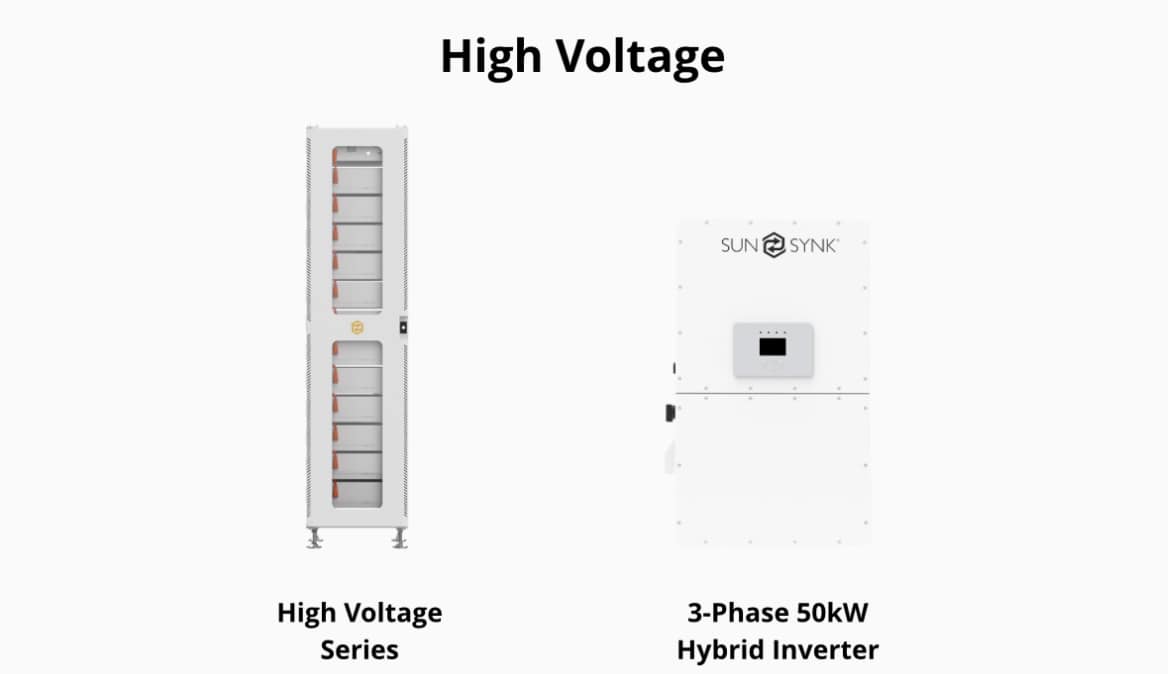
For example, pairing a Sunsynk 50kW hybrid inverter with a Sunsynk high-voltage 60kW battery storage rack ensures that both products are designed to communicate and function in perfect harmony.
Since both components are engineered by the same company, they’re optimised for one another, providing smoother integration and performance.
This also means the system’s software, communication protocols, and energy management settings are preconfigured to work together, resulting in fewer technical adjustments and a faster installation process.
In contrast, mixing products from different manufacturers can lead to compatibility issues.
Even if both components are theoretically compatible, variations in communication protocols, voltage thresholds, or software updates can lead to malfunctions or inefficiencies.
If problems arise, the inverter manufacturer may blame the battery storage unit, and vice versa, complicating technical support and delaying problem resolution.
By choosing products from the same manufacturer, you not only streamline installation but also simplify warranty and after-sales service.
If any technical issues arise, you can rely on one point of contact for troubleshooting, repairs, or replacements.
In the case of the Sunsynk system, this ensures that your solar energy is stored and distributed as efficiently as possible, optimising your return on investment while maintaining long-term reliability.
In summary, matching a hybrid inverter and battery storage solution from the same manufacturer helps to avoid unnecessary compatibility issues, providing greater peace of mind and a more efficient, cohesive solar energy system.