Manufacturing facilities are among the UK’s most energy-intensive operations, with heavy machinery, heating, ventilation, and lighting demanding substantial electricity.
Solar panels for factories offer a compelling solution for UK factory owners and manufacturers by generating clean, affordable electricity onsite to meet these high demands.
For UK manufacturers, the strongest solar business case comes from matching rooftop generation to real daytime electricity demand. A well-designed factory solar system can reduce dependence on grid electricity, improve long-term energy cost visibility and turn unused roof space into a productive business asset. This guide explains the practical factors that determine whether commercial solar is right for a manufacturing site, including energy usage, roof suitability, system sizing, finance and installation planning.
1. Understanding Manufacturing Energy Loads
Factories typically run large motors, conveyors, compressors, and processing equipment that consume vast amounts of electricity.
By generating solar electricity onsite, factories can offset grid consumption during peak sunlight hours – reducing peak loads and energy bills – resulting in a substantial increase in profits.
2. Matching Solar Generation with Equipment Demand
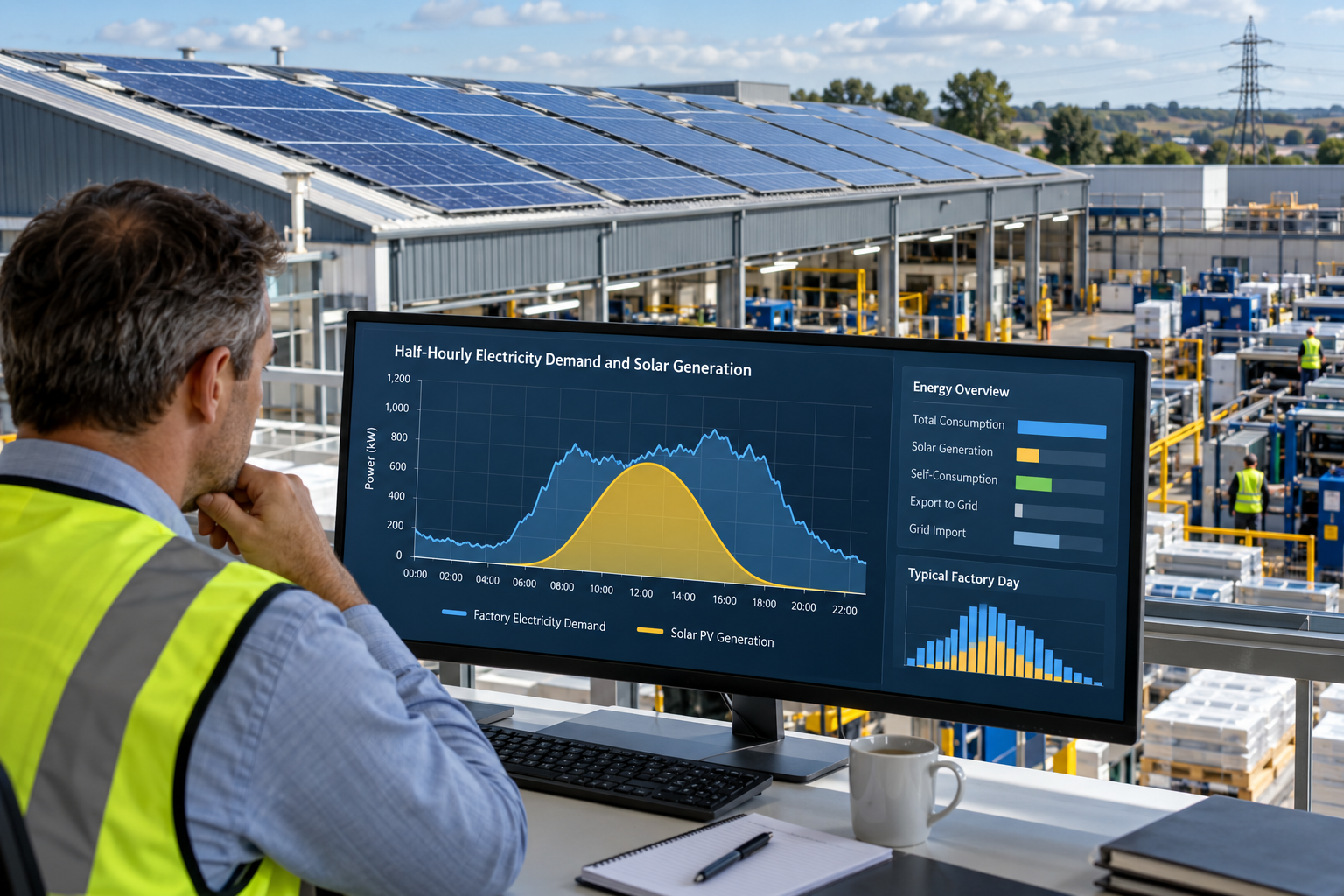
Effective solar power integration depends on aligning solar output with factory energy consumption patterns:
✅ Daytime solar generation complements production shifts that run during daylight hours.
✅ Solar can power critical processes and reduce reliance on grid electricity when demand and prices are highest.
✅ Combined with battery storage for factory solar, surplus solar energy can potentially be stored for later use, including evening or night-shift demand where the site data supports the business case.
This alignment can help factories use more of their solar generation onsite and reduce exposure to grid electricity costs.
3. Benefits of Solar-Powered Manufacturing Equipment
✅ Cost savings: Reducing grid electricity use lowers monthly energy bills and demand charges.
✅ Carbon footprint reduction: Onsite solar displaces fossil fuel-based electricity, cutting emissions.
✅ Energy independence: Solar reduces exposure to grid electricity price increases. Standard grid-connected solar shuts down during power cuts; backup operation requires a specifically designed system with suitable battery storage and isolation equipment.
✅ Regulatory compliance: Solar adoption supports meeting UK carbon reduction targets and industrial decarbonisation policies.
4. Practical Considerations for Factory Owners
✅ Conduct detailed energy audits to identify equipment energy loads and operating times.
✅ Design solar systems sized to meet peak demand during working hours.
✅ Consider integrating solar with energy management systems to optimise consumption.
✅ Compare ownership, leasing and other funding options in our commercial solar funding guide; assess total costs and contractual terms before choosing a solution.
5. Case Example: Solar in a UK Factory
For project planning, read our half-hourly electricity data guide to understand demand-led system sizing, and our factory rooftop solar fire-safety checklist for design and insurance considerations.
Illustrative scenario: a medium-sized UK manufacturing plant considers installing a 500 kW rooftop solar array to supply daytime machinery demand.
Actual grid-electricity reductions, annual savings and carbon benefits depend on the site’s half-hourly demand profile, generation yield, tariff, export arrangements and project costs. Figures should be calculated for the individual factory rather than assumed from system capacity alone.
Conclusion…
For UK factories with energy intensive equipment, solar for factories is a strategic asset that delivers tangible financial and environmental benefits.
By acting now and tailoring solar solutions to match manufacturing demands, factory owners can improve efficiency, and substantially increase profits.
And this can be achieved without it costing factory owners extra cash.