Manufacturers and engineers are increasingly judged not only on their own carbon and environmental performance, but also on the sustainability of their supply chain.
Large buyers, retailers, and government agencies often demand verified supply chain carbon credentials as part of tender requirements and ESG reporting.
This next educational series focuses on:
1. ISO 20400 – Sustainable Procurement
2. PAS/BES standards for responsible sourcing
3. Buyer expectations and tender requirements
4. Strategies for integrating supply chain carbon credentials into operations
ISO 20400 — Sustainable Procurement
Overview:
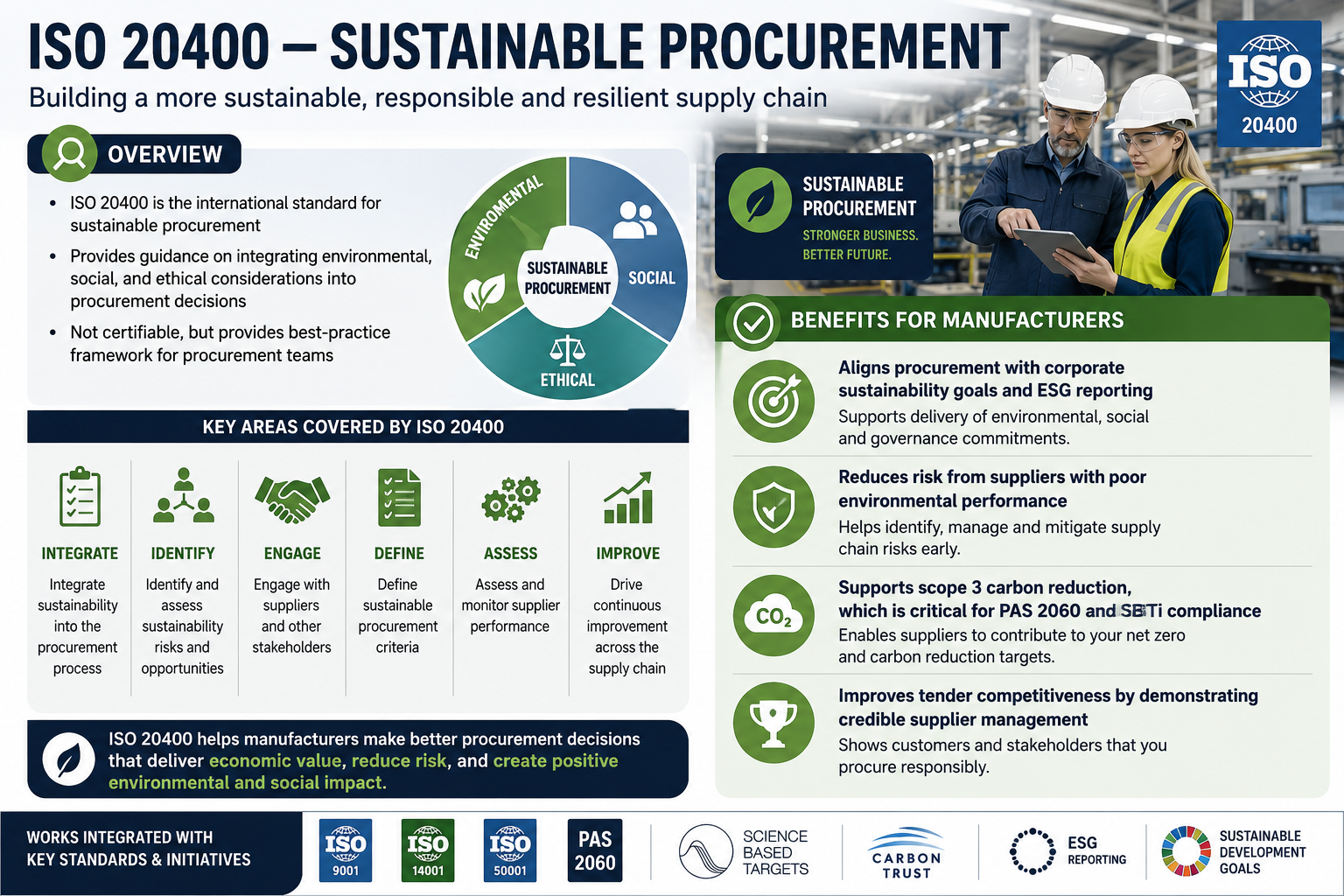
1. ISO 20400 is the international standard for sustainable procurement
2. Provides guidance on integrating environmental, social, and ethical considerations into procurement decisions
3. Not certifiable, but provides best-practice framework for procurement teams
Benefits for manufacturers and engineers:
1. Aligns procurement with corporate sustainability goals and ESG reporting
2. Reduces risk from suppliers with poor environmental performance
3. Supports scope 3 carbon reduction, which is critical for PAS 2060 and SBTi compliance
4. Improves tender competitiveness by demonstrating credible supplier management
Implementation tips:
1. Identify critical suppliers with significant environmental or carbon impact
2. Set sustainability criteria for selection and evaluation
3. Monitor supplier performance regularly
4. Integrate supplier sustainability into tender responses
Example:
A UK packaging manufacturer requires FSC certified paper suppliers and ISO 14001 certified subcontractors to meet buyer sustainability expectations.
Additional Resource
If you’d like to learn more about ISO 20400 (Sustainable Procurement) or other operational improvement / cost reduction related accreditations, please request a complimentary copy of our factories guide book – Planet meets Profit.
Check out our next article when we’ll be discussing PAS/BES standards for responsible sourcing.