Really, why do manufacturers and engineers need to reduce emissions before offsetting?
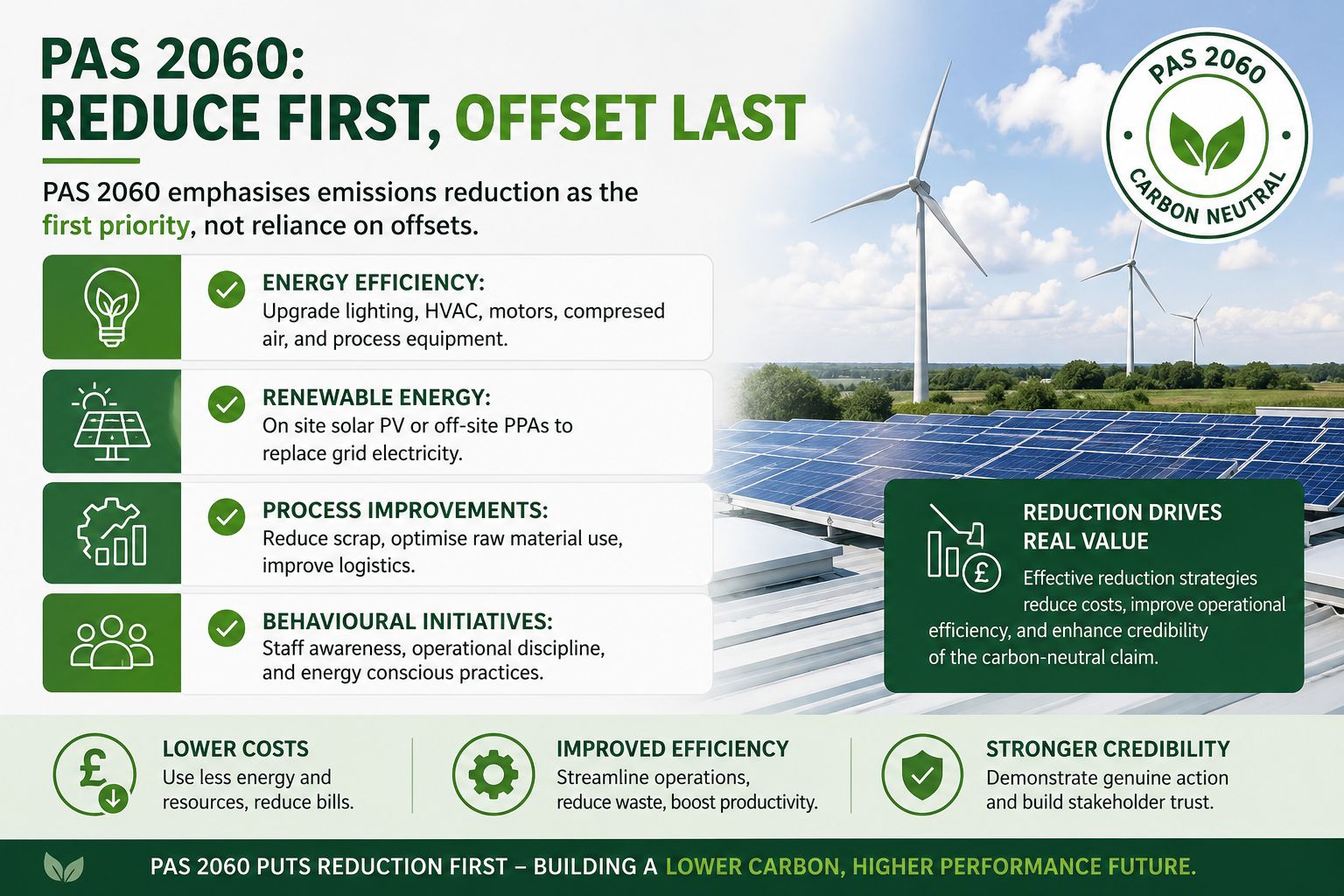
PAS 2060 emphasises emissions reduction as the first priority (not reliance on offsets) such as:
1. Energy efficiency: Upgrade lighting, HVAC, motors, compressed air, and process equipment
2. Renewable energy: On site solar PV or off-site power purchase agreements to replace grid electricity
3. Process improvements: Reduce scrap, optimise raw material use, improve logistics
4. Behavioural initiatives: Staff awareness, operational discipline, and energy conscious practices
Effective reduction strategies for emissions reduce costs, improve operational efficiency, and enhance credibility of the carbon-neutral claim.
Carbon Offsetting
Residual emissions that cannot be eliminated must be offset with certified carbon credits.
PAS 2060 requires:
1. Verified credits from recognised standards (e.g., Gold Standard, Verified Carbon Standard)
2. Transparent calculation of offset volumes
3. Clear documentation in verification reports
Offsets are a last step and should complement energy reduction measures, not replace them.
Verification and Certification
PAS 2060 requires independent verification to support carbon neutral claims. Verification involves:
1. Reviewing emission inventories (Scope 1, 2, and significant Scope 3)
2. Assessing reduction measures and their effectiveness
3. Confirming offset purchases and their legitimacy
4. Issuing an auditable statement supporting the carbon neutral claim
Verification enhances credibility, mitigates reputational risk, and enables manufacturers to market their carbon neutral products and operations.
Additional Resource
If you’d like to learn more about ISO and other operational improvement / cost reduction related accreditations, please request a complimentary copy of our factories guide book – Planet meets Profit.