As more UK factories install solar, a natural next question arises…
Should we add battery storage?
While solar panels generate savings during daylight hours, battery systems offer flexibility, resilience, and even deeper cost control – especially for energy-intensive sites.
In this post, we’ll look at whether adding battery storage to your factory’s solar setup makes financial and operational sense in 2025.
1. What Does a Battery System Do for a Factory?
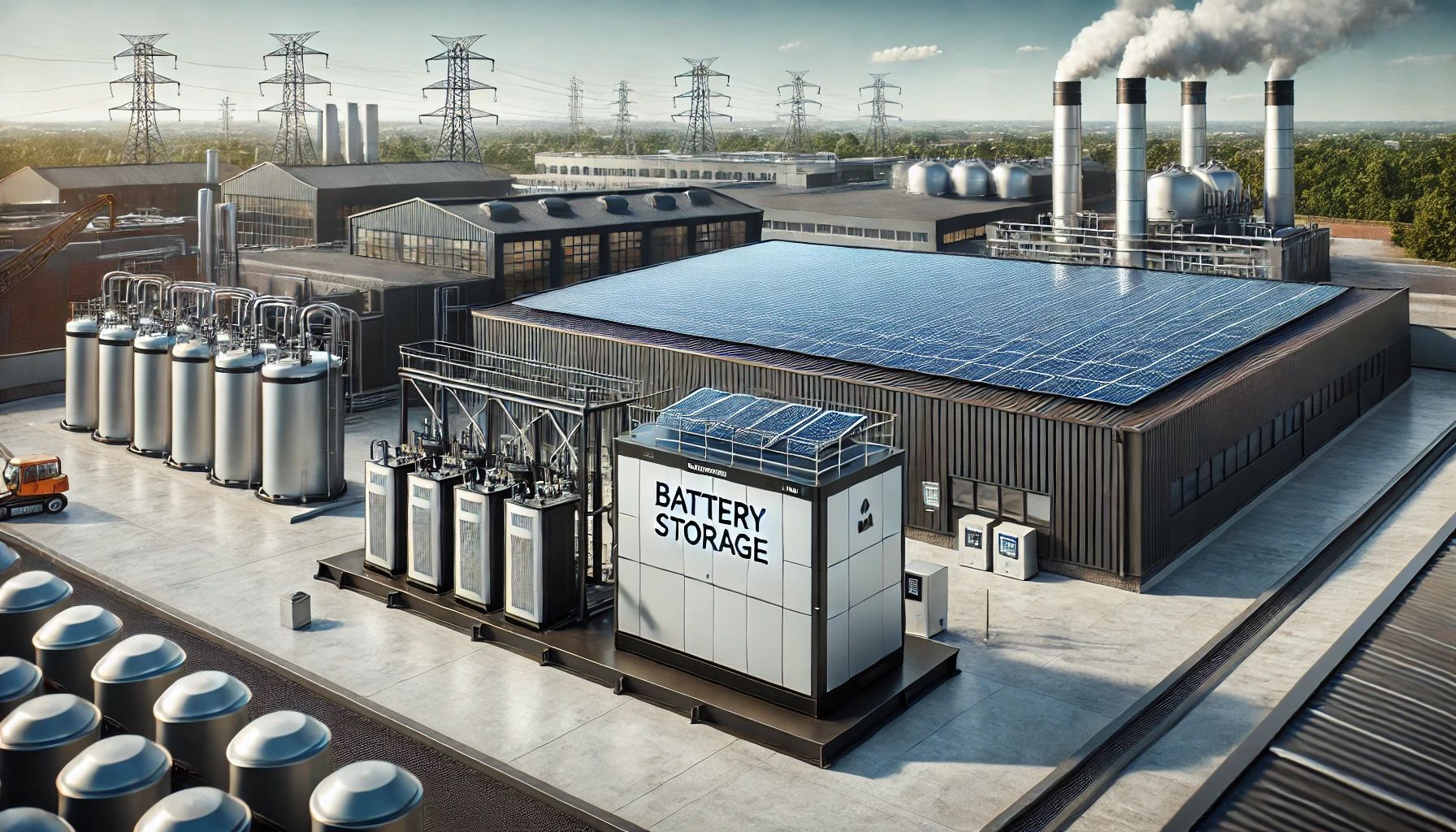
Battery energy storage systems (BESS) allow you to store excess solar power and use it when it’s most beneficial – usually outside daylight hours or during peak tariff periods.
Here’s how it works for factories:
✅ Daytime: Solar powers operations and charges the battery.
✅ Evening or high-demand times: Battery discharges to avoid pulling expensive electricity from the grid.
✅ Grid outage: Battery can provide short-term backup (depending on setup).
The result?
Lower peak usage, reduced grid dependency, and sometimes even new income streams.
2. Financial Benefits: Peak Shaving & Demand Charge Reduction
One of the biggest uses of battery storage in industrial settings is peak shaving – reducing electricity usage during the most expensive periods.
For example, many UK factories face red-band DUoS charges (Distribution Use of System) from 4pm–7pm.
Using stored solar power during these hours can slash charges by thousands annually.
Example…
A factory that uses a battery to avoid 500 kWh during red-band hours each week could save over £10,000 per year, depending on local rates.
3. Energy Resilience & Power Quality
Battery storage can also protect operations:
✅ Short-term backup: Avoid production loss from grid outages or voltage dips.
✅ Power smoothing: Manage spikes from heavy machinery startups.
✅ Critical loads protection: Keep essential systems running during faults.
This is especially useful in areas with unstable grid supply or if your site has tight production tolerances.
4. Is It Worth the Cost?
Battery storage for a factory still has a relatively high capital cost.
In 2025, commercial systems typically range from £300 to £500 per kWh of storage, plus installation. A 250 kWh system might cost £100,000 – £125,000 fully installed.
However:
✅ Prices are falling steadily.
✅ Storage qualifies for capital allowances (like solar).
✅ Savings and added resilience often justify the investment over 6 – 10 years, especially when paired with solar.
5. When Is Battery Storage a Good Fit?
Battery storage is most valuable when your factory:
✅ Has high electricity costs during peak periods
✅ Operates outside daylight hours (evening or 24/7 shifts)
✅ Suffers from poor grid reliability
✅ Wants to fully optimise on-site solar usage
While not every UK factory needs battery storage today, those with high peak demand, complex energy profiles, or critical power needs will likely benefit from adding it to their solar setup.