
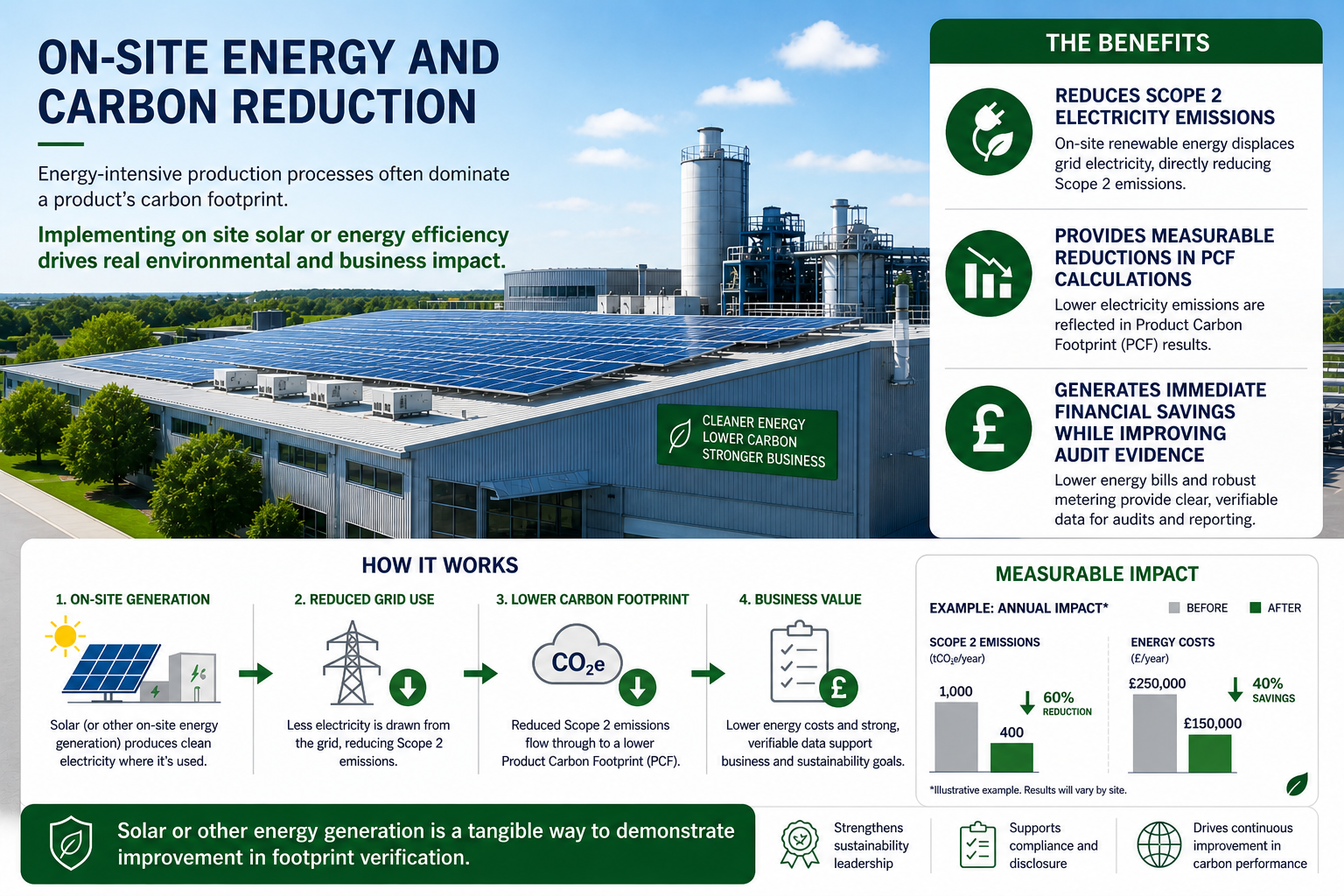
Energy-intensive production processes which manufacturers and engineers adopt, often dominate a product’s carbon footprint.
Integrating ISO 14067 / PAS 2050 with ISO 14001 and ISO 14064, to implement on site solar or energy efficiency:
1. Reduces Scope 2 electricity emissions
2. Provides measurable reductions in PCF calculations
3. Generates immediate financial savings while improving audit evidence
Solar or other energy generation is a tangible way to demonstrate improvement in footprint verification.
Common Challenges
Manufacturers and engineers often face:
1. Limited visibility of supplier emissions (Scope 3)
2. Complexity in calculating end-of-life impacts
3. Inconsistent data collection across multiple products
4. Difficulty balancing footprint reduction with operational constraints
Solutions include:
1. Supplier engagement programs
2. Using average or standard emission factors for materials
3. Focusing first on high volume, high carbon products
4. Continuous improvement as processes mature
Timeline and Implementation
Typical implementation timelines for a medium sized manufacturer:
1. Product selection and scoping: 1 – 2 months
2. Data collection and calculation: 2 – 3 months
3. Internal review and management approval: 1 month
4. Optional third-party verification: 1 – 2 months
Existing ISO 14001 and ISO 14064 systems can accelerate this process significantly.
Key Takeaways
1. Product carbon foot printing provides credible, auditable evidence of product emissions
2. ISO 14067 and PAS 2050 are complementary standards that guide methodology, calculation, and verification
3. Verified PCF is increasingly a commercial requirement, not just a regulatory exercise
4. Energy and material efficiency improvements – including solar – directly reduce carbon footprint and operating cost
5. Integration with ISO 14001 and ISO 14064 simplifies implementation and maximizes value
What Comes Next
With product level carbon footprints in place, manufacturers can:
1. Identify and implement high-impact energy and process improvements
2. Prepare for participation in net-zero supply chain initiatives
3. Strengthen tender responses with verified emissions data
Our next series focuses on ISO 50001 – Energy Management Systems – and how it can help reduce energy use, which often represents the single largest opportunity to reduce both organisational and product-level carbon.