
Calculating a product carbon footprint for a factory requires:
1. Activity data:
Material quantities, energy use, transport distances, waste volumes
2. Emission factors:
Standardised values converting activity data to CO₂e, typically from UK government or international LCA databases
3. Calculations:
Aggregating emissions for each lifecycle stage
4. Documentation:
Maintaining assumptions, data sources, and methodology for verification
Software tools and databases such as GaBi, SimaPro, or the Carbon Trust’s product foot printing tools can simplify this process for manufacturers.
Verification and Certification
ISO 14067 / PAS 2050 require that the footprint can be verified independently to ensure credibility.
Verification includes:
1. Auditing data sources and calculations
2. Checking alignment with the chosen standard
3. Confirming consistent reporting across products
Verified PCF allows manufacturers to:
1. Use carbon labels on products
2. Report accurate data to customers and supply chains
3. Support tender responses and ESG reporting
Unverified PCF, by contrast, can lead to reputational and commercial risk.
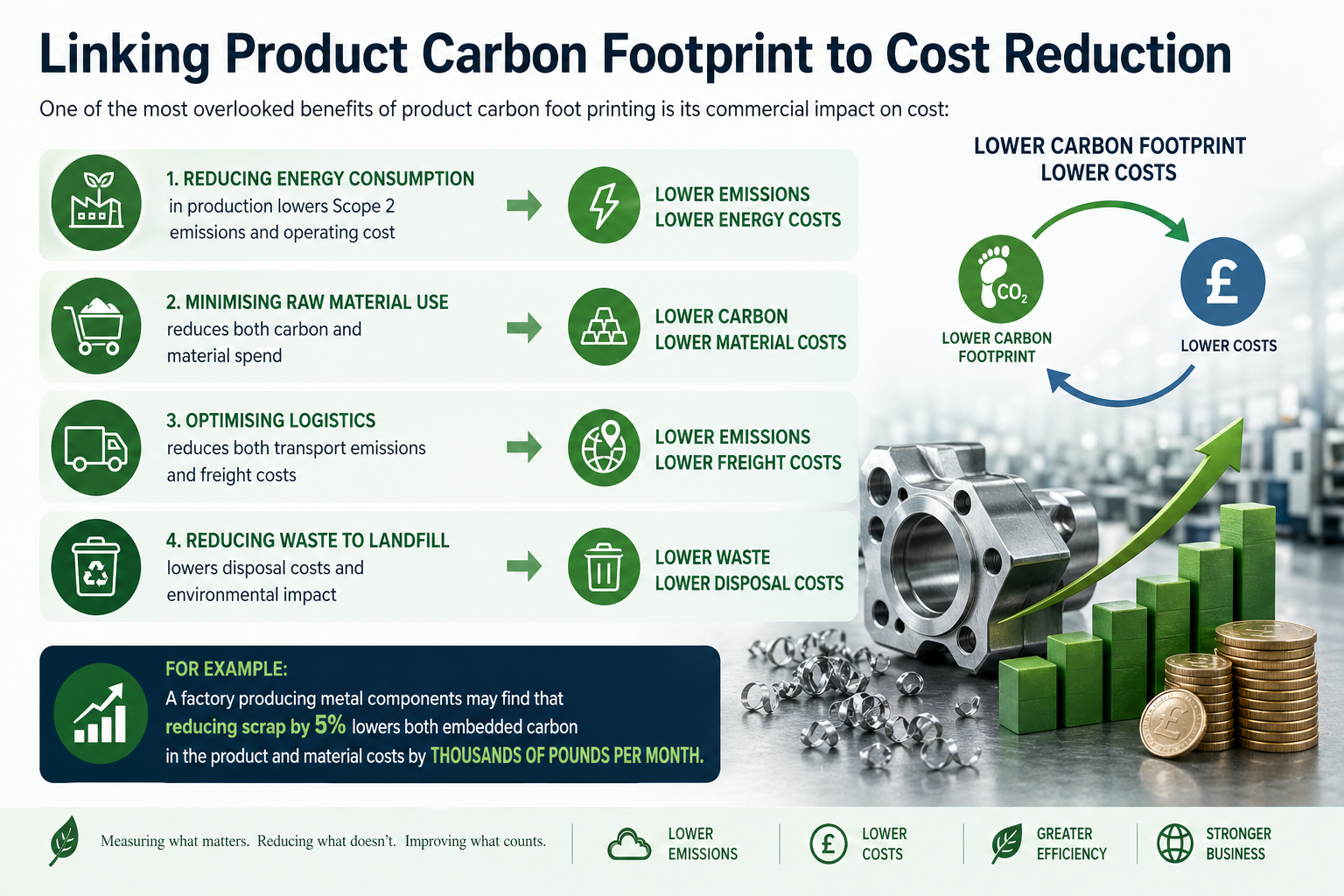
Linking Product Carbon Footprint to Cost Reduction
One of the most overlooked benefits of product carbon foot printing is its commercial impact on cost:
1. Reducing energy consumption in production lowers Scope 2 emissions and operating cost
2. Minimising raw material use reduces both carbon and material spend
3. Optimising logistics reduces both transport emissions and freight costs
4. Reducing waste to landfill lowers disposal costs and environmental impact
For example, a factory producing metal components may find that reducing scrap by 5% lowers both embedded carbon in the product and material costs by thousands of pounds per month.
Additional Resource
If you’d like to learn more about ISO and other operational improvement / cost reduction related accreditations, please request a complimentary copy of our factories guide book – Planet meets Profit.


