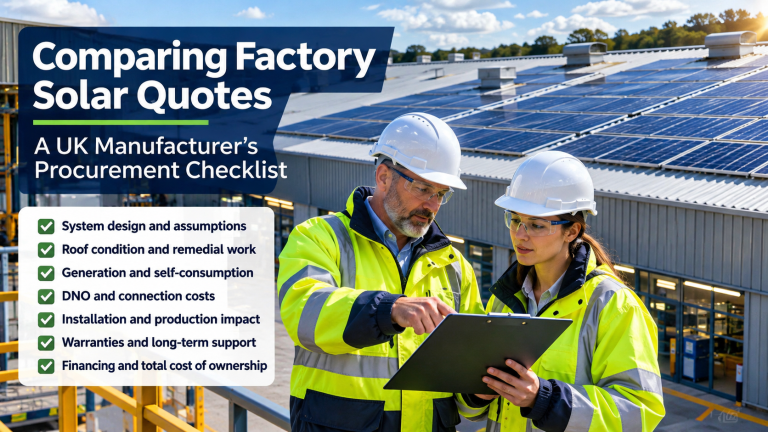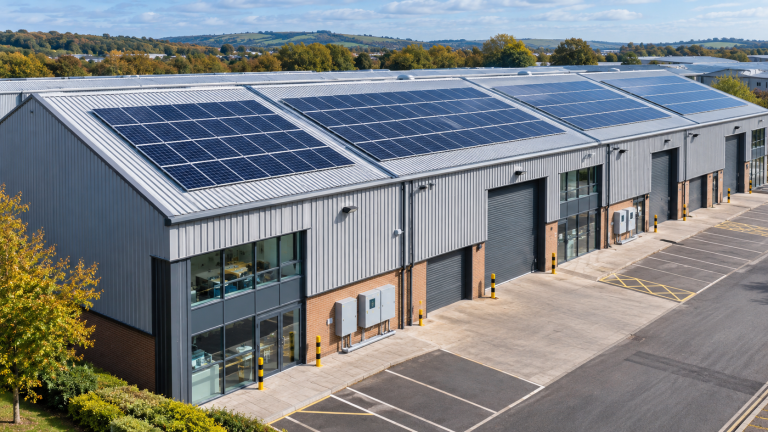

Installing solar panels on a UK factory roof can reduce purchased electricity, but insurance questions deserve attention before a contract is signed. Here is a practical, risk-aware checklist for manufacturers, facilities teams and finance directors.
Why insurers should be involved before installation
A factory rooftop solar project changes the risk profile of an existing building. The questions are not simply whether panels can be insured: insurers and brokers may need to understand the roof construction, fire strategy, electrical design, access arrangements and responsibilities after handover. Bringing them into the discussion early can prevent an expensive redesign or a disagreement over cover once equipment is installed.
Start with the existing building
Record the roof age, covering, insulation and any combustible materials, together with available structural surveys and fire-risk information. Establish whether rooflights, smoke vents, plant and access routes must remain clear. A structural engineer should assess the additional permanent loads and relevant wind and snow loads. A roof warranty provider may also need to approve the mounting approach. Where the factory is leased, clarify landlord consent and who is responsible for roof repairs.
Ask the broker specific questions
Before accepting a quotation, send the broker a concise description of the proposed system and ask what information the insurer needs to assess it. Confirm whether the policy covers the panels themselves, associated inverters and cabling, damage to the building, business interruption and loss of generation. Check deductibles, exclusions, security conditions, maintenance obligations and any change to declared values. Insurer requirements vary, so do not assume that a contractor’s standard specification automatically satisfies your policy.
Document the fire and electrical design
Request a layout identifying modules, inverters, cable routes, isolators, roof access and clearances around rooftop equipment. Ask the designer to explain DC cable management, isolation arrangements, protective devices, labelling and the approach to fire-service access. Electrical installation and commissioning should follow applicable UK requirements and be carried out by competent professionals. For a factory, the design should also address existing distribution equipment, transformer capacity, production continuity and any grid-connection approval.
Make responsibilities unambiguous
A useful responsibility matrix identifies who owns the panels, who inspects the roof, who maintains the PV system, who responds to faults, and who can isolate equipment in an emergency. For financed or power-purchase-agreement projects, clarify the insurer’s interest and the allocation of risks between the building owner, operator and system provider. A maintenance contract should specify inspection intervals, remote monitoring, defect response and records retained.
Build an evidence pack for handover
Keep the approved drawings, structural calculations, installation photographs, commissioning certificates, operating manuals, emergency information, warranties, grid-connection documents and as-built electrical diagrams together. Include a dated inspection schedule and the contact details for the installer and maintenance provider. This pack supports insurance discussions, future roof work, audits and eventual inverter replacement.
Check the commercial case alongside risk
A project can be technically feasible yet commercially weak if production is interrupted, roof repairs are imminent or insurance terms become expensive. Assess the business’s half-hourly electricity use, expected self-consumption, export assumptions, maintenance costs and financing terms. Test conservative generation and electricity-price scenarios rather than relying on a single headline payback figure.
A practical pre-contract checklist
Before signing, confirm that the roof and structure have been assessed; the broker has reviewed the proposed installation; fire and electrical design issues are documented; landlord and warranty approvals are addressed; maintenance responsibilities are agreed; and the final contract requires a complete handover evidence pack. These steps do not replace professional engineering, fire-safety or insurance advice, but they make the decision better informed.
Next step for UK factory owners
If you are considering solar for a manufacturing site, begin with a roof and electricity-use review and bring your broker into the process before finalising the design. Explore our solar panels for factories guide, factory solar fire-safety guide and factory solar quotation checklist.