As the UK races toward a net-zero future, one solution has been hiding in plain sight: the vast, under-used industrial roof space across the country with can be used for rooftop solar.
With energy demand surging due to housing growth, heat pumps and the rise of electric vehicles (EVs), commercial rooftop solar isn’t just a smart investment for business – it’s a national infrastructure priority.
Self-consumption is a win for business and the national grid…
For industrial and commercial buildings, rooftop solar enables direct on-site consumption. Instead of exporting excess energy back to a strained grid, companies can use their own generation to power operations.
This reduces electricity bills, shields against market volatility, and improves carbon footprints – all while easing demand on the national grid.
And the opportunity is massive…
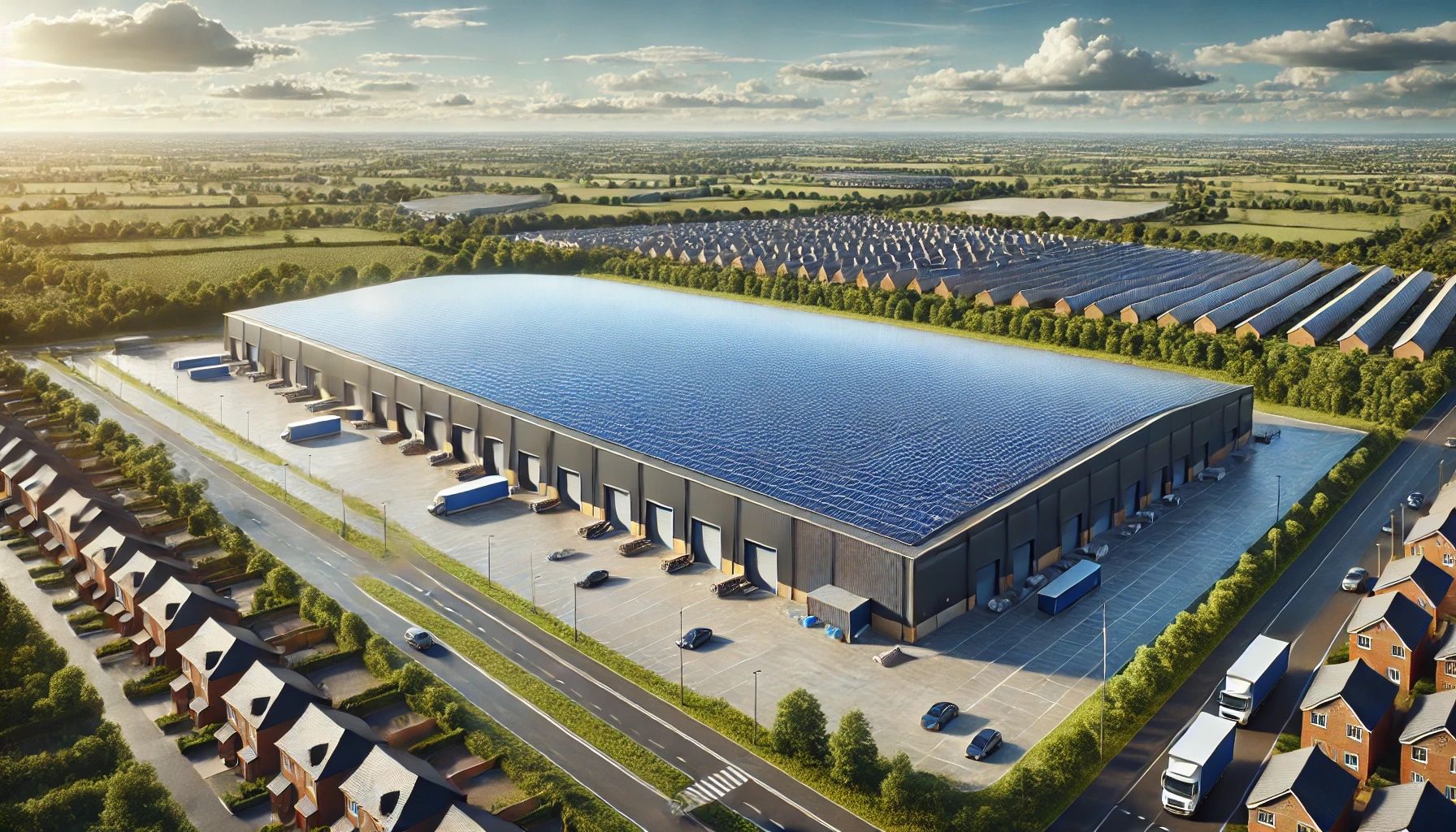
According to the UK Warehousing Association, over 18,500 hectares of industrial roof space is available – enough to install around 15GW of rooftop solar capacity.
That’s equivalent to five nuclear power stations, without taking up an inch of green belt land.
And the national grid can’t keep up with utility-scale renewables…
While large-scale solar and wind farms have a role to play, the UK’s grid is already struggling to handle intermittent renewable energy.
In 2023 alone, National Grid paid nearly £1 billion to curtail wind generation due to lack of storage and transmission bottlenecks.
Building more solar or wind farms in remote locations without corresponding upgrades in grid infrastructure leads to wasted energy.
The reality is that the UK grid simply isn’t built to store or distribute this volume of power effectively – yet.
Commercial rooftop solar can support house building and EV infrastructure…
The UK government has set ambitious targets for new housing and EV adoption. Both rely heavily on grid capacity that doesn’t currently exist in many regions.
By diverting business energy demand off the grid and into self-consumption via rooftop solar, critical space is freed up to support homes, heat pumps, and EV chargers – especially in urban or suburban areas where infrastructure upgrades are costly and slow.
Rooftop solar is faster, cheaper, and more sustainable…
Unlike utility-scale projects, rooftop solar installations can be deployed in weeks, not years.
They face fewer planning objections, avoid environmental disruption, and repurpose existing structures.
Incentivising this approach through tax breaks or streamlined grid connections would accelerate deployment dramatically.
Our conclusion…
The UK doesn’t need to cover more countryside with solar panels. It needs to be smarter with what it already has.
Unused industrial rooftops represent a golden opportunity to decentralise energy, stabilise the grid, and make space for the electrified future.
…which is why a commercial rooftop solar revolution makes perfect sense.