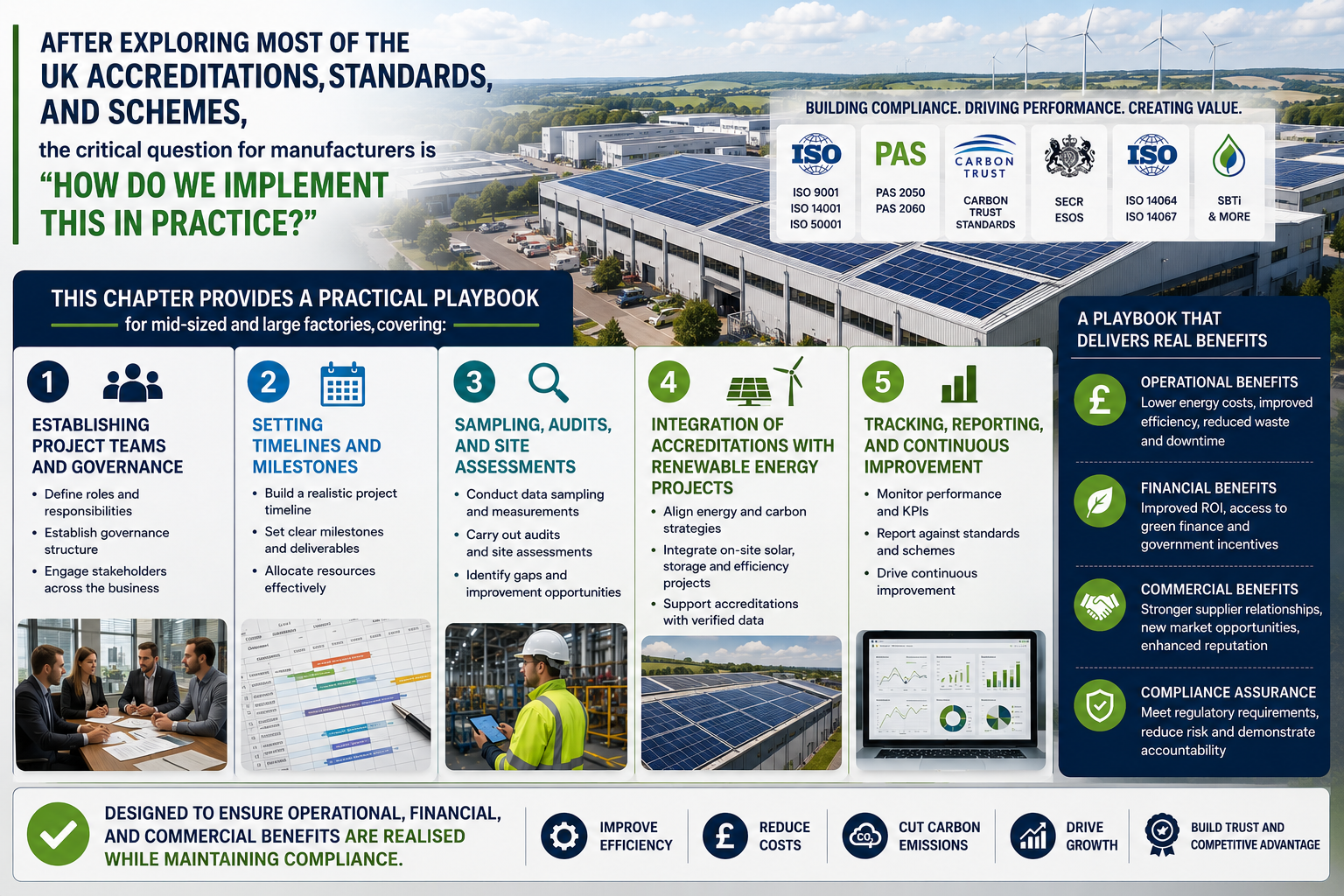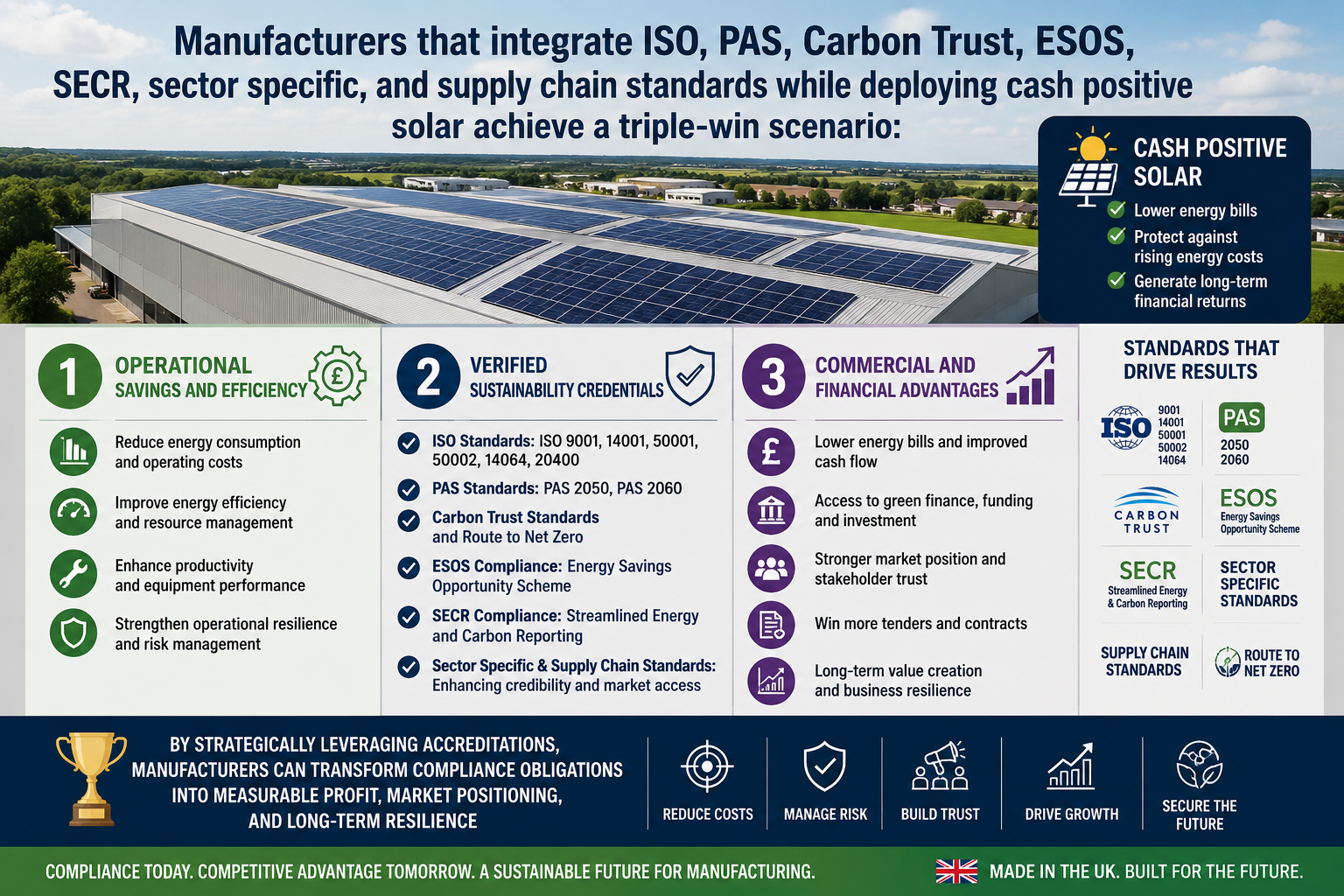

The Carbon Trust Route to Net Zero framework for manufacturers and engineers requires:
1. Baseline Assessment
a: Verified measurement of current organisational GHG emissions (Scope 1, 2, and significant Scope 3)
b: Integration with ISO 14064 and ISO 50001 data
2. Reduction Strategy
a: Evidence of active reduction initiatives in energy, materials, waste, and processes
b: Integration of renewable energy, efficiency improvements, and operational controls
3. Offset Strategy
a: Only residual emissions are offset using verified carbon credits
b: Offsets must be additional, permanent, and independently verified
4. Verification & Reporting
a: Independent audit of reductions and offset strategy
b: Public reporting of progress against targets
This route to net zero framework ensures manufacturers and engineers take meaningful action toward net zero, not just make claims.
Key Benefits for Manufacturers and Engineers
Financial and operational benefits:
1. Cost reduction: Verified energy and process improvements reduce operating expenses
2. Tender competitiveness: Many UK and international buyers prefer suppliers on a verified net zero pathway
3. Investor confidence: ESG reporting is strengthened with third party verification
4. Reputational advantage: Demonstrates leadership in climate action and sustainability
Strategic benefits:
1. Aligns with ISO 50001 energy management, ISO 14001 environmental management, and ISO 14064 carbon accounting
2. Supports product carbon foot printing (ISO 14067 / PAS 2050)
3. Integrates with PAS 2060 carbon neutral claims for products or sites
Route to Net Zero Implementation Process
Step 1: Initial Assessment
a. Conduct baseline GHG measurement
b. Identify energy intensive processes, Scope 1/2 emissions, and significant Scope 3 sources
Step 2: Reduction Planning
a. Prioritise high impact areas identified in ISO 50002 audits
b. Implement operational, efficiency, and energy projects (lighting, HVAC, motors, compressed air)
c. Integrate on site solar or other renewable energy
Step 3: Verification Preparation
a. Maintain evidence for all reductions, operational controls, and monitoring
b. Ensure alignment with ISO 50001 EnMS performance metrics
Step 4: Offsetting Residual Emissions
a. Purchase verified carbon credits for residual emissions
b. Document offsetting strategy for audit
Step 5: Independent Audit
a. Third party verification of reductions, offsets, and net zero pathway
b. Issue Carbon Trust Route to Net Zero certification
Step 6: Ongoing Monitoring
a. Track emissions and efficiency improvements
b. Update reduction roadmap annually
Additional Resource
If you’d like to learn more about ISO and other operational improvement / cost reduction related accreditations, please request a complimentary copy of our factories guide book – Planet meets Profit.