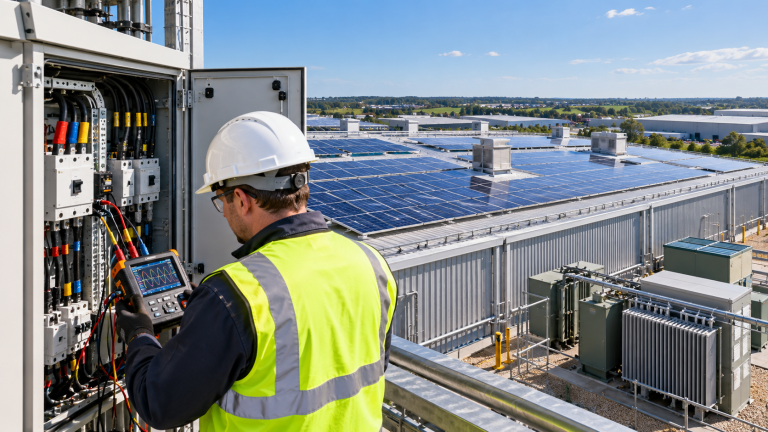

Let’s start with the basics: solar energy comes from the sun. It’s been blasting out free energy for about 4.6 billion years.
In fact, every hour, the sun delivers enough energy to Earth to power the entire planet for a year. And yet, most of us are still paying through the nose for electricity.
Why? Because we’ve been too busy staring at screens instead of rooftops.
But don’t worry – you’re about to join the enlightened.
Let’s break it down step by step so you’ll understand why solar energy, isn’t just science; it’s a cosmic life hack.
Step 1: The Sun Does All the Heavy Lifting:
Imagine the sun as the ultimate overachiever. It’s a 24/7 nuclear fusion reactor sitting 93 million miles away, sending energy to Earth in the form of light and heat. It doesn’t ask for a salary, vacation days, or even a thank-you card. And yet, here it is, throwing free energy at us day after day.
Step 2: Photons: The Energy Delivery Guys:
The sun sends energy to Earth in the form of photons. Think of photons as tiny packets of sunlight. They’re like those delivery drivers who bring your packages – except photons don’t get stuck in traffic or leave your stuff on the neighbours’ patio. When photons hit a solar panel, they bring their energy with them. This is where the magic starts to happen.
Step 3: Solar Panels: The Great Energy Catchers:
Solar panels are the sun’s version of flypaper. They’re made of special materials – usually silicon – that love catching photons. Each solar panel is like a giant energy sponge, soaking up sunlight and converting it into electricity.
Step 4: The Electric Current: Energy on the Move:
Now that the electrons are all hyped up, they need somewhere to go.
Enter the electric circuit. Solar panels are designed with built-in wiring that guides these excited electrons into a current. Think of it like organising a group of rowdy kids into a conga line. Once the electrons start moving in the right direction, bam! You’ve got electricity.
But wait – it’s not quite ready to use yet.
That’s because the electricity coming out of solar panels is in direct current (DC) form. Most of the stuff you use (like your toaster, laptop, or industrial machinery) runs on alternating current (AC). Don’t worry; we’ve got a gadget for that.
Step 5: Meet the Inverter: The Translator of Electricity:
Think of the inverter as the Rosetta Stone for energy. It takes the DC electricity from your solar panels and converts it into AC electricity that your appliances and machines can understand. The inverter is where the raw power of the sun gets refined into something you can plug into. It’s like taking raw cocoa beans and turning them into chocolate. Delicious, usable, electric chocolate.
Step 6: Powering Your Business: The Endgame:
Once the inverter has done its job, the electricity flows into your building’s power system, ready to light up your factory floor, spin your machines, or keep your coffee machine buzzing.