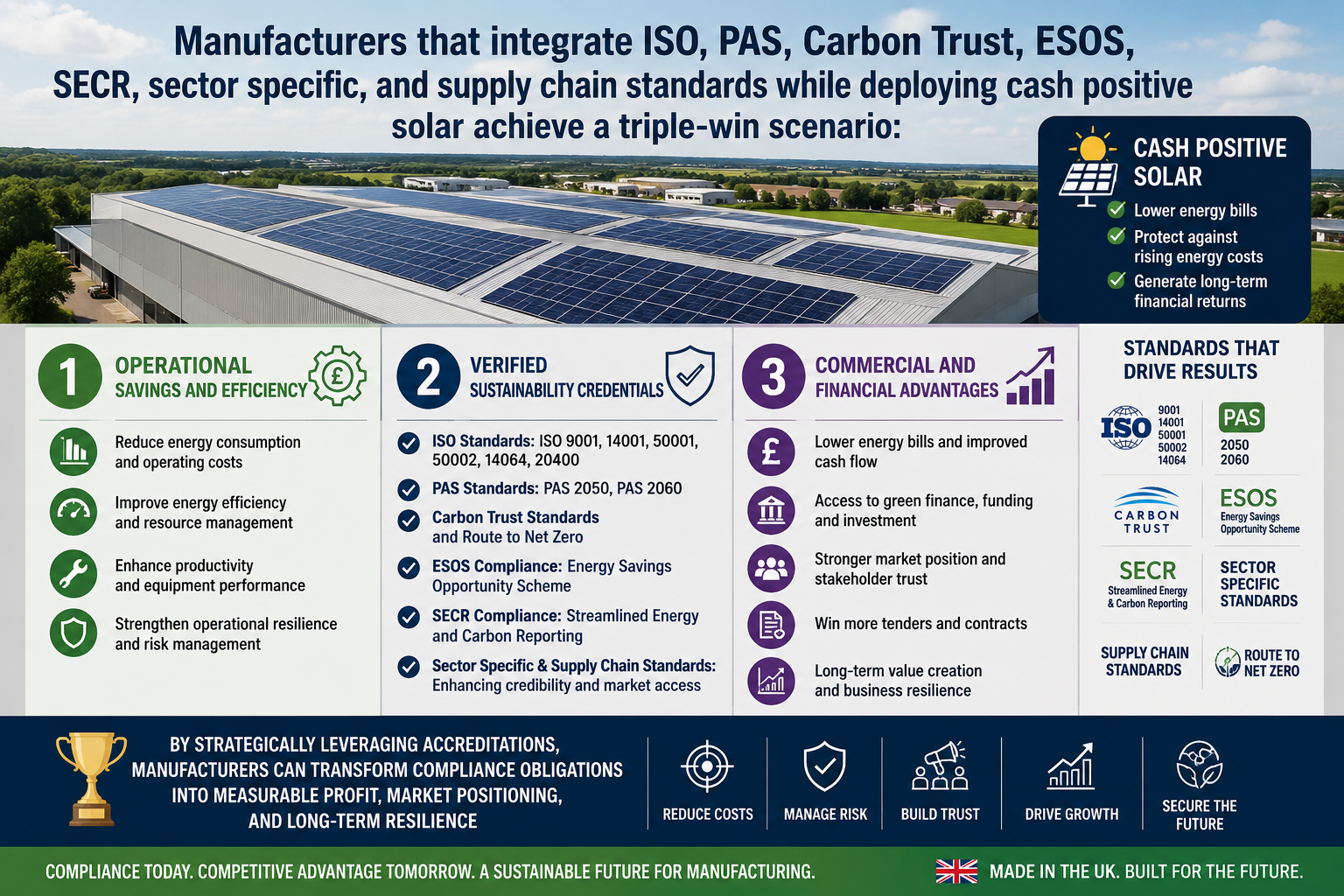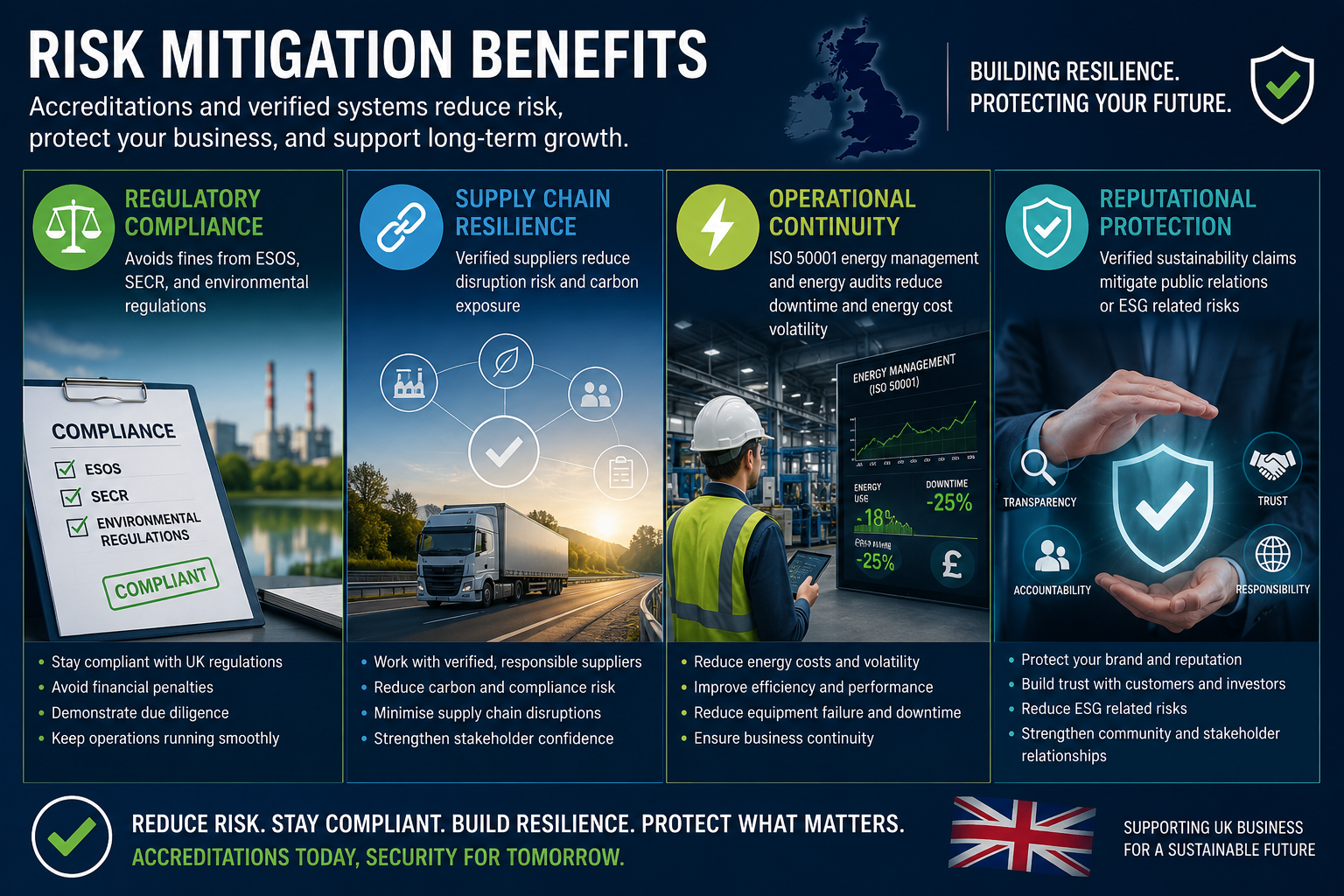

Across UK manufacturing, purchasing behaviour is changing rapidly. Large buyers increasingly require suppliers to:
1. Disclose energy and carbon data
2. Demonstrate structured management systems
3. Commit to carbon reduction targets
4. Evidence year-on-year progress
This applies not only to direct OEM relationships, but also to:
1. Tier-2 and Tier-3 suppliers
2. Contract manufacturers
3. Component and materials producers
Accreditations act as shortcuts for buyers:
1. They reduce due diligence effort
2. They standardise supplier evaluation
3. They provide external assurance
For manufacturers, this means:
1. Holding the right accreditations reduces sales friction
2. Lacking them increasingly excludes you before price is even discussed
Energy is no longer a minor overhead for factories.
For many UK manufacturers:
1. Electricity is one of the top three operating costs
2. Price volatility makes forecasting difficult
3. Margin erosion from energy costs is real and ongoing
At the same time:
1. Passing energy cost increases to customers is often limited
2. Global competition puts pressure on pricing
3. Efficiency gains elsewhere are harder to find
This makes energy strategy inseparable from accreditation strategy.
Standards such as ISO 50001, ESOS and carbon reporting frameworks do not just demand measurement – they force strategic decisions.
Those decisions, when supported by the right investments, can materially improve profitability.
Why solar keeps appearing throughout our new book?
This is not because solar is the only solution – but because it uniquely:
1. Directly reduces grid electricity consumption
2. Produces measurable, auditable data
3. Improves carbon metrics instantly
4. Can be deployed with no upfront capital
5. Can be structured to be cash positive from day one
For accreditations that rely on:
1. Energy baselines
2. Carbon inventories
3. Continuous improvement evidence
On-site solar becomes a high impact enabler, not a distraction.
The final chapter of our book brings all the accreditations together and shows, in financial detail, how cash positive solar strengthens compliance while increasing factory profit.
You can buy a copy off Amazon, or simply connect and message me to request a complimentary copy.