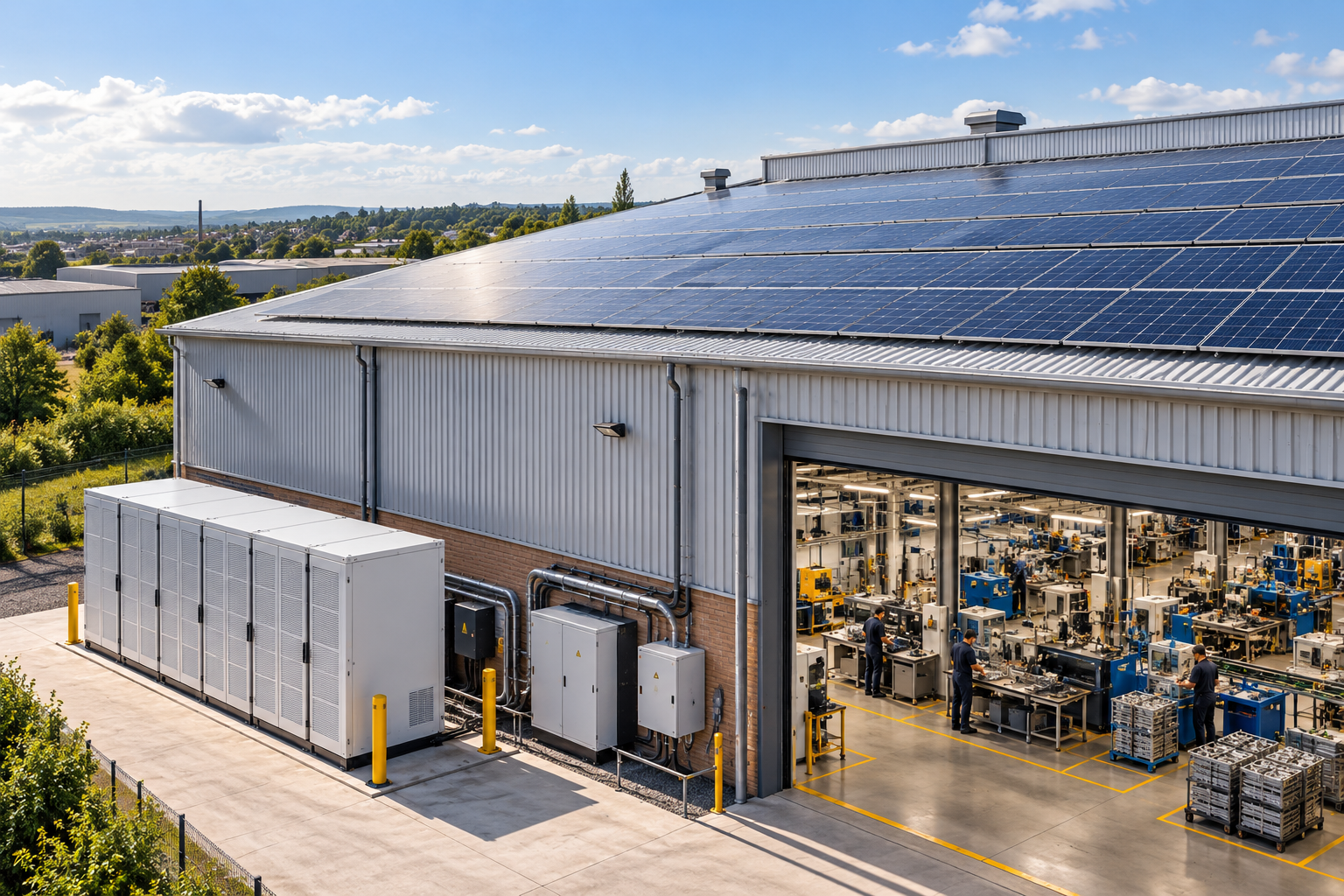
For a UK factory, the best commercial solar system is not necessarily the largest array that will fit on the roof. It is the system that matches the site’s real electricity demand closely enough to maximise valuable on-site consumption and deliver a strong financial return.
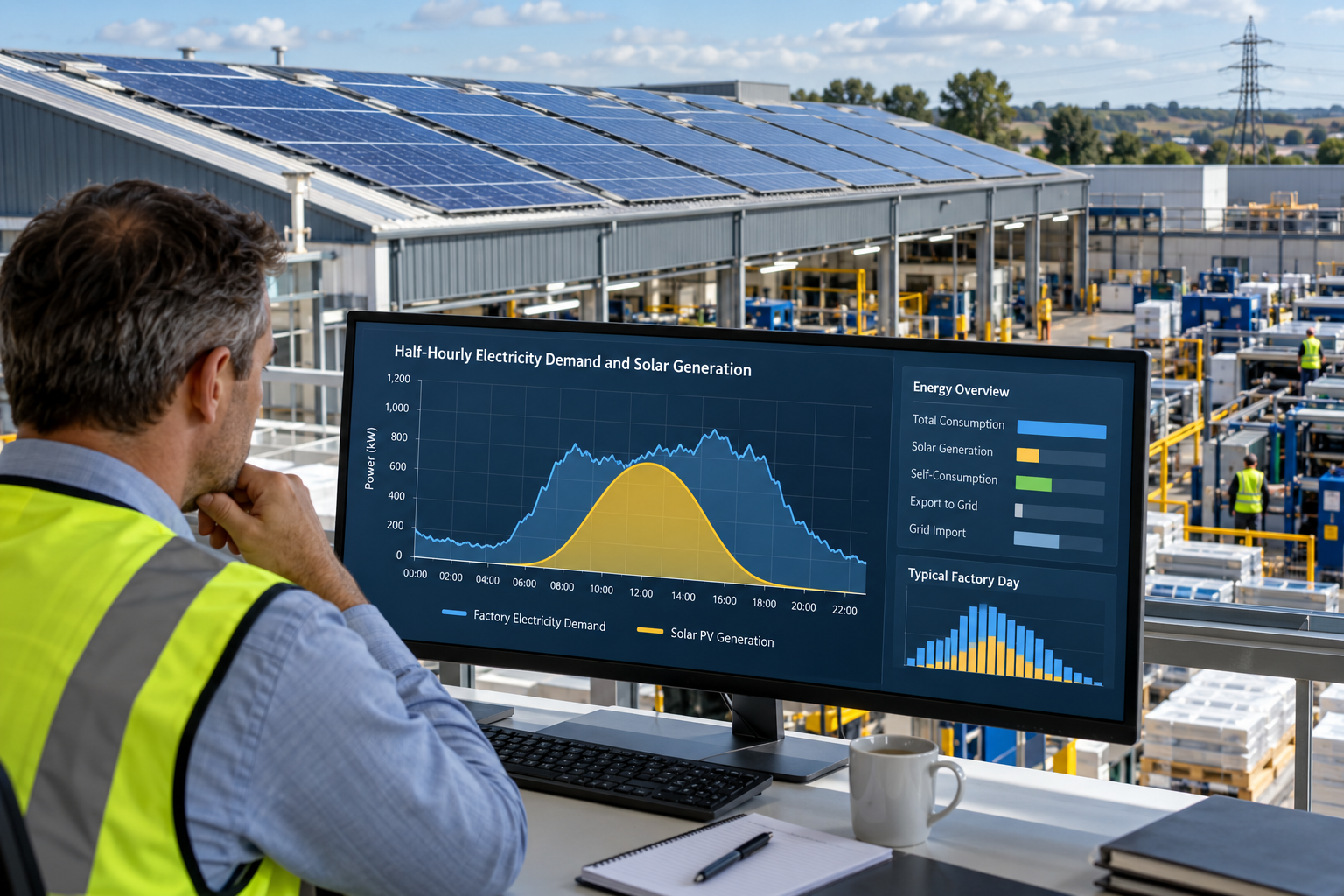
That is why half-hourly electricity data is one of the most useful inputs when sizing factory solar PV. Instead of relying only on annual kWh figures, it shows when your factory actually consumes electricity throughout each working day.
What is half-hourly electricity data?
Half-hourly data records electricity consumption in 30-minute intervals, creating 48 readings for every full day. Ofgem explains that eligible businesses have long used actual half-hourly consumption for electricity settlement, while Great Britain is continuing its wider move towards Market-wide Half-Hourly Settlement.
For solar design, those readings can reveal far more than an annual electricity bill: daytime baseload, production peaks, shift patterns, weekend demand, seasonal changes and periods when electricity use falls sharply.
Why annual electricity consumption is not enough
Imagine two factories each consuming 1,000,000 kWh per year. Factory A operates mainly during daylight hours, Monday to Friday. Factory B has substantial overnight demand and lower daytime consumption. Their annual usage is identical, but the solar system that best suits each site could be very different.
A design based primarily on annual consumption can therefore hide an important question: how much solar electricity can the factory actually use while it is being generated?
Matching solar generation to factory demand
A robust feasibility study compares the factory’s half-hourly load profile with an expected solar generation profile. This helps identify an appropriate array size and estimate how much generation should be consumed behind the meter rather than exported.
High daytime electricity demand can make manufacturing sites particularly attractive for commercial solar because production machinery, compressed air, HVAC, refrigeration, process loads and office consumption may coincide with solar generation.
Our guide to maximising factory solar self-consumption explains why increasing the proportion used on site can improve project economics.
What should you look for in the data?
- Daytime baseload: the electricity demand that remains consistently present during solar-generating hours.
- Production peaks: periods when machinery and processes increase demand.
- Shift patterns: whether the factory operates one, two or three shifts.
- Weekends and shutdowns: lower-demand periods that may increase potential exports.
- Seasonality: changes caused by heating, cooling, production cycles or seasonal orders.
- Future changes: planned EV charging, electrification, new machinery, heat pumps or production expansion.
Avoiding unnecessary solar export
Export is not automatically a problem, but electricity used on site can often have greater value than exported electricity because it displaces electricity that would otherwise have been purchased from the grid. The right balance depends on your import tariff, export arrangements, generation profile and operating pattern.
If a proposed array creates substantial periods of surplus generation, consider whether the system should be resized, whether loads can be shifted into daylight hours, or whether battery storage alongside factory solar has a credible business case.
Half-hourly data and DNO applications
Good load data also strengthens the engineering picture when assessing import, export and connection requirements. Larger commercial solar projects may require engagement with the local Distribution Network Operator, so system design should consider the site connection as well as roof capacity.
See our UK factory solar DNO and G99 guide for more on the grid-connection process.
Roof capacity still matters
Electricity data tells us how much solar generation a factory may be able to use; the building determines what can physically be installed. Roof condition, structural loading, orientation, shading, access, fire-safety requirements and usable area all need consideration.
Before assuming every available square metre should carry PV, read our guide to factory roof suitability for solar panels.
A practical solar-sizing process for manufacturers
- Collect at least 12 months of electricity consumption information where available, including half-hourly data.
- Review operating hours, shifts, shutdowns and planned changes in production.
- Assess usable roof or ground space and structural constraints.
- Model expected solar generation against the factory’s half-hourly demand.
- Calculate expected self-consumption, grid imports and exports.
- Test alternative system sizes rather than automatically maximising panel count.
- Model savings, cash flow, payback and financing assumptions.
- Check DNO/grid requirements before finalising the project.
The key question is not “How many panels fit?”
For manufacturers considering commercial solar, a better question is: what solar system best matches our factory’s electricity demand and financial objectives?
Half-hourly data helps answer that question with evidence rather than guesswork. Combined with a roof survey, tariff information and realistic generation modelling, it provides a much stronger basis for an investment decision.
Planning factory solar?
Commercial Solar Systems can review your electricity profile, roof opportunity and project objectives to help establish an appropriate solar PV design for your UK manufacturing site. Contact us to discuss your factory and the information needed for an initial assessment.