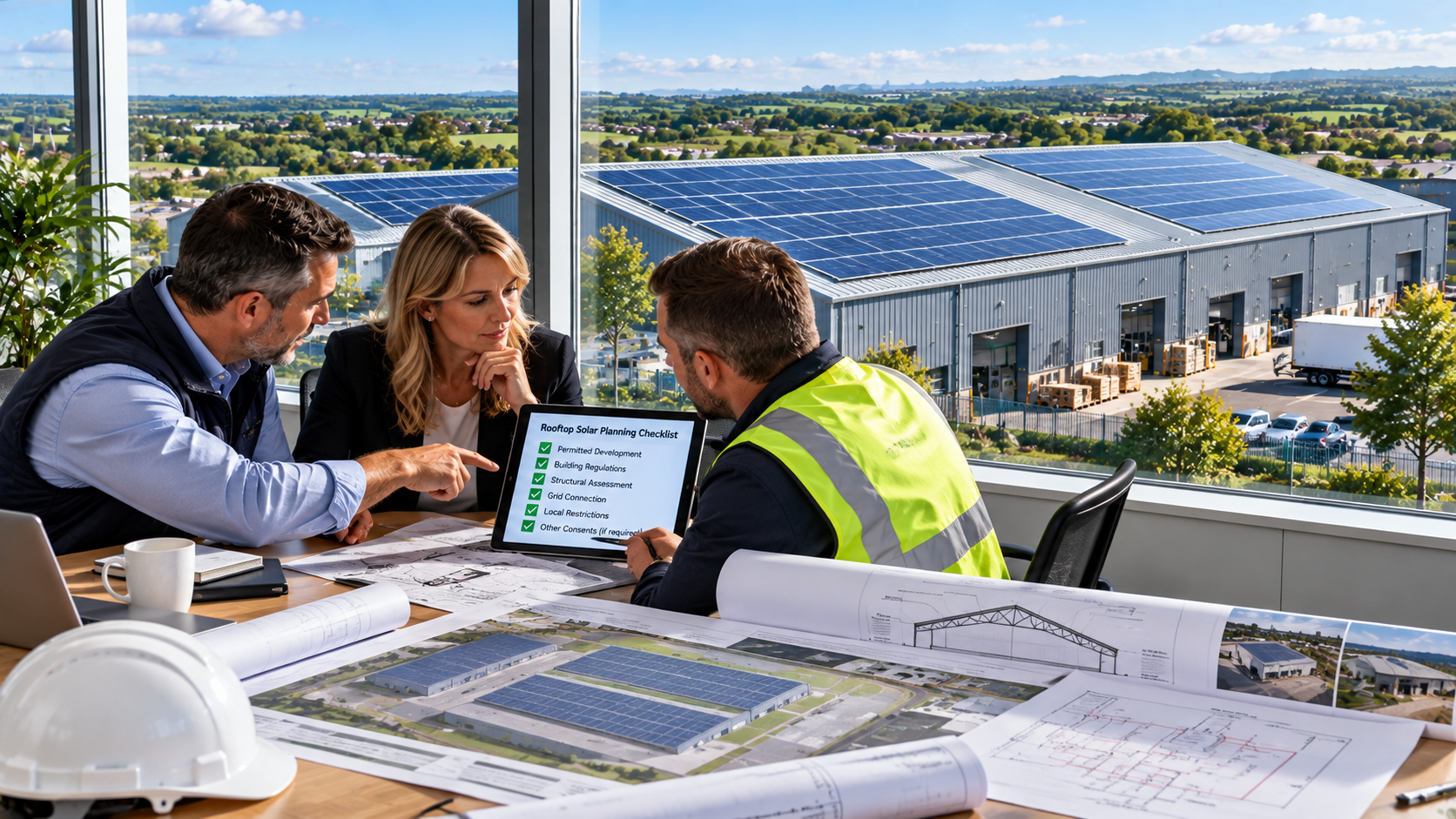
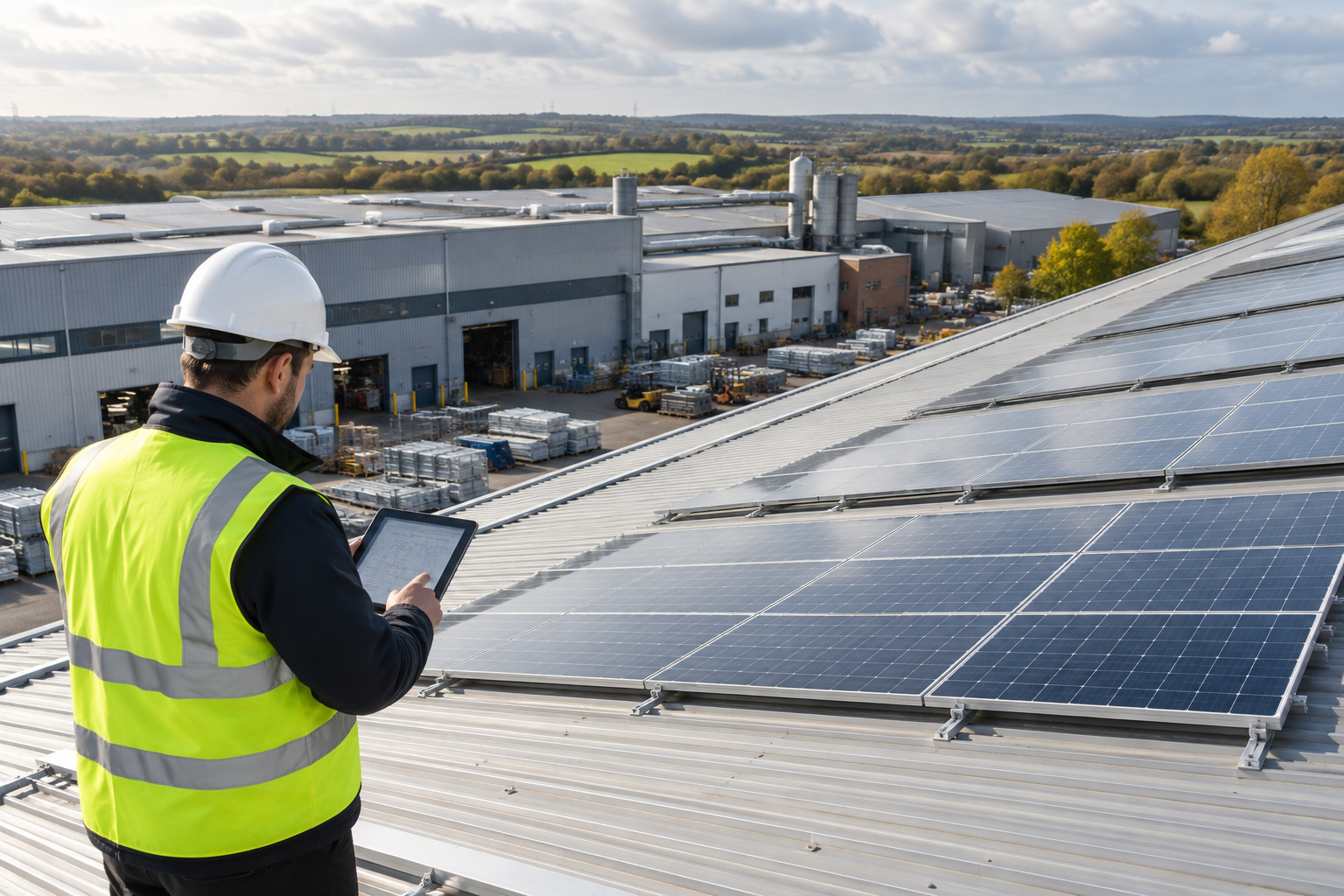
For a UK manufacturer considering rooftop solar, the first question should not simply be “how many panels can we fit?” A commercially sound project starts by establishing whether the factory roof, electricity profile and site constraints are suitable for the proposed solar PV system.
A proper factory roof assessment can reduce project risk, improve system design and help ensure that the financial model is based on usable roof area and realistic onsite electricity consumption. This guide explains the main checks to make before progressing a commercial rooftop solar project.
1. Check the roof structure and loading capacity
Commercial solar panels, mounting systems and associated equipment add load to a roof. The existing structure therefore needs to be assessed for the proposed installation, taking account of the roof construction, age, condition and the intended fixing system. Where appropriate, a competent structural professional should confirm suitability before the final system design is agreed.
2. Assess roof condition before installing solar
Solar PV is a long-term asset, so installing it over a roof that is approaching major repair or replacement can create avoidable future costs. Manufacturers should consider roof covering condition, known leaks, corrosion, drainage, warranties and anticipated maintenance. Coordinating necessary roof works with the solar project can be more efficient than removing and reinstating panels later.
3. Identify genuinely usable roof area
Total roof area is not the same as usable solar area. Rooflights, vents, plant, access routes, fire-safety requirements, shading, roof edges and maintenance zones can all reduce the area available for panels. A good design balances generation potential with safe access and the ongoing operation of the factory.
4. Match the solar system to factory electricity demand
Factories can be particularly well suited to solar because production equipment often creates substantial daytime electricity demand. However, the best system is not necessarily the largest array that physically fits. Half-hourly electricity data and operating patterns should be reviewed so generation can be matched sensibly with onsite consumption.
For a broader explanation of manufacturing applications, see our solar panels for factories UK guide.
5. Consider orientation, shading and roof layout
Roof pitch, orientation and shading affect generation, but modern commercial designs can make productive use of a variety of industrial roof layouts. The design should be based on site-specific modelling rather than a simple panel-count estimate.
6. Include grid, planning and electrical considerations early
Connection requirements, electrical infrastructure and any relevant planning considerations should be reviewed early enough to influence the project programme. Larger commercial installations may require network assessment or approval, so these steps should form part of project planning rather than being treated as an afterthought.
7. Model finance and ROI using the assessed design
Once roof suitability, usable area and electricity demand are understood, the business can compare cash purchase, asset finance or other commercial funding routes using a more credible generation model. Our commercial solar asset finance guide explains one funding approach in more detail.
Factory roof solar suitability checklist
- Structural capacity assessed for the proposed system
- Roof covering condition and remaining service life reviewed
- Leaks, corrosion and drainage issues identified
- Rooflights, plant, access and exclusion zones mapped
- Shading, orientation and pitch modelled
- Half-hourly electricity consumption reviewed where available
- Electrical and grid-connection requirements considered
- Solar design coordinated with future roof maintenance
- Finance and ROI model based on the assessed system rather than headline roof area
Frequently asked questions
Can an older factory roof support solar panels?
Potentially, but age alone does not establish suitability. The roof structure, covering condition, proposed loading and fixing method need to be assessed for the individual building.
Should the roof be replaced before solar panels are installed?
Not necessarily. If significant roof work is likely during the expected life of the solar system, however, coordinating that work before or alongside installation can avoid unnecessary panel removal and reinstatement later.
Is every square metre of factory roof usable for solar?
No. Rooflights, plant, shading, access routes, safety zones and other constraints can materially reduce the usable area. System design should therefore use surveyed, usable roof space rather than gross roof dimensions.
Assess your factory roof before finalising the solar business case
A roof suitability assessment connects the engineering and financial sides of a commercial solar project. Commercial Solar Systems can help UK factories and manufacturers assess the site, electricity demand and funding options before progressing to detailed design. Contact us to discuss your factory solar project.