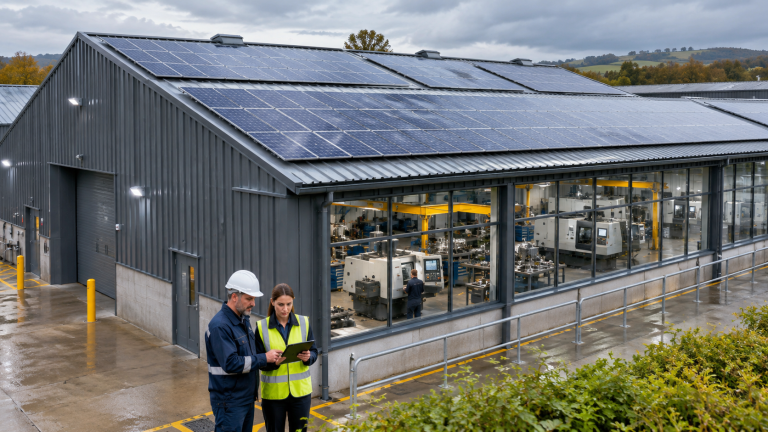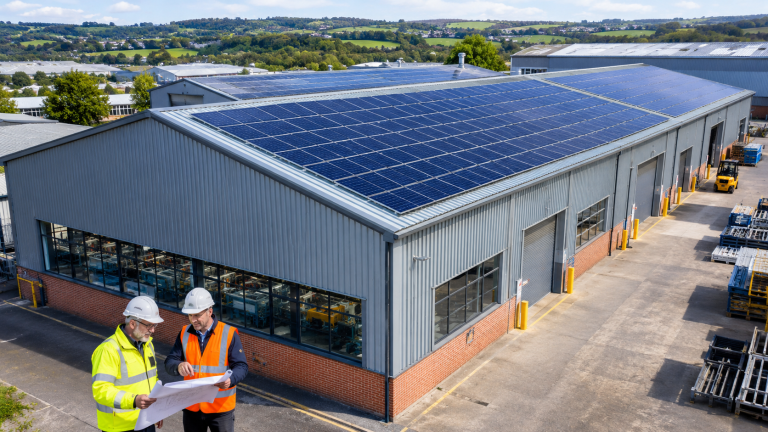
A factory solar proposal should not be judged on a sunny June afternoon alone. UK manufacturing sites need electricity throughout the year, while rooftop photovoltaic (PV) generation varies substantially by season, weather, roof orientation and shading. The practical question is not whether panels work in winter—they do—but how a manufacturer should account for lower winter output when forecasting grid purchases, savings and cash flow.
Why winter matters to a factory solar business case
Solar panels convert daylight into electricity, not heat. They can generate on cold, bright days, and cooler module temperatures can improve conversion efficiency compared with very hot conditions. However, shorter daylight hours, lower sun angles, cloud cover and potential shading generally reduce total UK winter generation. Frost, snow or accumulated debris may temporarily obstruct panels. The annual generation estimate therefore needs a credible month-by-month profile, not a flat one-twelfth allocation.
For factories, the mismatch can be particularly important: production, lighting, ventilation and heating-related electrical demand may increase or remain high in winter even as solar generation falls. A site operating two or three shifts will also continue buying electricity overnight regardless of daytime PV output unless separate storage or other supply arrangements are in place.
1. Ask for a monthly generation forecast, not just annual kWh
A proposal might predict 200,000 kWh per year. That headline is useful but insufficient for budgeting. Ask the designer for twelve monthly generation estimates, the underlying weather dataset, assumed system losses, orientation and tilt, shading assumptions, and a clear distinction between expected and conservative outcomes. A monthly forecast should also identify the effect of planned roof plant, neighbouring buildings and any proposed extensions.
Review the forecast alongside the factory solar feasibility and design guide so that the roof, electrical and commercial assumptions are assessed together.
2. Match each month against half-hourly factory demand
Take at least twelve representative months of half-hourly import data, where available, and map the production calendar: day shifts, night shifts, weekend operation, seasonal orders, maintenance shutdowns and holiday closures. A food producer with refrigeration demand every day has a different profile from an engineering workshop that closes for two weeks in August and operates one daytime shift in December.
Model the solar generation and factory load in the same time intervals. This distinguishes electricity consumed directly on site from electricity exported, which may have a different financial value. Our half-hourly demand and self-consumption guide explains the process in more detail.
3. Do not apply one electricity price to every generated unit
Every solar kWh is not necessarily worth the full imported electricity tariff. Electricity used directly can avoid some import charges, subject to the actual contract and tariff structure. Exported electricity is valued according to the site’s export arrangements, while generation curtailed by network constraints may have no export value. A sound winter budget separates imported electricity avoided, exports, any curtailment and ongoing system costs.
For illustration only, suppose a site produces 10,000 kWh of solar electricity in a particular month and consumes 8,000 kWh directly, exporting 2,000 kWh. At an illustrative avoided import cost of 25p/kWh and export payment of 10p/kWh, the gross monthly energy value would be £2,200 before operating costs and contractual adjustments: £2,000 from self-consumption and £200 from exports. Actual tariffs, metering and charges must be verified; this is not a site-specific forecast.
4. Model winter production and grid imports separately
Compare at least three monthly cases: the central forecast, a lower-generation case and a changed-production case. The last could involve an extra winter shift, a temporary shutdown, an expanded refrigeration line or reduced daytime operations. A lower-generation winter does not necessarily make the annual investment unattractive, but it can increase seasonal grid purchases and alter working-capital requirements.
Finance directors should compare projected monthly electricity expenditure with and without solar, rather than relying only on a single annual saving. Where a system is financed, compare repayment obligations against the actual seasonal savings pattern. Our factory solar business-case stress-test covers broader tariff and shift-pattern sensitivity.
5. Check whether battery storage solves a genuine problem
Battery storage can shift some daytime generation into later hours, but it cannot create missing winter sunlight. The commercial case depends on usable battery capacity, charge/discharge losses, cycle patterns, tariff spreads, peak-demand arrangements, capital cost and operational constraints. A factory with little winter solar surplus may find a large battery underused for solar shifting during that season. Assess storage against measured load and forecast generation, not a generic claim that batteries eliminate winter grid imports.
6. Plan winter maintenance and operational access
Ensure the maintenance plan covers monitoring alerts, inverter availability, drainage, roof access, electrical inspections and safe procedures for any roof work. Avoid informal advice to climb onto icy roofs or remove snow from panels. Work at height and electrical interventions require competent specialists and site-specific risk assessment. Keep roof warranty, fire access and insurer requirements in view. Compare the proposed arrangements with the factory solar insurance documentation checklist.
7. Verify real performance once the system is operating
After commissioning, compare measured generation with a weather-adjusted expectation rather than simply declaring every cloudy month a fault. Monitor inverter availability, export, grid imports and site consumption. Record production changes that explain differences. Investigate persistent deviations through a qualified operator or installer, using the agreed performance-monitoring and warranty procedures.
Winter factory solar: questions for the board
- Does the investment paper show monthly generation and monthly grid purchases?
- Have we matched solar output to actual half-hourly production demand?
- What happens to cash flow in a dull winter or during a production shutdown?
- Are self-consumption, export and curtailment valued separately?
- Have roof, inverter, maintenance, insurance and financing costs been included?
- Who will monitor the system and investigate underperformance?
Conclusion: budget for the whole year
Winter is not a reason to dismiss factory solar. It is a reason to build a better investment case. UK manufacturers should ask for monthly forecasts, realistic half-hourly demand modelling and a clear explanation of seasonal grid purchases. That produces a more defensible decision than a single annual savings figure.
For a site-specific assessment of factory roof suitability, electricity use, financing and expected returns, contact Commercial Solar Systems.