
Installing rooftop solar on a UK factory is not simply a question of how many panels will fit. Manufacturers also need to understand the roof construction, electrical design, fire risk assessment, maintenance access and insurer requirements. A well-planned project considers these matters before equipment is ordered, helping avoid expensive redesigns and delays.
This practical guide is for factory owners, operations directors, facilities managers and finance teams assessing commercial solar. It complements our broader solar panels for factories guide by focusing specifically on factory solar fire safety and insurability.
Why fire safety belongs in the factory solar business case
Solar PV changes how a roof and its electrical systems are used. The design introduces panels, mounting systems, DC cabling, inverters and isolation arrangements. Existing factory activities, roof materials, storage, processes and access routes must be considered together. This does not mean solar is inherently unsuitable for factories; it means a competent, site-specific assessment should shape the design.
In England and Wales, the person responsible for fire safety in non-domestic premises must ensure an appropriate fire risk assessment is undertaken and reviewed. Government guidance specifically addresses factories and warehouses. Requirements differ across UK jurisdictions, so sites in Scotland should follow the relevant Scottish framework.
1. Understand the roof before designing the solar array
A roof survey should consider its condition, age, structure, covering, insulation, rooflights, drainage, existing penetrations and planned refurbishment. Some roofs may need repair or replacement before PV installation is sensible. Ask for the roof build-up and proposed mounting details to be reviewed by competent designers and the relevant insurer, rather than relying on an aerial image alone.
Roof work itself presents serious risks. The Health and Safety Executive advises that roofs should be treated as fragile until a competent person establishes otherwise; rooflights and deteriorated sheets deserve particular attention. See HSE guidance on fragile surfaces and our factory roof suitability guide.
2. Check electrical design, cabling and isolation
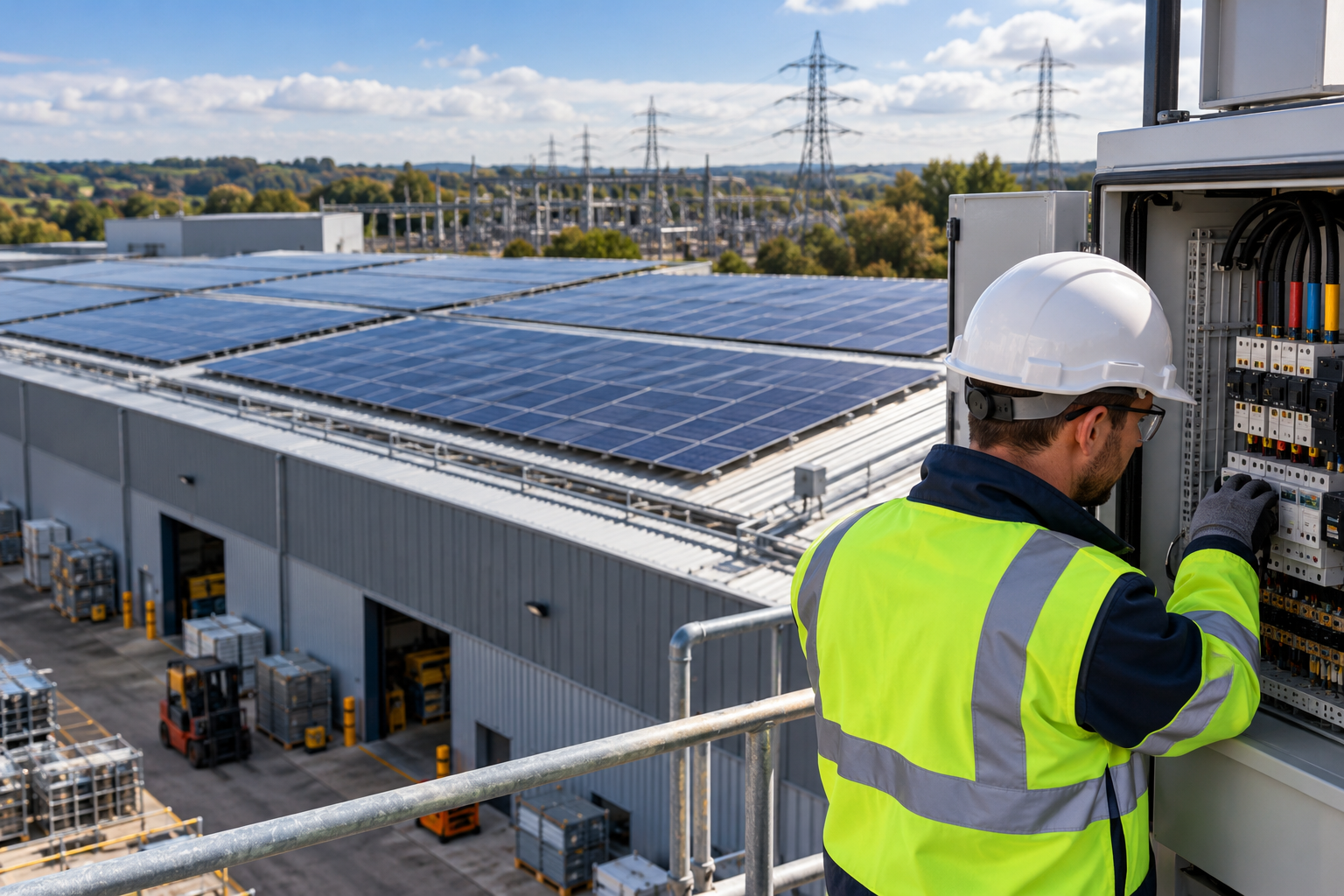
Factory solar designs should document the routing and protection of DC and AC cables, inverter locations, electrical protection, isolation and labelling. Equipment should be selected and installed by suitably competent professionals, with testing, commissioning and handover records provided. The installation must be considered alongside the site’s existing distribution equipment and operating conditions.
Solar modules can generate electricity when exposed to daylight, so switching off the building’s normal supply does not necessarily remove every electrical hazard. The site’s emergency information should identify the PV system and the isolation arrangements that trained personnel and emergency responders need to know about.
3. Plan access for maintenance and emergency response
Do not assume the maximum theoretical panel coverage is the best design. Discuss access routes, rooflights, smoke vents, fire compartmentation, service equipment, cable routes and any operational restrictions at design stage. The appropriate layout depends on the building and professional fire strategy, rather than a universal spacing rule.
Maintenance should remain practical throughout the life of the system. Agree inspection responsibilities, fault-response arrangements and access procedures before handover. Our commercial solar maintenance guide explains the operational side.
4. Speak to your insurer early
Before approving the final design, ask the factory’s property insurer or broker whether it has requirements for rooftop PV, roof coverings, mounting systems, separation, electrical components, maintenance, fire risk documentation or contractor competence. Different insurers and buildings may produce different responses. Never promise an automatic insurance-premium reduction from adding solar.
For leased or multi-occupied factories, also establish who owns the roof, who may authorise alterations and how responsibilities are shared between landlord, tenant and any other responsible persons. The fire risk assessment and emergency arrangements may need to be updated to reflect the installation.
5. Consider battery storage as a separate design decision
If a factory is considering battery storage alongside rooftop PV, assess the battery location, manufacturer requirements, access, electrical protection and fire-safety implications separately. A battery should not be added merely because solar panels are being installed: first establish the financial and operational purpose using demand and generation data. See our factory solar battery-storage guide.
6. Use evidence, not unsupported safety claims
Government-commissioned research published in 2025 and updated in February 2026 examines how rooftop PV may influence fire behaviour and firefighting. The Building Safety Regulator’s research collection is useful background, but its findings are research rather than new mandatory design rules for every factory roof. A project still needs the applicable law, standards, competent assessment and insurer input.
Factory solar fire-safety checklist before signing a contract
- Has the roof’s structure, condition and construction been assessed?
- Have the site fire-risk assessor and insurer reviewed the proposed change?
- Are PV equipment, electrical protection, cable routes and isolation documented?
- Have roof access, smoke vents, maintenance routes and emergency arrangements been considered?
- Are contractor competence, commissioning tests and handover documents specified?
- Is battery storage, if proposed, assessed on its own merits?
- Do the commercial assumptions include any safety-driven design or roof-upgrade costs?
Frequently asked questions
Are solar panels safe on a factory roof?
They can be suitable where the building, roof, electrical installation, access and fire-safety arrangements have been competently assessed and the system is appropriately designed, installed and maintained. Suitability must be decided for the individual site.
Does factory solar require a new fire risk assessment?
The responsible person should review the existing fire risk assessment when changes may affect fire risks or precautions. A rooftop PV installation should be considered as part of that review; the scope of any new assessment depends on the premises and the proposed work.
Will installing solar invalidate factory insurance?
There is no single answer for every policy. Inform the insurer or broker about the proposal and confirm any conditions before work starts. Keep written records of design approvals, commissioning and maintenance.
Should the factory fit as many panels as possible?
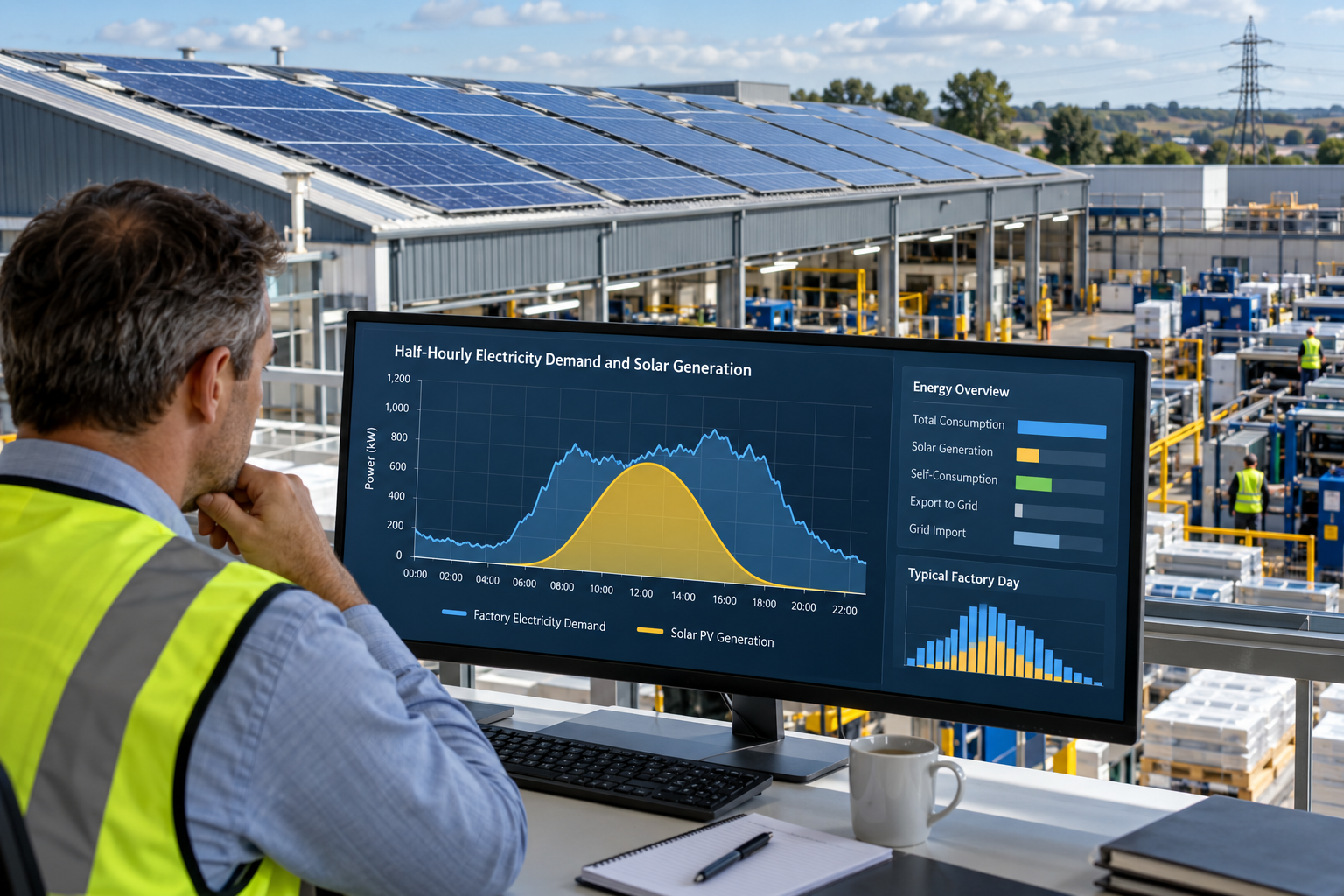
Not automatically. Safe roof layout, access, usable roof area, the factory’s electricity demand, grid connection and investment return all affect the right system size. See our half-hourly electricity data and solar sizing guide.
Get a factory solar proposal built around your site
Commercial Solar Systems helps UK manufacturers assess commercial rooftop solar as an engineering and financial project. If you are considering a factory installation, contact our team to discuss roof suitability, electricity use, design constraints and finance options. A site-specific professional assessment is essential before installation.