
In Lancashire, a large commercial printing company specialising in packaging and promotional materials was grappling with relentless energy price increases.
Their factory housed high-speed presses, drying units, and finishing machines that consumed vast amounts of electricity every hour of the working day.
By early 2025, the finance director was signing off energy bills of over £40,000 each month, with little control over volatility in the wholesale market.
“Margins in print are already razor-thin,” the FD explained. “Every unpredictable rise in electricity made it impossible to forecast accurately. We needed stability as much as savings.”
The managing director was initially cautious about solar, fearing disruption to production schedules.
But when the team explored financing, the case became compelling. The solution was an asset finance solar system, requiring no capital outlay.
Repayments were structured so that they came in lower than existing electricity costs, ensuring the project was cash-positive from day one.
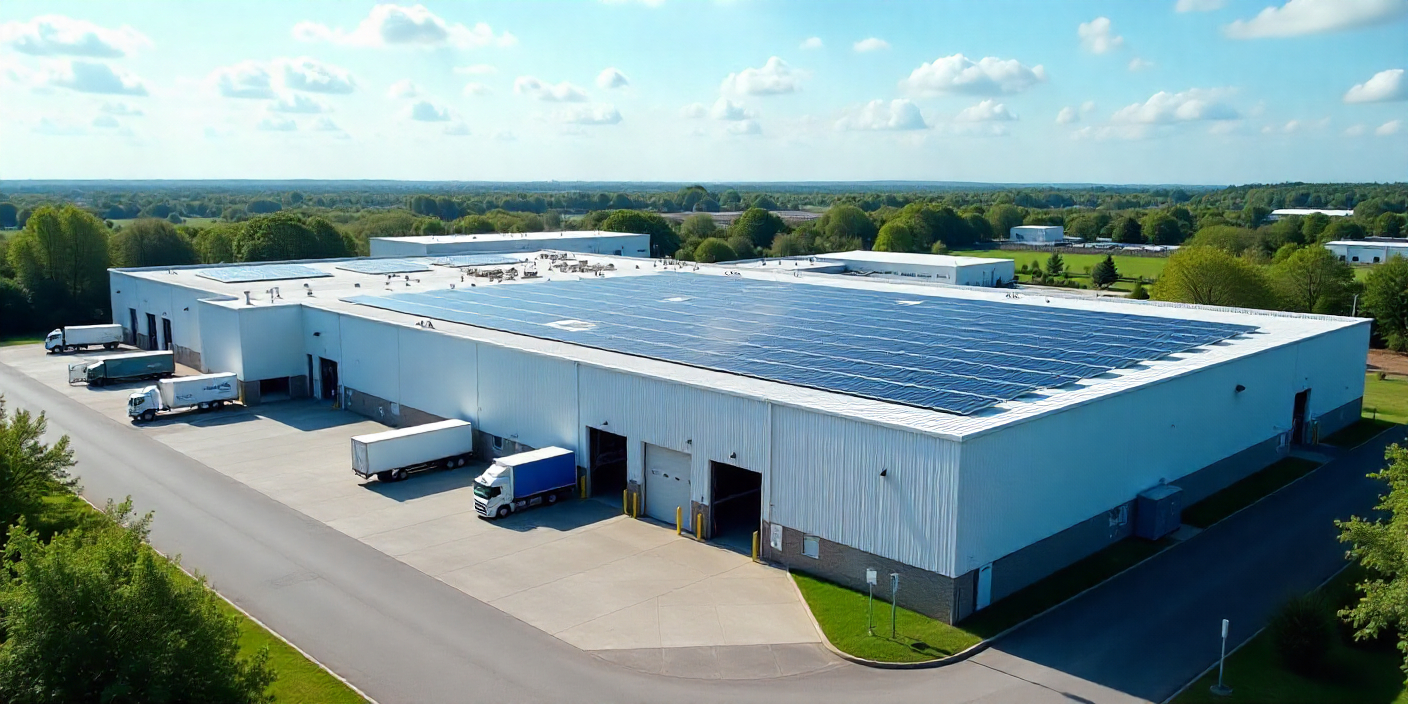
The installation team fitted a 1MW rooftop solar system across the factory’s wide roof space in under three months.
Careful scheduling avoided interfering with press runs, meaning production never stopped. Once live, the panels generated around 70% of the site’s power requirements.
Immediately, the company’s electricity bills dropped from £40,000 to about £12,000 while the monthly 5-year asset finance repayment stood at £20,000.
The combined effect was a £8,000 net monthly saving from month one.
More importantly, the finance director now had predictability – no more second-guessing sudden wholesale energy spikes.
Over the next 20 years – following the asset finance being settled – the solar system is projected to save the business £7 million, while also avoiding over 1,000 tonnes of CO₂ emissions.
For a company supplying household-name brands that increasingly demand greener suppliers, this wasn’t just an energy project – it became a sales tool.
Within six months of commissioning the solar array, the factory won a new contract with a major consumer goods company.
During contract negotiations, the client praised the company’s visible commitment to sustainability, which gave them an edge over less environmentally proactive competitors.
The managing director summed it up:
“We thought of solar as a way to cut bills. What we didn’t realise was how much it would boost our standing with customers. It shows we’re forward-thinking, and that matters more than ever.”
For finance directors in printing and packaging, the lesson is simple:
Turning unused roof space into an energy asset delivers immediate savings, stabilises costs, and provides a powerful narrative for winning business.
In a sector where margins are shrinking, solar is proving to be one of the few levers that strengthens both the balance sheet and the brand.


