
In South Yorkshire, a family-owned steel fabrication business was facing unprecedented energy costs. Plasma cutters, welding stations, and CNC machinery all drew huge amounts of power during long production shifts.
By 2025, monthly electricity bills had exceeded £35,000, making energy their second largest expense after raw steel.
The finance director recalled the pressure clearly:
“Every month we were paying the equivalent of a skilled worker’s annual salary just to keep the lights on. It was unsustainable.”
The directors were keen to explore solar, but there was an obstacle:
Capital…
Large investments had already been committed to new machinery, leaving little liquidity for a project of this scale. That’s when a solar rental solution emerged as the answer.
Unlike a purchase or asset-financed model, the rental scheme required no upfront cost and no ownership risk.
The stell fabrication factory agreed to a long-term rental arrangement where the solar provider installed and maintained the system entirely at their cost. In return, the factory paid a fixed monthly rental fee – but crucially, that fee was lower than what they would otherwise pay for the equivalent electricity from the grid.
From day one, the project was cash-positive. The 800kW solar system now supplies around 70% of the site’s daytime demand, immediately cutting monthly electricity bills from £35,000 to around £10,500. The rental fee is £14,500 per month, meaning the company nets an immediate £10,000 in monthly saving, with zero capital outlay.
The arrangement also removes maintenance risk. The rental company retains responsibility for servicing, performance monitoring, and repairs.
For the finance director, this was a critical point:
“We’re not in the energy business. With rental, we just enjoy the savings without worrying about upkeep.”
Over the next 25 years, projected lifetime savings exceed £3 million for the steel fabrication factory, alongside avoidance of over 1,000 tonnes of CO₂ emissions.
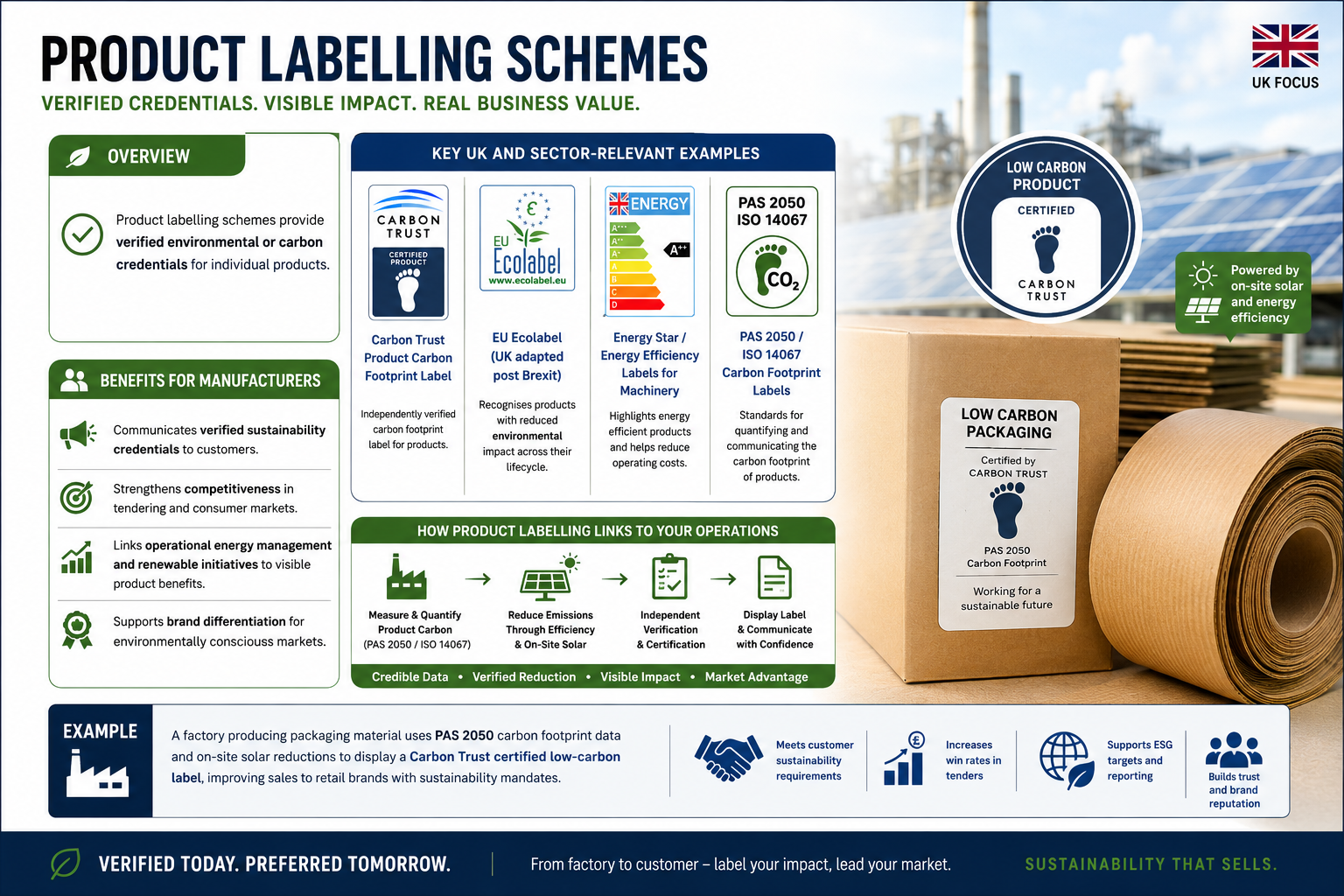
But beyond savings, the impact on the steel fabrication company’s reputation has been transformative. Steel fabrication is often perceived as a high-emission, heavy industry.
By publicising its solar project, the steel fabrication factory repositioned itself as a forward-looking, environmentally responsible supplier.
Within months, it won a major contract with a construction firm that prioritised green procurement.
The managing director explained:
“Solar gave us something our competitors didn’t have – a demonstrable commitment to sustainability. It tipped the scales in our favour.”
For finance directors in energy intensive sectors like steel and metalworking, the lesson is clear:
‘Solar doesn’t have to tie up capital or add operational complexity. A rental system can unlock immediate savings and long-term reputational gains – all without risk, ownership, or upfront costs.’