
For many factory owners, the words “government audit” often trigger thoughts of hassle, cost, and bureaucracy.
But when it comes to the Energy Savings Opportunity Scheme (ESOS), the reality is very different.
Far from being just a compliance exercise, ESOS audits can unlock real, measurable benefits that go far beyond ticking a regulatory box.
The first and most obvious benefit is cost savings:
Energy is one of the largest controllable expenses in manufacturing. ESOS requires a detailed analysis of how energy is consumed across your buildings, processes, and transport.
That analysis often uncovers inefficiencies that have quietly drained money for years.
For example, an audit might reveal that your compressed air system is leaking, your lighting is outdated, or your motors are running far below efficiency standards.
Fixing these issues is typically low-cost but can result in savings of tens or even hundreds of thousands of pounds annually.
The second benefit is competitive advantage:
Energy costs feed directly into product margins. Factories that reduce waste and secure lower operating costs can price more competitively or simply enjoy healthier profits.
In industries where margins are tight, those savings can be the difference between thriving and merely surviving.
Third, ESOS audits deliver future resilience:
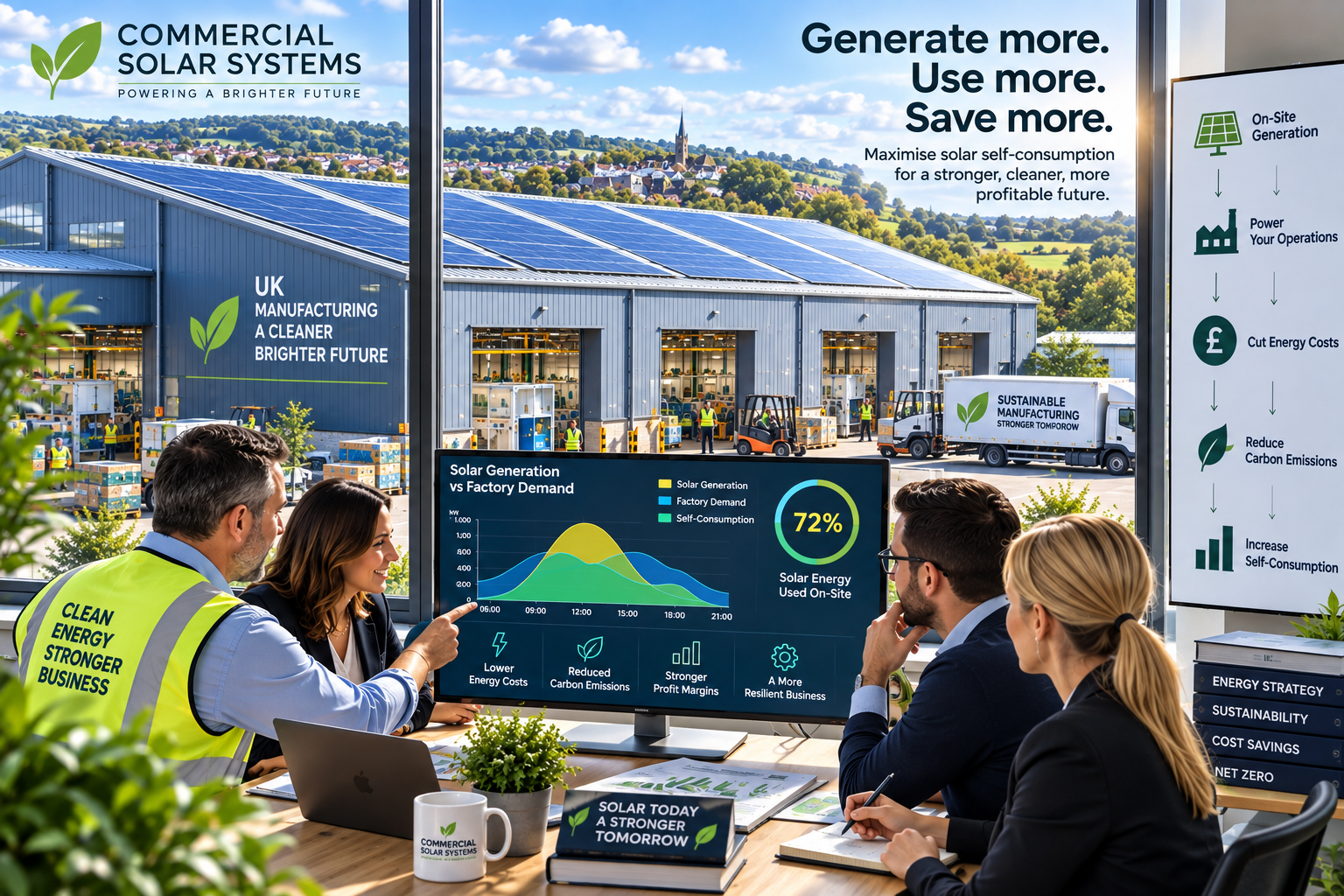
By identifying renewable energy opportunities – most notably rooftop solar panels – audits prepare factories to insulate themselves from rising and volatile grid electricity prices.
Solar power is particularly powerful here, and with today’s financing models, installing panels doesn’t require heavy upfront capital.
Factories can enter agreements where the monthly savings on electricity bills are greater than the cost of repayments, or simply rent a system – resulting in immediate positive cashflow in both scenario’s.
Please note: installing solar panels can lead to millions in extra profits over the system’s life expectancy.
Beyond money, there’s also the reputational benefit:
Increasingly, customers and supply chain partners are asking manufacturers about their sustainability practices.
An ESOS audit gives you data and a roadmap to showcase progress.
If your audit leads to tangible actions like switching to solar, you’re also strengthening your brand’s credibility in an increasingly environmentally conscious marketplace.
Finally, ESOS helps with strategic decision-making:
Many factory owners suspect where waste is occurring but lack the hard numbers to justify investment. An ESOS audit delivers that evidence.
In short, ESOS is not a burden; it’s a blueprint. For factories, it can mean:
✅ Lower operating costs
✅ Stronger competitiveness
✅ Future-proofing against rising energy prices
✅ Improved sustainability credentials
✅ Better data for smarter investment decisions
Factories that embrace the Energy Savings Opportunity Scheme (ESOS) as an opportunity rather than a chore will reap significant long-term rewards.