
Our latest educational series detailed how manufacturers and engineers are increasingly judged not only on their own carbon and environmental performance, but also on the sustainability of their supply chain.
Large buyers, retailers, and government agencies often demand verified supply chain carbon credentials as part of tender requirements and ESG reporting.
To support this we provided educational content detailing:
1. ISO 20400 – Sustainable Procurement
2. PAS/BES standards for responsible sourcing
3. Buyer expectations and tender requirements
4. Strategies for integrating supply chain carbon credentials into operations
Today we’re going to bring all this together, and detail how renewable energy and solar fits in, together with providing you with the key takeaways.
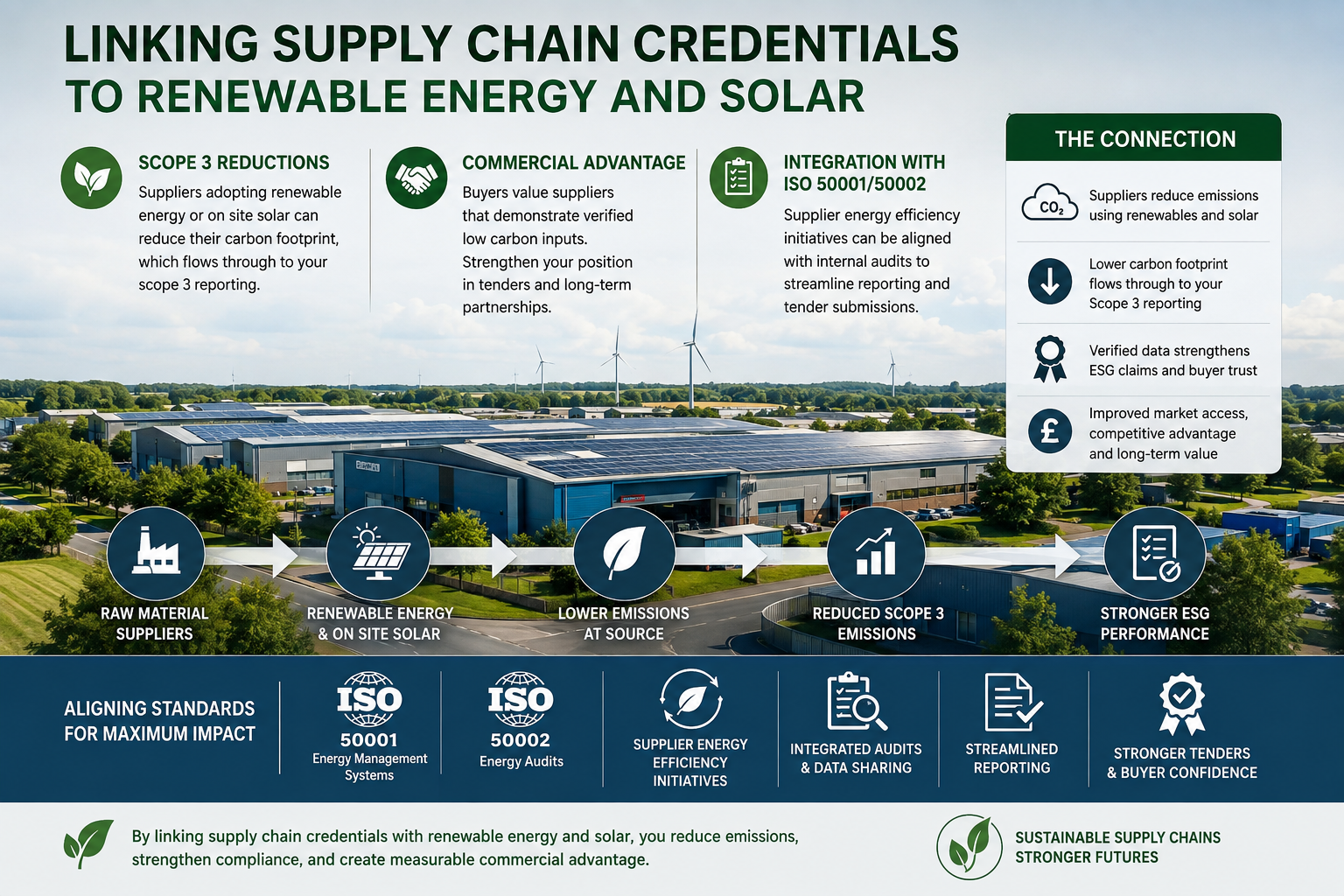
Linking Supply Chain Credentials to Renewable Energy and Solar
1. Scope 3 reductions:
Suppliers adopting renewable energy or on site solar can reduce their carbon footprint, which flows through to your scope 3 reporting
2. Commercial advantage:
Buyers value suppliers that demonstrate verified low carbon inputs
3. Integration with ISO 50001/50002:
Supplier energy efficiency initiatives can be aligned with internal audits to streamline reporting and tender submissions
Example:
A UK electronics manufacturer sources components from a supplier with onsite solar and ISO 50001 certification.
Verified emissions reductions are incorporated into the manufacturer’s SECR report and tender submissions, enhancing competitiveness.
Key Takeaways for Manufacturers
1. Supply chain carbon credentials are critical for tender success, ESG reporting, and scope 3 reduction
2. ISO 20400 provides a framework for sustainable procurement, while PAS/BES standards offer verifiable responsible sourcing evidence
3. Integration with ISO 50001, ESOS, SECR, PAS 2060, SBTi, and Carbon Trust initiatives ensures comprehensive sustainability governance
4. Verified supplier initiatives, especially energy efficiency and renewable energy, strengthen corporate carbon claims and commercial positioning
5. Manufacturers that proactively manage supply chain carbon enhance reputation, tender success, and operational efficiency
What Comes Next
With supply chain carbon credentials integrated into procurement, tendering, and ESG reporting:
1. Manufacturers have a complete carbon and energy management ecosystem
2. Internal and external initiatives align, from ISO 50001 energy audits to PAS 2060 carbon neutrality
3. On-site solar and renewable investments contribute to both internal reductions and scope 3 supply chain impact
Additional Resource
If you’d like to learn more about operational improvement / cost reduction related accreditations, please request a complimentary copy of our factories guide book – Planet meets Profit.