As we discussed in our latest educational series posts – manufacturers and engineers are increasingly judged not only on their own carbon and environmental performance, but also on the sustainability of their supply chain.
Large buyers, retailers, and government agencies often demand verified supply chain carbon credentials as part of tender requirements and ESG reporting.
To support this this latest educational series is focusing on:
1. ISO 20400 – Sustainable Procurement
2. PAS/BES standards for responsible sourcing
3. Buyer expectations and tender requirements
4. Strategies for integrating supply chain carbon credentials into operations
Our first two episode’s covered ISO 20400 – Sustainable Procurement, and PAS/BES Standards – Responsible Sourcing.
Today we’ll be covering – buyer expectations and tender requirements.
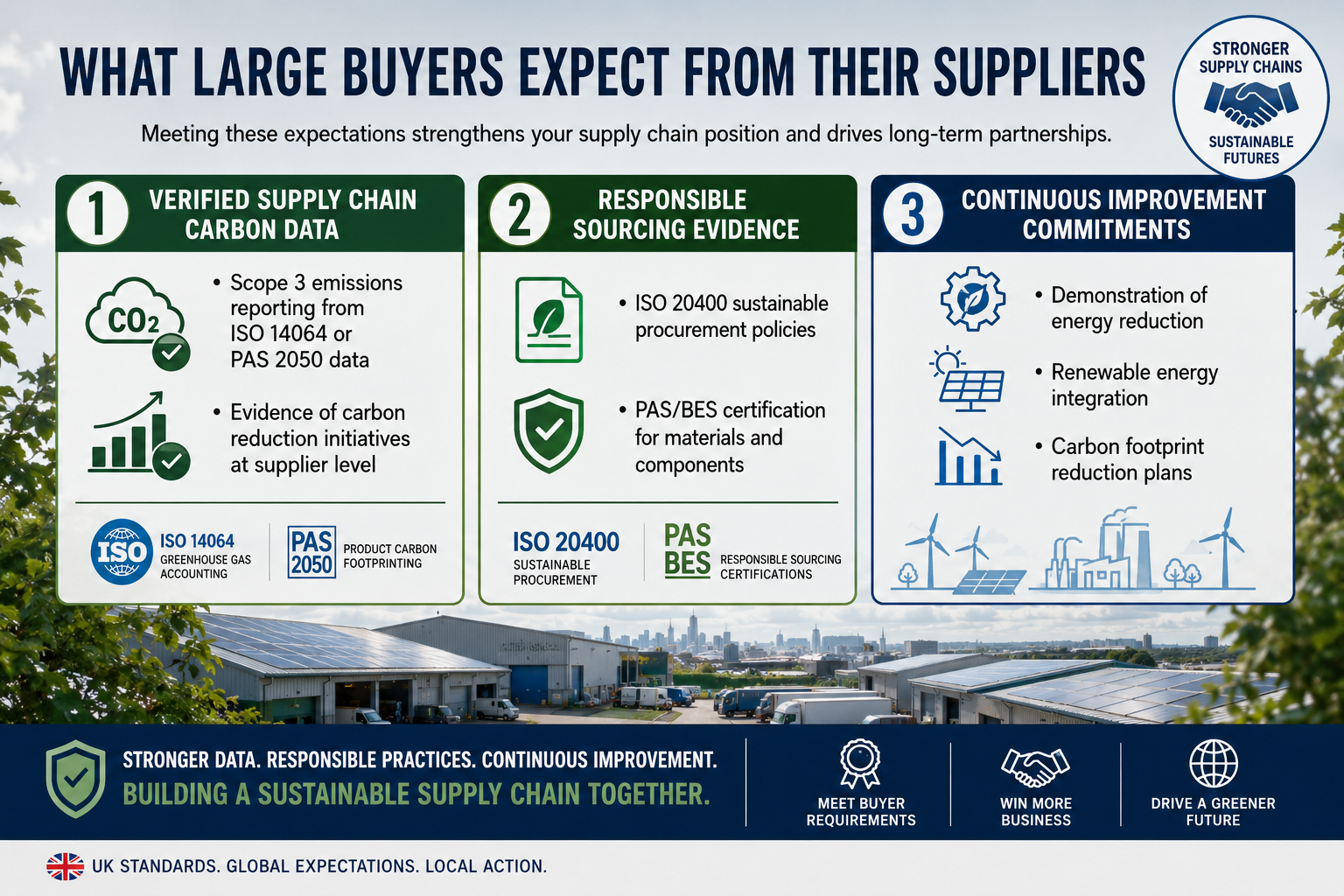
Buyer Expectations and Tender Requirements – large buyers often require:
1. Verified supply chain carbon data
a. Scope 3 emissions reporting from ISO 14064 or PAS 2050 data
b. Evidence of carbon reduction initiatives at supplier level
2. Responsible sourcing evidence
a. ISO 20400 sustainable procurement policies
b. PAS/BES certification for materials and components
3. Continuous improvement commitments
a. Demonstration of energy reduction, renewable integration, and carbon footprint reduction plans
Impact on Manufacturers & Engineers
1. Suppliers without verified credentials risk losing tenders or facing reduced contract value
2. Verified supply chain credentials differentiate manufacturers in competitive bidding
3. Integrates with existing internal initiatives (ISO 50001, ESOS, SECR, Carbon Trust) to maximise commercial advantage
Stay tuned for a next episode which will discuss – strategies for integrating supply chain carbon credentials into operations.
Additional Resource
If you’d like to learn more about operational improvement / cost reduction related accreditations, please request a complimentary copy of our factories guide book – Planet meets Profit.